Candle Fragrance Load Calculator: How Much Scent to Use
Learn how to calculate fragrance load for candles. Includes fragrance percentages by wax type, maximum loads, and formulas to get the perfect scent throw every time.
Quick Answer
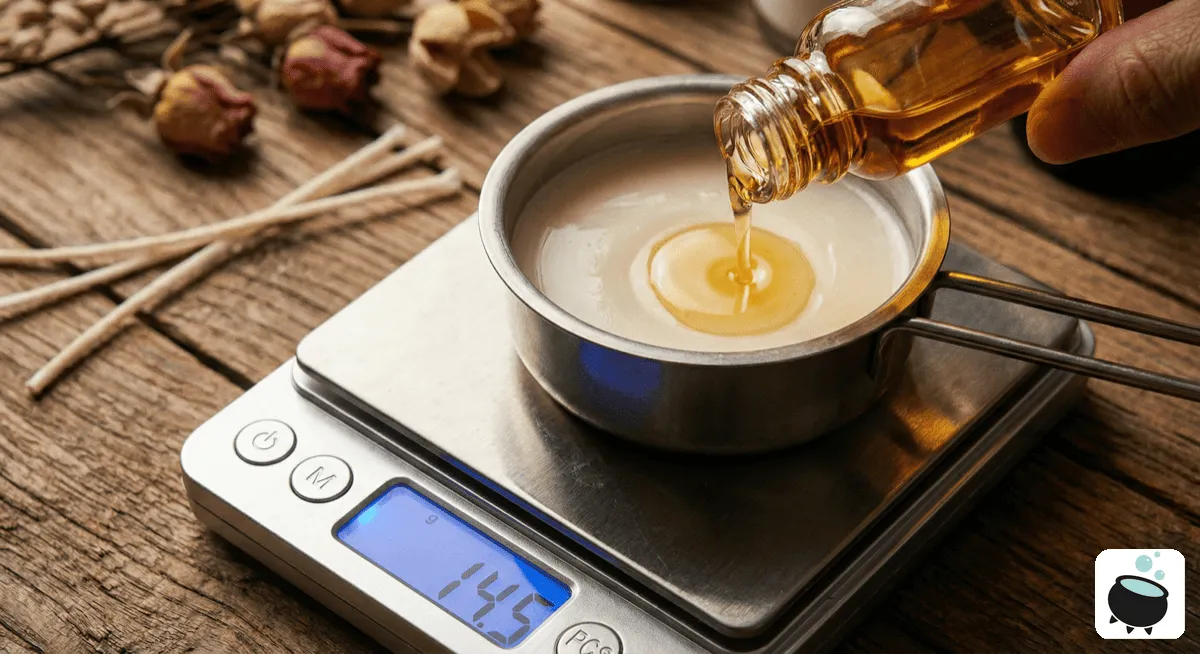
Fragrance load is the percentage of fragrance oil relative to wax weight. Formula: Fragrance Amount = Wax Weight × Fragrance Percentage. For soy wax at 10% load with 16 oz wax: 16 oz × 0.10 = 1.6 oz fragrance oil. Standard loads range from 6-12% depending on wax type.
What Is Fragrance Load?
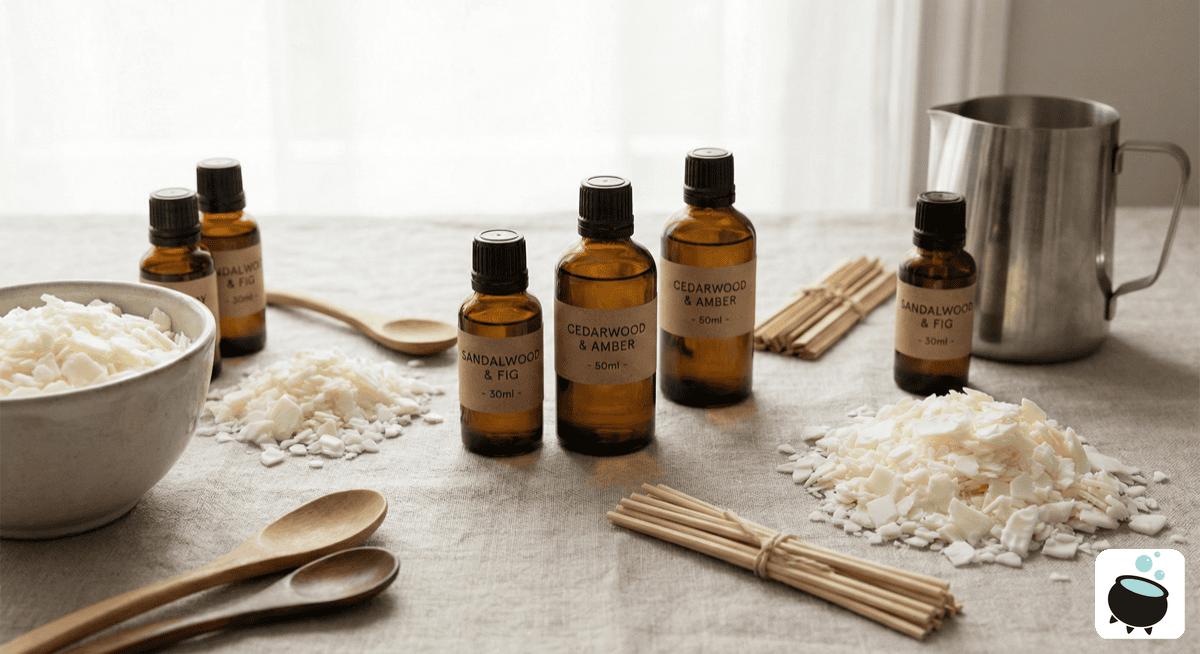
Fragrance load (also called fragrance percentage or scent load) is the ratio of fragrance oil to wax in your candle. It's expressed as a percentage of the total wax weight.
The formula:
Fragrance Oil Amount = Wax Weight × (Fragrance Load % ÷ 100)
Getting fragrance load right affects:
- Hot throw - Scent when burning
- Cold throw - Scent when unlit
- Burn quality - Flame stability, pooling
- Safety - Flashpoint considerations
Fragrance Load by Wax Type
Different waxes hold fragrance differently. Using too much causes problems; too little means weak scent throw.
| Wax Type | Typical Load | Maximum Load |
|---|---|---|
| Soy Wax (container) | 6-10% | 10-12% |
| Paraffin (container) | 6-9% | 10-11% |
| Coconut Wax | 6-10% | 10-12% |
| Beeswax | 3-6% | 6-8% |
| Palm Wax | 6% | 6% |
| Parasoy Blend | 8-10% | 10-12% |
| Gel Wax | 3-4% | 4% |
Important: These are general guidelines. Always check your specific wax supplier's recommendations.
How to Calculate Fragrance for Candles
Basic Calculation
Example: 16 oz soy wax at 10% fragrance load
- Convert percentage: 10% = 0.10
- Multiply: 16 oz × 0.10 = 1.6 oz fragrance oil
Batch Calculation (Multiple Candles)
Example: Making 8 candles, each with 8 oz wax, at 8% load
- Total wax: 8 candles × 8 oz = 64 oz
- Fragrance load: 64 oz × 0.08 = 5.12 oz fragrance oil
Calculating by Container Volume
If you know your container's capacity but not wax weight:
- Wax fills about 80-90% of container volume
- For an 8 oz container: approximately 6.5-7 oz of wax
- Calculate fragrance from wax weight, not container size
Fragrance Load Percentage Chart
Quick reference for common wax weights:
| Wax Weight | 6% Load | 8% Load | 10% Load | 12% Load |
|---|---|---|---|---|
| 4 oz | 0.24 oz | 0.32 oz | 0.40 oz | 0.48 oz |
| 8 oz | 0.48 oz | 0.64 oz | 0.80 oz | 0.96 oz |
| 16 oz | 0.96 oz | 1.28 oz | 1.60 oz | 1.92 oz |
| 32 oz | 1.92 oz | 2.56 oz | 3.20 oz | 3.84 oz |
| 5 lbs | 4.8 oz | 6.4 oz | 8.0 oz | 9.6 oz |
| 10 lbs | 9.6 oz | 12.8 oz | 16.0 oz | 19.2 oz |

What Happens With Wrong Fragrance Load?
Too Much Fragrance
- Oil may "sweat out" of candle surface
- Flame issues (smoking, flickering)
- Poor burning and tunneling
- Fire hazard from excess oil
- Wasted money on fragrance
Too Little Fragrance
- Weak or no hot throw
- Disappointing cold throw
- Customers complaining about scent
- Need to increase load or change fragrance
Factors Affecting Scent Throw
Fragrance load isn't the only factor in scent throw:
Wax Type
Different waxes release fragrance differently. Paraffin typically has stronger throw than soy at the same percentage.
Fragrance Quality
High-quality fragrance oils designed for candles perform better than cheap alternatives.
Cure Time
Most candles need 1-2 weeks to cure. Scent throw improves significantly after curing.
Container Size
Larger containers need adequate wick size to create proper melt pools, which affect hot throw.
Room Size
Scent throw that fills a small room may seem weak in a large space.
Tips for Optimal Fragrance Load
Start at Recommended Percentage
Begin with your wax supplier's suggested load. Don't assume more is better.
Test Before Production
Make test candles at different percentages (6%, 8%, 10%) to find the sweet spot.
Consider Fragrance Strength
Some fragrances are stronger than others. You may need less of a potent scent.
Keep Detailed Records
Document fragrance percentage, wax type, pour temperature, and cure time for every batch.
Check Flashpoint
Ensure your fragrance flashpoint is appropriate for your wax and add fragrance below the flashpoint temperature.
Fragrance Load for Different Candle Types
Container Candles
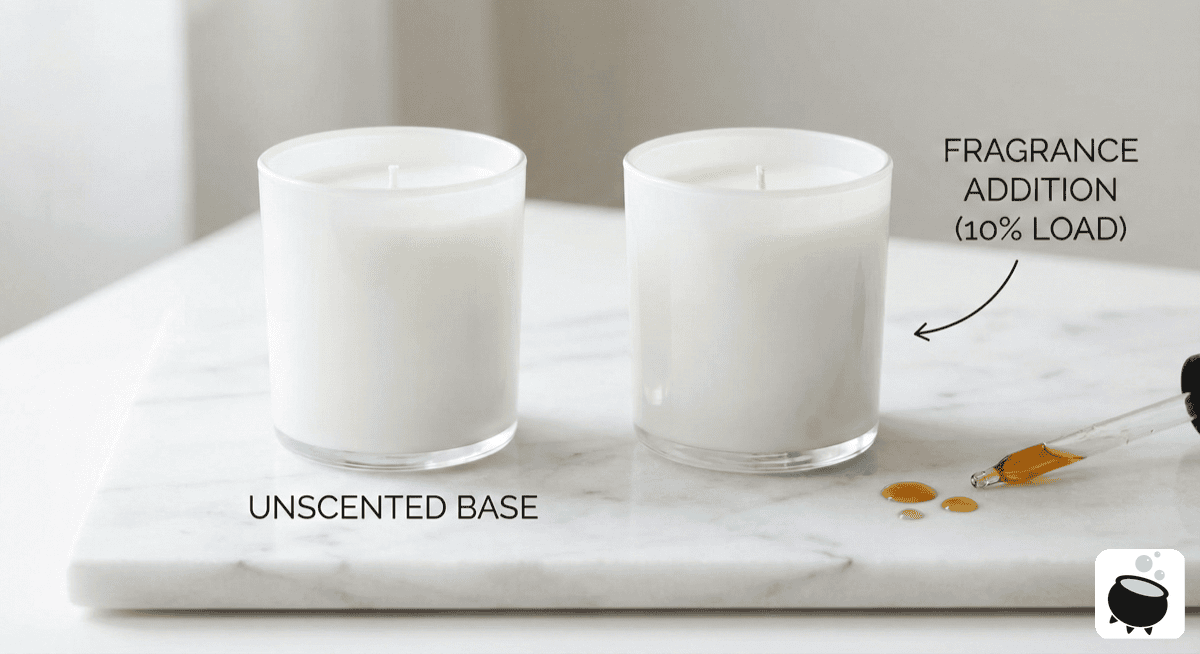
- Standard loads: 6-10%
- Most forgiving for fragrance
- Hot throw develops as wax melts
Pillar Candles
- Lower loads: 4-6%
- High loads can cause sweating
- Cold throw matters more
Wax Melts
- Higher loads possible: 10-12%
- No wick combustion concerns
- Maximize cold and hot throw
Tea Lights & Votives
- Standard loads: 6-8%
- Consistent burning important
- Test thoroughly
Frequently Asked Questions
What percentage of fragrance oil should I use in candles?
Start with 8-10% for soy wax container candles, 6-9% for paraffin. Always check your specific wax's recommendations and test before production.
Can I use more fragrance oil for stronger scent?
Only up to your wax's maximum load. Exceeding it causes sweating, burning issues, and safety hazards. If you've maxed out load, try a different fragrance or wax.
Why does my candle smell weak even with high fragrance load?
Possible causes: insufficient cure time (wait 2 weeks), wrong wick size (too small creates small melt pool), poor quality fragrance, or inappropriate wax/fragrance combination.
Do I calculate fragrance by wax weight or total candle weight?
Calculate by wax weight only, not including container, wick, or other materials.
What's the difference between hot throw and cold throw?
Cold throw is the scent when the candle is unlit. Hot throw is the scent released when burning. Some fragrances perform differently in each category.
How do I convert fragrance load between grams and ounces?
Use the same percentage regardless of unit. For 500g wax at 10%: 500g × 0.10 = 50g fragrance. The math works identically.
Conclusion
Calculating fragrance load correctly is essential for quality candles. Too much fragrance creates burning and safety issues; too little means weak scent that disappoints customers.
The formula is simple—wax weight times percentage—but managing fragrance across multiple recipes, batches, and candle types can become complex. Many candle makers use dedicated software to track recipes and automatically calculate fragrance amounts, ensuring consistency across all production.
Test your fragrances at different load percentages, document your results, and find the sweet spot for each wax and scent combination you use.
Ready to Manage Your Recipes Like a Pro?
PotionHub helps soap and candle makers calculate lye, track batches, manage inventory, and grow their business.
Get PotionHub