Candle Making for Business: Cost Calculator, Pricing & Profit Margins
Start a candle business profitably. Calculate material costs, wax expenses, pricing strategies, wholesale costs, and profit margins with real examples.
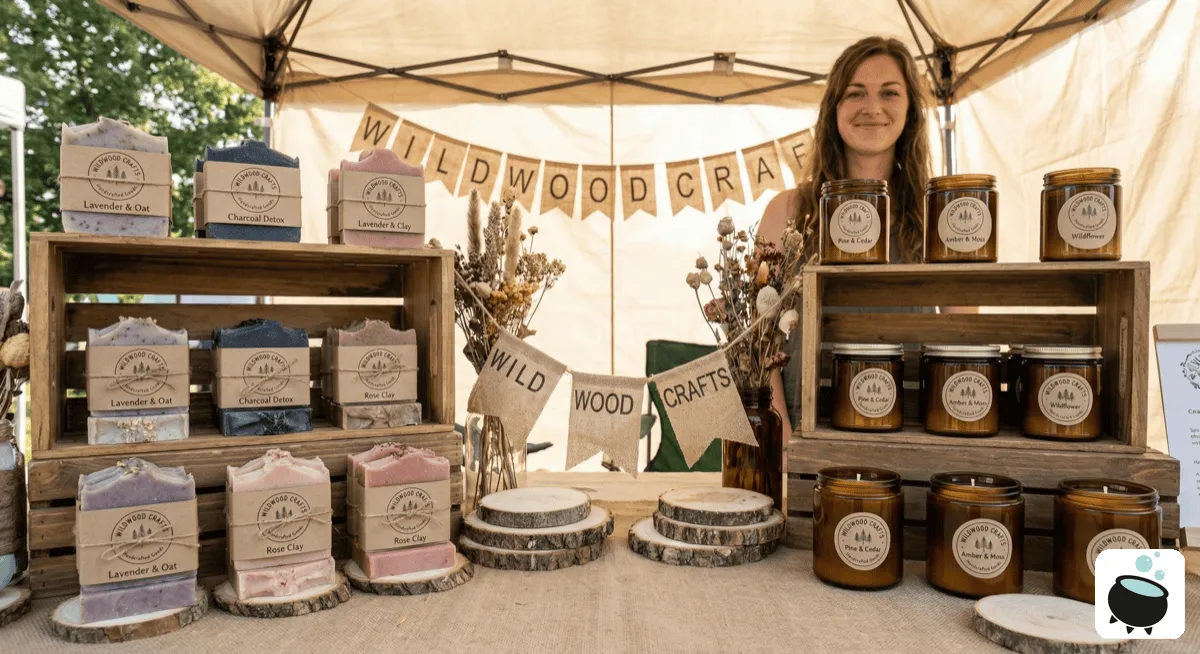
Quick Answer
Starting a candle business requires calculating material costs (wax, fragrance, wicks, containers, packaging), then applying 3-5× markup for retail pricing. An 8 oz soy candle costing $2.50 in materials retails for $12-18. Profit margin targets: 60-70% gross margin on materials. Use our free cost calculator to track costs per candle and optimize pricing.
Free Cost Calculator
Calculate true costs per candle, set wholesale and retail prices, and hit your profit targets.

The Real Cost of Making Candles
Many candle makers underprice because they ignore hidden costs. Profitability requires knowing every expense down to the cent per candle.
Direct Material Costs: The Breakdown
Wax (largest expense)
| Wax Type | Cost Per Pound | Cost Per 8 oz Candle |
|---|---|---|
| Soy Wax | $6-8 | $3.00-4.00 |
| Paraffin | $3-4 | $1.50-2.00 |
| Coconut Wax | $10-12 | $5.00-6.00 |
| Blended (Parasoy) | $5-7 | $2.50-3.50 |
| Beeswax | $15-20 | $7.50-10.00 |
Assumption: 8 oz container needs ~6.9 oz of wax, using soy at $7/lb.
- 6.9 oz ÷ 16 = 0.43 lbs
- 0.43 lbs × $7 = $3.00 per candle
Fragrance Oil
Typical fragrance load: 0.5-1 oz per pound of wax (6-10%)
| Load | Fragrance Amount | Cost (at $3/oz) |
|---|---|---|
| 6% | 0.4 oz | $1.20 |
| 8% | 0.55 oz | $1.65 |
| 10% | 0.7 oz | $2.10 |
Budget: $1.20-2.10 per candle for fragrance
Note: Buy fragrance in bulk (1 gallon) to reduce per-oz cost to $1.50-2.00.
Containers and Lids
| Container Type | Size | Cost Per Unit |
|---|---|---|
| Standard glass jar | 8 oz | $0.30-0.50 |
| Luxury glass | 8 oz | $0.50-0.80 |
| Ceramic | 8 oz | $0.80-1.20 |
| Specialty | 8 oz | $1.00-2.00 |
| Lids | , | $0.10-0.20 |
Average: $0.50 container + $0.15 lid = $0.65 per candle
Wicks
| Wick Type | Cost Per Candle |
|---|---|
| Paper-core | $0.05-0.10 |
| Wood wick | $0.15-0.25 |
| Braided cotton | $0.08-0.15 |
Assumption: Standard cotton wick = $0.10 per candle
Dyes and Colorants
| Type | Cost Per Candle |
|---|---|
| Wax dyes (liquid) | $0.10-0.20 |
| Mica/micas | $0.15-0.30 |
| Iron oxides | $0.10-0.20 |
| No coloring | $0.00 |
Average: $0.15 per candle (or $0 for uncolored)
Packaging
| Item | Cost |
|---|---|
| Box | $0.30-0.60 |
| Tissue/filler | $0.05 |
| Label | $0.10 |
| Sticker seal | $0.05 |
| Ribbon/decorative | $0.10 |
| Total packaging | $0.60-0.90 |
Total Material Cost Per 8 oz Candle:
Wax:           $3.00
Fragrance:     $1.50
Container:     $0.50
Lid:           $0.15
Wick:          $0.10
Dye/colorant:  $0.15
Packaging:     $0.75
──────────────────────
TOTAL:         $6.15
Labor and Overhead Costs
Materials are half the story. Labor and overhead add significantly.
Labor Per Candle
| Task | Time | Rate | Cost |
|---|---|---|---|
| Melting and fragrance | 0.25 hr | $15 | $3.75 |
| Pouring | 0.15 hr | $15 | $2.25 |
| Wick placement | 0.10 hr | $15 | $1.50 |
| Cooling monitoring | 0.10 hr | $15 | $1.50 |
| Packaging | 0.25 hr | $15 | $3.75 |
| Total per candle | $12.75 |
Note: One hour of labor makes about 4-6 candles, so per-candle labor = ~$2.50-3.75 depending on production efficiency.
For simplicity, budget $3.00 labor per candle (assumes some batching efficiency).
Overhead (Monthly, Spread Per Candle)
If making 100 candles per month:
| Expense | Monthly | Per Candle (÷100) |
|---|---|---|
| Workspace (portion) | $100 | $1.00 |
| Equipment depreciation | $50 | $0.50 |
| Utilities | $30 | $0.30 |
| Website/e-commerce | $30 | $0.30 |
| Marketing | $50 | $0.50 |
| Insurance | $40 | $0.40 |
| Miscellaneous | $20 | $0.20 |
| Total overhead | $3.20 |
As production scales, overhead per unit decreases.
Total Cost Per 8 oz Candle (Full Cost Accounting)
Materials:     $6.15
Labor:         $3.00
Overhead:      $3.20
──────────────────────
TOTAL COST:    $12.35
This is your break-even cost per candle.
Pricing Strategies for Profitability
Strategy 1: Standard Markup (Most Common)
Retail Price = Total Cost × 3-4
Using our $12.35 total cost:
- × 3 = $37 retail price
- × 4 = $49 retail price
Reality check: This seems high for an 8 oz candle. Here's why...
Strategy 2: Material-Based Markup (Simplified)
Many hobby candle makers ignore labor and overhead, using only material cost for easier pricing:
Retail = Material Cost × 4-5
Using our $6.15 material cost:
- × 4 = $24.60 retail
- × 5 = $30.75 retail
Gross margin: 75% on materials, but this doesn't cover full business costs long-term.
Strategy 3: Tiered Pricing (Market-Driven)
Price based on product category, not cost alone:
| Candle Type | Typical Retail | Volume | Markup |
|---|---|---|---|
| Budget/basic | $12-15 | 8 oz | 2× material |
| Standard | $18-25 | 8 oz | 3× material |
| Premium/luxury | $28-40 | 8 oz | 4-5× material |
| Specialty/large | $35-60 | 12+ oz | 4× material |
Use case: Budget uncolored soy candles at $12-15. Specialty hand-poured luxury at $35-40.
Strategy 4: Wholesale (B2B)
Retailers need 50% margin (keystone markup). Your wholesale price must be 50% of retail.
If retail = $24, wholesale = $12
Your material cost ($6.15) + labor ($3.00) = $9.15 minimum cost. This leaves thin margin at wholesale pricing.
Solution: Reduce labor through batching, negotiate lower material costs through bulk purchasing.
Real-World Pricing Examples
Budget Candles (Soy, Uncolored, Basic Scent)
Materials:      $5.50
Labor (batched): $2.00
Overhead:       $2.50
Total:          $10.00

Retail (3×):    $30.00
Gross margin:   66%
Market price range: $18-22 (adjust down for budget positioning)
Premium Candles (Soy, Specialty Container, Complex Fragrance)
Materials:      $8.50
Labor:          $3.50
Overhead:       $3.20
Total:          $15.20

Retail (3×):    $45.60
Gross margin:   67%
Market price range: $28-40 (adjust for luxury positioning)
Luxury Specialty (Hand-Poured, Ceramic, Premium Fragrance)
Materials:      $12.00
Labor:          $4.50
Overhead:       $4.00
Total:          $20.50

Retail (3×):    $61.50
Gross margin:   67%
Market price range: $35-60 (high-end market)

Scaling and Batch Efficiency
As production increases, per-unit costs decrease:
10 Candles/Month (Hobby)
- Setup + cleanup time: high per candle
- Material per unit cost: standard
- Effective cost: $13-15 per candle
50 Candles/Month (Semi-Pro)
- Batching efficiency: melting larger quantities
- Bulk material discounts: 15-20% savings
- Effective cost: $10-12 per candle
200+ Candles/Month (Professional)
- Maximal batching: melting 5+ lbs at once
- Significant bulk discounts: 25-35% savings on materials
- Reduced overhead per unit
- Effective cost: $6-8 per candle
At professional scale, your $6.15 material cost drops to ~$4.50 through bulk buying and batching efficiency.
Gross Margin vs. Net Profit
Gross margin (what you calculate) ≠ Net profit (what you keep).
Example: $24 Candle with $6.15 Material Cost
Retail price:           $24.00
Less material cost:     -$6.15
Gross margin:           $17.85 (74%)

But also subtract:
Labor:                  -$3.00
Overhead:               -$3.20
Packaging/shipping:     -$0.75
──────────────────────────────
NET PROFIT:             $10.90 (45%)
Your 74% gross margin becomes 45% net profit after full cost accounting. This is realistic and healthy for a small business.
Pricing for Different Sales Channels
Direct Sales (Website, Markets, Instagram)
You keep full retail price. Price at full margin.
Example: $24 per candle (captures 74% gross margin)
Wholesale to Retailers
Retailers need 50% margin.
Calculation:
- Your wholesale price = 50% of retail
- If retail is $24, wholesale is $12
- Your cost is $6.15 + $3 labor = $9.15
- Margin: $2.85 per candle (24%)
Challenge: Wholesale margins are tight. You must achieve significant cost reductions.
Subscription Box Inclusion
Box services typically pay 30-40% of recommended retail.
Example:
- Your retail: $24
- Box pays: $7.20-9.60
- Your cost: $9.15
- Margin: Loss to thin margin
Solution: Create specific SKUs for subscription channels at lower cost structure, or negotiate higher wholesale price.
Corporate/Bulk Orders
Offer volume discounts:
- 25-50 units: 15-20% off
- 50+ units: 20-30% off
These large orders offset thin per-unit margins with volume.
Using a Cost Calculator
For multiple SKUs or batch sizes, a cost calculator prevents pricing mistakes:
Free Candle Cost Calculator
Calculate costs for multiple container sizes, wax types, and production volumes to ensure profitability.
Track:
- Material costs by component (wax, fragrance, container, etc.)
- Labor per production hour
- Monthly overhead allocation
- Desired profit margin percentage
- Wholesale pricing (50% of retail)
The calculator shows:
- Cost per unit
- Recommended retail price
- Margin percentage
- Breakeven volume
Common Candle Pricing Mistakes
Mistake 1: Price by Size Alone
"My 8 oz candle should be half the price of a 16 oz candle."
Wrong. A 16 oz candle doesn't use twice the labor. Materials scale, but labor doesn't proportionally.
Right approach: Premium per oz decreases with size.
- 8 oz: $24 ($3 per oz)
- 16 oz: $38 ($2.38 per oz)
Mistake 2: Ignoring Bulk Material Discounts
"I'll price based on current fragrance cost of $2/oz."
When you buy in bulk, that drops to $1.50/oz. Reprice accordingly.
Mistake 3: No Margin for Returns/Damaged Goods
If 5% of candles are returned or unsellable, prices need to account for that loss.
Mistake 4: Undervaluing Labor
"Labor is just $10/hr."
Even at $10/hr, your time adds up. One batch of 12 candles might require 2-3 hours total.
Mistake 5: Wholesale Pricing Too Close to Retail
If wholesale is only 10-15% below retail, retailers have no margin and won't stock you.
Rule: Wholesale should be 45-50% of retail to give retailers healthy margin.
Frequently Asked Questions
How much profit margin should I target?
Healthy gross margin: 50-70% on materials. After labor and overhead, target 35-45% net profit. This requires scale.
Can I be profitable making candles part-time?
Yes, but margins are tighter. Focus on high-priced specialty candles (premium containers, unique scents) rather than volume.
What's the minimum price for an 8 oz candle?
$12-15 for budget; $18-25 for standard; $28+ for premium. Don't go below $12 for standard soy candles with quality materials.
Should I charge differently at farmers markets vs. online?
Generally no. Consistent pricing prevents confusion. You might offer "show specials" at markets, but core prices should match.
How do I price gift sets and bundles?
Bundle price = 10-15% discount off sum of individual items.
Example: 3 candles at $24 each = $72 individual. Bundle = $60-62.
What if my supplier raises material costs?
Immediately review and adjust prices. Many small businesses wait too long to raise prices and absorb losses.
When should I drop a product line?
If net margin (after all costs) is below 30%, consider dropping or reformulating for cost reduction.
Scaling Your Candle Business
0-50 Candles/Month (Starting Out)
- Focus on product quality and customer experience
- Price at full margin (3-4× materials)
- Manual everything: melting, pouring, packaging
- Expect 40-50% net profit margin
50-200 Candles/Month (Growth)
- Implement batching systems to reduce per-unit labor
- Negotiate bulk material purchases
- Consider hiring for packaging/fulfillment
- Net profit margin: 40-45%
200+ Candles/Month (Professional)
- Optimize production workflow
- Achieve significant bulk discounts (25-30% savings)
- Potentially reduce pricing (increased margin buffer)
- Net profit margin: 40-50%
At all stages, use a cost calculator to ensure pricing aligns with true costs.
Conclusion
Starting a candle business profitably requires honest cost calculation: materials, labor, overhead, and desired profit margin. An 8 oz candle typically costs $6-9 in materials and labor, requiring $18-30 retail pricing for healthy margins.
Price based on full costs, not materials alone. Apply 3-5× markup depending on product positioning. Validate against market rates. Track costs per candle as production scales.
Candle businesses thrive on multiple SKUs and production volumes. Dedicated software can track costs across container sizes, wax types, and fragrance profiles,showing which products are most profitable and where to focus production.
Master your costs. Price confidently. Build a sustainable business.
Try These Free Tools
Skip the Manual Math
PotionHub calculates lye, tracks batches, manages inventory, and scales recipes for you. Free during beta - no credit card required.
Get PotionHub Free