Candle Wick Size Chart: How to Choose the Right Wick for Any Container
Complete candle wick size chart with container diameter measurements, wick types (CD, ECO, HTP, LX), testing methods, and troubleshooting common burn issues.
Quick Answer
Choose candle wick size by container diameter: 2-3" containers use 51-81 CD wicks, 3-4" use 81-109 CD, 4" and larger use 109-203 CD. Wick type matters too,CD wicks suit paraffin, ECO wicks work better with soy wax. Test your candle for proper burn: the flame should be 1/2-1 inch tall, and the melt pool should reach the edge within 2-4 hours.
Free Wick Size Calculator
Instantly determine the perfect wick size for your container using diameter and wax type. Includes recommendations for paraffin, soy, and blended waxes.

Why Wick Size Matters
Many candle makers overlook wick selection, thinking all wicks work the same. Wrong. Wick size determines:
- Burn temperature - Wrong wick = candle tunnels or burns too hot
- Melt pool size - Too small wick means cold spots and waste
- Flame height - Oversized wick = dangerous flame, soot, waste
- Burn time - Correct wick burns clean and lasts as designed
A candle with the wrong wick might not perform its best, leading to customer returns or disappointed friends.
Understanding Wick Terminology
Before diving into sizes, understand the numbering system:
Wick Number = Ply Count
Wick sizes are numbered by plies (strands):
- 51 = 51 braided stands (thinnest, for very small candles)
- 81 = 81 strands (small to medium containers)
- 109 = 109 strands (medium to large containers)
- 203 = 203 strands (extra-large containers)
More strands = thicker wick = hotter burn = larger melt pool
Wick Types
Different wick types suit different waxes:
| Wick Type | Best For | Characteristics | Price |
|---|---|---|---|
| CD (Cotton-Deliver) | Paraffin wax, blends | Curls as it burns, self-trimming, classic braided | $0.05-0.15/wick |
| ECO | Soy wax, all waxes | Cotton/paper blend, good for soy, slightly faster burn | $0.08-0.18/wick |
| HTP (High Temp Paper) | Soy wax, blends | High-temp core, designed for soy's lower melt point | $0.10-0.20/wick |
| LX (Flat Braid) | Paraffin, some soy | Flat construction, less curl, good for large candles | $0.08-0.18/wick |
| Paper Core | All waxes | Very clean burning, minimal curl | $0.12-0.22/wick |
For beginners: Start with CD wicks for paraffin and ECO for soy. These cover 90% of use cases.

The Wick Size Chart for Container Candles
By Container Diameter (Using CD Wicks)
This is the most practical chart,measure your container opening and match it:
| Container Diameter | CD Wick Size | Container Examples | Notes |
|---|---|---|---|
| 2 - 2.5" | 35-51 CD | Small tea lights, votives | Start at 35; rarely need larger |
| 2.5 - 3" | 51-65 CD | Small containers, sample sizes | 51 CD is most common |
| 3 - 3.5" | 65-81 CD | Jars, standard containers | 81 CD for fuller melt pools |
| 3.5 - 4" | 81-109 CD | Medium jars, popular size | 81 for paraffin, 109 for soy |
| 4 - 4.5" | 109-145 CD | Large jars, 3-wick base | Single wick at 109 |
| 4.5 - 5" | 145-203 CD | Extra-large, 3+ wick candles | Usually multi-wick |
| 5"+ | 203 CD or multi-wick | Large vessels, pillars | Multiple wicks recommended |
By Container Diameter (Using ECO Wicks)
ECO wicks generally burn hotter than equivalent CD wicks:
| Container Diameter | ECO Wick Size | Notes |
|---|---|---|
| 2 - 2.5" | 35-51 ECO | Fine for small soy candles |
| 2.5 - 3" | 51 ECO | Most common small size |
| 3 - 3.5" | 51-65 ECO | May use smaller than CD equivalent |
| 3.5 - 4" | 65-81 ECO | 81 for full soy blends |
| 4 - 4.5" | 81-109 ECO | 81 typically sufficient |
| 4.5 - 5" | 109-145 ECO | Still usually single wick |
| 5"+ | 145+ ECO or multi-wick | Depends on blend |
Wick Size by Wax Type
Your wax choice affects wick selection:
Paraffin Wax
Paraffin burns hot and accepts larger melt pools. Use standard sizing above.
Best wicks: CD, LX, or Paper Core
Example: 3.5" paraffin container = 81 CD
Soy Wax
Soy has lower melt point and burns cooler. Use slightly smaller wicks than paraffin.
Best wicks: ECO or HTP
Example: 3.5" soy container = 65-81 ECO (not 81+ CD)
Gel Wax
Gel (usually paraffin-based) burns hot like paraffin. Use standard sizing or slightly larger.
Best wicks: CD, Paper Core, or reinforced wicks
Example: 3" gel container = 51-65 CD
Blended Wax (Paraffin + Soy)
Blends are trickier since burn characteristics depend on ratio. Start with ECO or HTP.
Best wicks: ECO, HTP, or CD
Example: 3.5" paraffin/soy blend = 65 ECO (then test and adjust)

Testing Your Candle Wick
Charts are guides. Real testing is how you confirm proper wick size:
The Burn Test
- Light the candle and let it burn for 2-4 hours
- Check the melt pool - it should reach the edge of the container
- Check flame height - should be 1/2 to 1 inch tall
- Check the wick - should curl slightly as it burns (CD/ECO) or remain upright (LX)
- Listen for crackling - excessive popping means wick is too large
Visual Indicators of Proper Burn
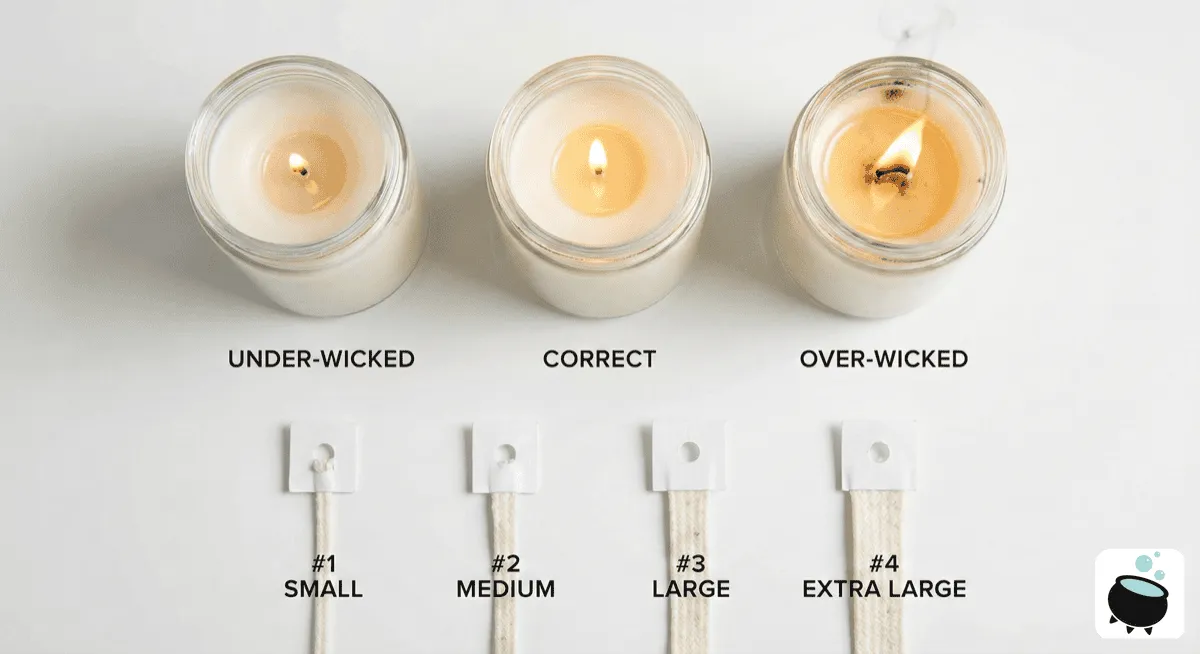
Perfect:
- Melt pool reaches container edge within 2-4 hours
- Flame is steady, 1/2 to 1 inch tall
- Minimal soot on container
- No excessive smoking
Signs Your Wick Is Too Small
- Melt pool doesn't reach edge after 4+ hours
- Candle tunnels (unmelted wax around edges)
- Weak, flickering flame
- Candle won't stay lit
- Excessive fragrance or dye unburned
Solution: Increase wick size (go from 51 to 65, or 65 to 81)
Signs Your Wick Is Too Large
- Flame is tall (over 1.5 inches) and dancing
- Large melt pool with wax dripping sides
- Lots of smoke and soot
- Strong fragrance smell (overpoured fragrance burning)
- Black soot buildup on container
Solution: Decrease wick size (go from 81 to 65, or 65 to 51)
| Problem | Wick Too Small | Wick Too Large |
|---|---|---|
| Melt pool | Doesn't reach edge | Reaches edge in <1 hour |
| Flame height | Weak, under 1/2" | Over 1.5", dancing |
| Soot | Minimal | Significant black buildup |
| Sound | Silent | Crackling or popping |
| Fragrance throw | Weak | Can be overwhelming |
| Burn time | Longer | Much shorter |
Multi-Wick Candles
For containers over 4 inches, using multiple smaller wicks often works better than one large wick:
| Container Size | Single Wick Option | Multi-Wick Option | Recommendation |
|---|---|---|---|
| 4" diameter | 109 CD | 2 × 65 CD | Either works |
| 4.5" diameter | 145 CD | 2 × 81 CD | Multi-wick better |
| 5" diameter | 203 CD | 3 × 65 CD | Multi-wick preferred |
| 6" diameter | Too large for single | 3 × 81 CD or 4 × 65 CD | Multi-wick required |
Advantages of multi-wick:
- More even melt pool
- Better fragrance throw
- Cooler burn (multiple small wicks vs. one hot large wick)
- More visually appealing
Disadvantages:
- More wick trimming
- More complex setup
- Wicks may need spacers to stay separated
Wick Trimming Matters
Even the right wick size won't perform well if not trimmed properly:
Trimming Before First Burn
- Trim wick to 1/4 inch above container
- Remove any loose fibers
- Check that wick is centered
Trimming Between Burns
- Always trim to 1/4 inch
- Carbon buildup causes problems
- Never let wick get longer than 1/2 inch
Carbon Tabs
Most candle wicks come attached to metal tabs (carbon tabs):
- Keep these in your candle
- They prevent wick from falling into melt pool
- They help distribute heat evenly
Common Wick Selection Mistakes
Mistake 1: Using the Same Wick Size for All Waxes
Soy doesn't burn as hot as paraffin. Using a paraffin-sized CD wick in soy can cause tunneling. Adjust wick size for wax type.
Mistake 2: Assuming Larger Containers Need Larger Wicks
Bigger isn't always better. Test using the charts above first. Many candle makers use smaller wicks than expected for better performance.
Mistake 3: Not Testing Enough
Visual inspection during first light is crucial. Many wicks work in theory but underperform or misbehave in real conditions.
Mistake 4: Changing Variables at Once
If your candle burns poorly, change one variable at a time:
- Week 1: Test with current wax and wick
- Week 2: If needed, only change wick size (keep wax the same)
- Week 3: If needed, reconsider wax type
This isolates the actual problem.
Mistake 5: Using Wick Size Charts Without Testing
Charts are starting points, not gospel. Every wax, fragrance load, and container is slightly different. Always burn test.
Wick Selection Quick Reference
For beginners:
- Measure your container diameter
- Use the chart above for your wax type
- Place wick in container with tab at bottom
- Pour candle and let fully cure
- Burn test and observe
- Adjust wick size if needed
For consistent batches:
- Keep batch notes (container, wax type, wick size, burn results)
- Test every new fragrance load change
- Document your best-performing combinations
Frequently Asked Questions
What happens if I use the wrong wick size?
Too small: candle tunnels and wastes wax. Too large: excessive smoking and soot. Both disappoint customers and make your candles perform poorly.
Can I use the same wick for paraffin and soy?
Not ideally. Soy burns cooler, so you typically need a smaller soy-rated wick (like ECO) versus a paraffin wick (like CD) of the same number. Testing is essential.
How do I know if my wick is burning properly?
The melt pool should reach the container edge within 2-4 hours, flame should be 1/2-1 inch tall, and minimal soot should be visible. Use PotionHub's free wick size calculator for starting guidance, then burn test.
Should I trim the wick before or after pouring?
Before pouring. Use wick stickers to hold wick centered at the correct height, then pour around it.
What's the difference between CD and ECO wicks?
CD is traditional braided cotton. ECO adds paper for a slightly cleaner burn and works better with soy. Both are good; ECO suits soy candles better.
Can I test wick sizes before making full candles?
Yes. Make small test candles in votive-sized containers with different wick sizes, burn them, and compare performance.
How long should I burn test before deciding on wick size?
At least one complete burn (2-4 hours minimum, ideally 4+ hours). A quick 30-minute burn tells you nothing about melt pool size.
Do wick sizes vary by manufacturer?
Slightly, yes. A 81 CD from Supplier A might burn slightly different than Supplier B's 81 CD. Consistency comes from testing with your specific supplies.
Conclusion
Choosing the right wick size is part art, part science. Use the wick size chart above as your starting point, select the right wick type for your wax, then always burn test your finished candles.
The effort spent getting wick size right pays dividends in customer satisfaction, reduced returns, and candles that perform as expected. PotionHub's free wick size calculator gives you an instant recommendation based on your container diameter and wax type,use it as your baseline, test thoroughly, and document what works.
Remember: no chart replaces real testing. Every candle is slightly different due to fragrance load, colorant, container type, and curing time. Stay curious, keep burn-test notes, and continuously refine your wick selection for consistently beautiful, well-performing candles.
Try These Free Tools
Skip the Manual Math
PotionHub calculates lye, tracks batches, manages inventory, and scales recipes for you. Free during beta - no credit card required.
Get PotionHub Free