Coconut Oil in Soap: Benefits, Usage Rates, and Formulation Tips
Everything soap makers need to know about using coconut oil in cold process soap. Covers SAP values, optimal percentages, lather properties, and how to avoid a drying bar.
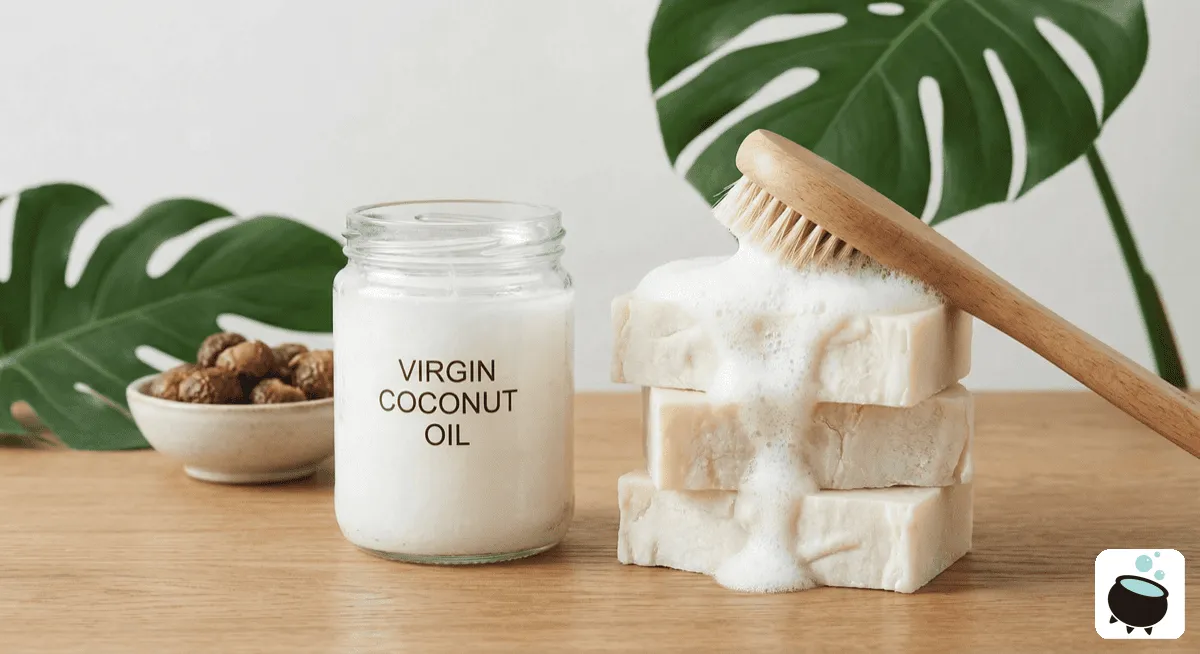
Quick Answer
Coconut oil is the #1 lather and cleansing oil in cold process soapmaking. It typically makes up 15–30% of a recipe and produces abundant, fluffy bubbles with excellent cleansing properties. However, too much coconut oil (above 30–35%) can create a drying bar that strips natural skin oils.
Need to calculate exact lye amounts for your coconut oil recipe? Use our free lye calculator to get precise measurements in seconds.

Why Coconut Oil Is So Popular in Soap
Soap makers worldwide rely on coconut oil for one primary reason: it creates an exceptional lather. Unlike many other oils, coconut oil is naturally high in lauric and myristic acids—the fatty acids responsible for creating big, fluffy bubbles that customers love.
Beyond lather, coconut oil brings three major benefits:
Cleansing Power: Coconut oil produces what's called a "cleansing bar"—soap that removes dirt and oils effectively. This makes it essential in recipes designed for the face, body washes, or shampoo bars. The cleansing properties come from its short and medium-chain fatty acids, which behave differently in soap than longer-chain oils.
Hardness: Coconut oil contributes to a firm bar that doesn't soften or melt quickly in the shower. This extends the life of the soap and provides a satisfying, solid feel. A recipe with adequate coconut oil will produce a bar that lasts weeks rather than days.
Stability: Coconut oil resists rancidity better than many polyunsaturated oils, making it ideal for soap that will sit on shelves for months before purchase. This stability also means fewer antioxidants are needed to preserve the bars.
The trade-off: coconut oil can be drying if used above 30–35% of the recipe. This is why experienced soap makers balance it with conditioning oils like shea butter, castor oil, or avocado oil.
Types of Coconut Oil for Soap Making
Not all coconut oil is created equal. Different processing methods produce oils with different properties, melting points, and SAP values. Understanding these differences ensures accurate calculations and consistent results.
| Type | SAP Value (NaOH) | SAP Value (KOH) | Melting Point | Best For |
|---|---|---|---|---|
| 76° Coconut Oil (Refined) | 0.183 | 0.257 | 76°F / 24°C | Standard cold process recipes; consistent results |
| 92° Coconut Oil (Refined) | 0.183 | 0.257 | 92°F / 33°C | Warmer climates; prevents oils from solidifying |
| Virgin/Unrefined Coconut Oil | 0.183 | 0.257 | 76°F / 24°C | Adding coconut scent; higher perceived quality |
| Fractionated Coconut Oil (MCT) | 0.196 | 0.275 | Liquid at room temp | Light conditioning; bars that don't solidify |
76° Refined Coconut Oil is the industry standard. It's odorless, produces consistent results, and arrives as a solid at room temperature in most climates. The "76" refers to the melting point in Fahrenheit.
92° Refined Coconut Oil melts at a higher temperature, making it ideal for soap makers in hot climates. It won't soften in your workspace but has identical SAP values and performance to 76° oil.
Virgin Coconut Oil retains a natural coconut scent and has a slightly creamy color. It costs more and isn't necessary for most recipes, but some artisans prefer it for its perceived quality. The scent can complicate fragrance design in your recipe.
Fractionated Coconut Oil (MCT oil) is processed to remove longer-chain fatty acids, leaving only medium-chain triglycerides. It remains liquid at room temperature and has a different SAP value (0.196 for NaOH). It's useful for creating ultra-light conditioning bars but produces less lather than standard coconut oil.
How Much Coconut Oil to Use
The percentage of coconut oil in your recipe determines both the bar's cleansing strength and its conditioning properties. Too little, and you lose the signature lather. Too much, and the bar becomes drying despite excellent bubbles.
15–20% Coconut Oil: Minimal lather, very conditioning. Used in recipes designed for sensitive or dry skin, often paired with oils like shea butter or jojoba. The bar cleanses gently but may feel soft or slippery.
20–25% Coconut Oil: Balanced approach. This range gives solid lather while maintaining conditioning. It's ideal for all-purpose bars that appeal to most skin types.
25–30% Coconut Oil: Strong lather, good cleansing. Many commercial soap brands operate in this range. The bar is firm and produces abundant bubbles, though it may feel slightly drying on sensitive skin.
30–35% Coconut Oil: Very high lather, significant cleansing. Appropriate for shampoo bars, body washes, and recipes specifically designed to be cleansing. Requires careful balance with conditioning oils.
Above 35% Coconut Oil: Approaching diminishing returns. The lather doesn't improve significantly, but dryness increases. Rarely recommended except in specialized recipes (like salt bars) with very high superfat percentages.
Coconut Oil Percentage Guide
| Percentage Range | Bar Properties | Best For | Superfat Recommendation |
|---|---|---|---|
| 15–20% | Conditioning, mild lather | Sensitive or dry skin bars | 5–8% superfat |
| 20–25% | Balanced, moderate lather | All-purpose bars; beginners | 5–7% superfat |
| 25–30% | Good lather, all-purpose | Standard commercial bars | 5–6% superfat |
| 30–35% | Strong lather, cleansing | Shampoo bars; face soap | 3–5% superfat |
| 35%+ | Heavy cleansing, potentially drying | Specialty bars only | 1–3% superfat (salt bars) |
Notice the superfat recommendation decreases as coconut oil increases. This is intentional. Higher coconut oil means more lye consumption; using the same 5–6% superfat with 35% coconut oil leaves excess unsaponified oil, making the bar feel greasy. Reducing superfat in these recipes creates a balanced, cleansing bar.
100% Coconut Oil Soap
Some soap makers venture into pure coconut oil recipes—100% of the oils come from coconut. These bars are extreme: explosive lather, intense cleansing, and moderate dryness even with 20% superfat.
When to Make 100% Coconut Oil Soap:
- Creating a salt bar (where 1–2 tablespoons of salt per pound of oils is added after trace)
- Designing a shampoo bar specifically meant to strip oils
- Experimenting with specialty formulations
- Formulating a bar intended for hard water or very oily skin types
Why They Work: Salt bars rely on coconut oil's properties. The salt doesn't saponify; it only crystallizes with the soap. This process produces a unique texture and accelerates trace dramatically. The extra salt (and high superfat, 20%+) compensates for coconut oil's drying nature.
Recipe Example:
- 100% Coconut Oil (0.183 SAP value for lye)
- 20% Superfat
- Salt bar technique with 2 Tb salt per pound of oils
- Produces incredible shimmer and creamy lather
These bars are niche products. Most soap makers use coconut oil as one ingredient among many, not the sole base.
Coconut Oil and Lye Calculations
Accurate lye calculations are critical. Coconut oil has a SAP value of 0.183 when using sodium hydroxide (NaOH for solid bars) and 0.257 for potassium hydroxide (KOH for liquid soap). Using the wrong value leads to either excess lye (caustic bars) or excess oil (greasy bars).
Step-by-Step Example:
Let's say you're making a 32-ounce batch with this recipe:
- 16 oz Coconut Oil (50%)
- 10 oz Olive Oil (31%)
- 6 oz Shea Butter (19%)
- 5% Superfat
Step 1: Calculate lye for each oil.
- Coconut: 16 × 0.183 = 2.928 grams NaOH
- Olive: 10 × 0.134 = 1.340 grams NaOH
- Shea: 6 × 0.128 = 0.768 grams NaOH
- Total: 5.036 grams NaOH
Step 2: Apply superfat.
- Total lye × (1 − 0.05) = 5.036 × 0.95 = 4.784 grams NaOH
Step 3: Calculate water.
- Standard ratio: lye weight × 2.5 to 3 = 4.784 × 2.75 = 13.16 grams water
Your recipe needs 4.784 grams lye and 13.16 grams water. This example shows why the SAP value matters—coconut's 0.183 is significantly higher than olive oil's 0.134, meaning more lye is needed per ounce.
Use a calculator: Rather than hand-calculate every batch, use our free lye calculator. Input your oils and amounts; it handles SAP values, superfat, and water calculations instantly.
Substituting Coconut Oil
If coconut oil is unavailable or you want to experiment, two alternatives provide similar lather and cleansing:
| Oil | SAP Value (NaOH) | SAP Value (KOH) | Usage Rate | Notes |
|---|---|---|---|---|
| Babassu Oil | 0.189 | 0.265 | 15–30% | Nearly identical to coconut; slightly different color |
| Palm Kernel Oil | 0.162 | 0.227 | 15–30% | Similar lather; less cleansing; lower SAP |
| Coconut Oil (Fractionated) | 0.196 | 0.275 | 15–25% | Liquid at room temp; lighter feel |
Babassu Oil is the closest substitute. It comes from South American palm nuts and performs almost identically to coconut oil in recipes. The SAP value is slightly higher (0.189 vs. 0.183), so recalculate your lye. Many artisan soap makers prefer babassu for sustainability reasons.
Palm Kernel Oil is another option but has a lower SAP value (0.162). This means you'll use slightly less lye per ounce. The lather is good, though not quite as abundant as coconut oil. Be aware that palm oil sourcing raises environmental concerns; if using palm kernel, purchase from suppliers committed to sustainable forestry.
Fractionated Coconut Oil (MCT) creates a different bar texture—lighter, more conditioning. Use it at slightly lower percentages (15–25%) because of its higher SAP value.
None of these alternatives produce identical bars. Expect slight variations in hardness, lather, and conditioning. Always recalculate lye when swapping oils.
Common Mistakes with Coconut Oil
Experienced soap makers learn these lessons through trial and error. Here's what to avoid:
Mistake 1: Using Wrong SAP Value Confusing the SAP value between coconut oil (0.183) and another oil creates lye errors. Always verify which oil you're entering into calculations. Double-check your lye calculator's database.
Mistake 2: Too Much Coconut Oil Without Adjustment Going above 35% while maintaining 5–6% superfat creates drying bars that strip skin. If you want high coconut oil, reduce superfat to 2–4% and add salt (for salt bars) or increase conditioning oils elsewhere.
Mistake 3: Skipping Water Calculation Some beginners assume water amount doesn't matter. Water-to-lye ratio affects trace time, gel phase, and final texture. Too much water = very soft batter and delayed cure time. Too little = seizing and fast trace.
Mistake 4: Forgetting Lye Consumption Coconut oil consumes significant lye. If you substitute 30% of a recipe with coconut oil without recalculating, you're under-liming the batch. Always recalculate when changing oils.
Mistake 5: Expecting Creamy Lather from High-Coconut Bars Coconut oil creates fluffy, fleeting bubbles—not creamy, dense lather. That creamy lather requires oils like castor, avocado, or palm. If customers expect creamy bubbles, lower coconut oil and increase conditioning oils.
Frequently Asked Questions
Q: Is coconut oil soap drying? A: At recommended percentages (15–30%), coconut oil soap is no drier than any other well-formulated bar. The issue arises above 30–35% without proper balancing. Always pair coconut oil with conditioning ingredients and appropriate superfat.
Q: Can I use fractionated coconut oil instead of regular coconut oil? A: Yes, but the SAP value is different (0.196 vs. 0.183), so recalculate lye. The resulting bar will be softer and more conditioning because fractionated oil has fewer long-chain fatty acids. Expect a different texture and feel.
Q: What's the ideal coconut oil percentage for a beginner? A: Start with 20–25%. This range provides excellent lather and cleansing without requiring careful balancing. Adjust up or down after you understand how your skin responds and how the bars perform.
Q: Why does my coconut oil soap feel slippery? A: Usually, this indicates excess oil (too much superfat or under-calculated lye). Try reducing superfat to 4–5%. Alternatively, the bar may be very soft because you used fractionated coconut oil or diluted it with too many soft oils.
Q: Can I combine 76° and 92° coconut oil in the same recipe? A: Yes. Both have identical SAP values (0.183), so they're interchangeable in calculations. The only difference is melting point. Blending them has no negative effects; use whichever stays solid in your workspace.
Q: How long does coconut oil soap last in the shower? A: With 20–30% coconut oil and proper curing (4–6 weeks), bars typically last 3–5 weeks of daily use. Higher coconut oil percentages and lower water content create longer-lasting bars.
Q: What's the difference between virgin and refined coconut oil for soapmaking? A: Refined coconut oil is odorless and produces consistent results. Virgin coconut oil has a coconut scent and costs more. Both have identical SAP values and performance. Choose refined for consistency; virgin if you want coconut aroma.
Q: Should I adjust water amount if I'm using high coconut oil percentages? A: Not necessarily. Water-to-lye ratio (typically 2.5:1) depends on lye weight, not oil composition. The lye weight changes with different oils, which naturally adjusts water needs. Always calculate water based on actual lye weight.
Wrapping Up
Coconut oil is the backbone of countless successful soap recipes. Its unmatched lather and cleansing properties make it indispensable for professional and hobbyist soap makers. The key is balance: use coconut oil in the 20–30% range, pair it with appropriate conditioning oils, and always calculate lye accurately.
When you're ready to formulate your next batch, use our free lye calculator to ensure your calculations are precise. Accurate measurements are the foundation of beautiful, long-lasting bars that customers love.
Happy soapmaking!
Try These Free Tools
Skip the Manual Math
PotionHub calculates lye, tracks batches, manages inventory, and scales recipes for you. Free during beta — no credit card required.
Get PotionHub Free