Coconut Oil in Soap Making: Benefits, Percentages, and Formulation Tips
Learn how to use coconut oil in soap making. Understand optimal percentages, why it creates great lather, potential drawbacks, and how to balance coconut oil in your recipes.
Quick Answer
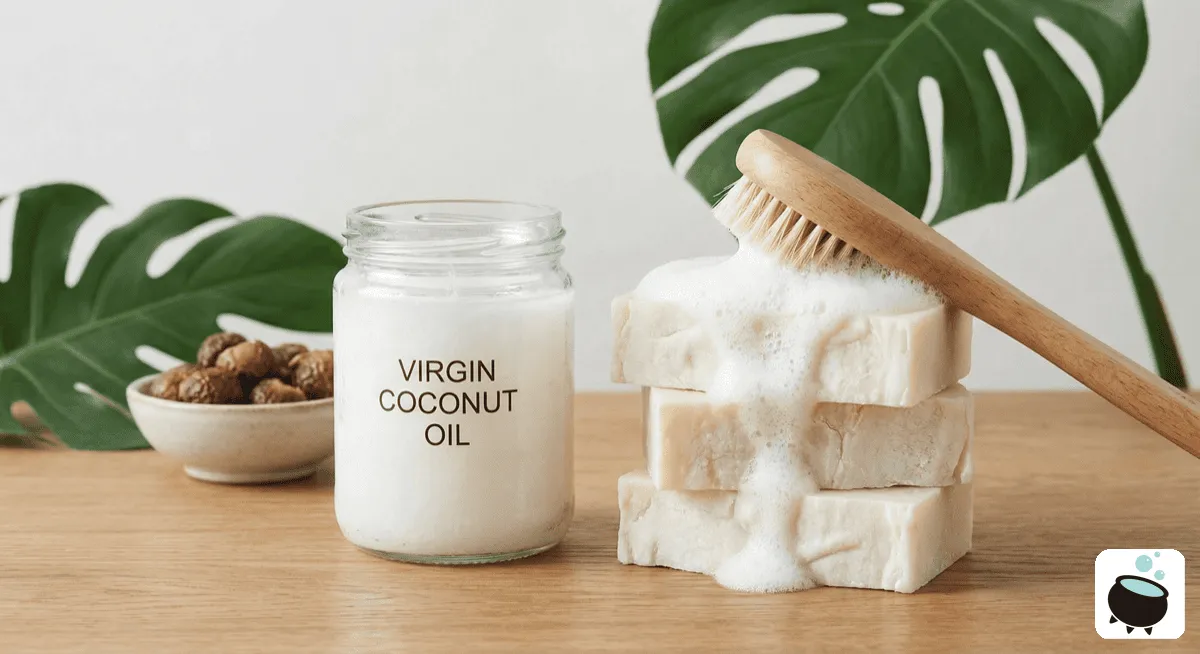
Coconut oil in soap creates excellent lather and hardness but can be drying at high percentages. Standard usage: 15-30% of oils in a recipe. Maximum for skin soap: 33%. For high-coconut (100%) soap, use 20% superfat to prevent dryness. SAP value (NaOH): 0.178.
Why Coconut Oil Is Popular in Soap Making
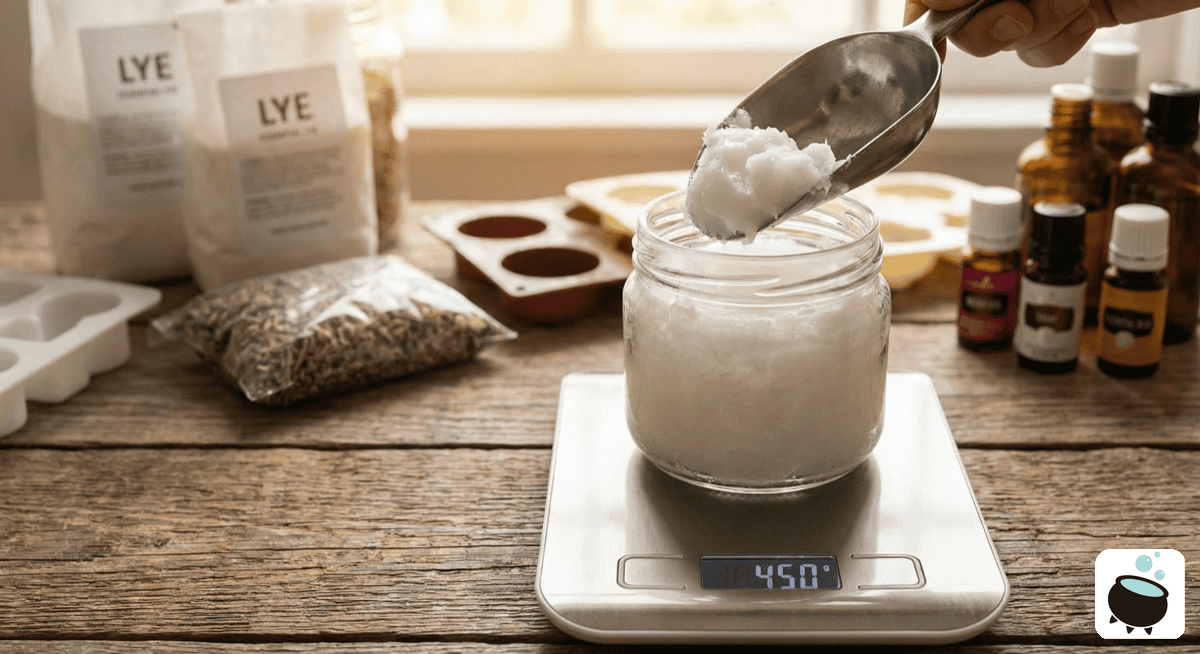
Coconut oil is a soap making staple because it contributes:
- Big, fluffy lather - Creates the bubbles people expect from soap
- Cleansing power - Effective at cutting grease and dirt
- Hardness - Makes firm, long-lasting bars
- Lather in hard water - Performs where other oils struggle
- Affordability - Relatively inexpensive in bulk
Few other oils provide this combination of benefits.
The Science: Lauric Acid
Coconut oil is approximately 50% lauric acid, a medium-chain fatty acid that:
- Produces copious, fluffy lather
- Creates very hard bars
- Has strong cleansing properties
- Lathers even in salt water
This unique fatty acid profile is why coconut oil behaves differently than other common soap oils.
Types of Coconut Oil for Soap
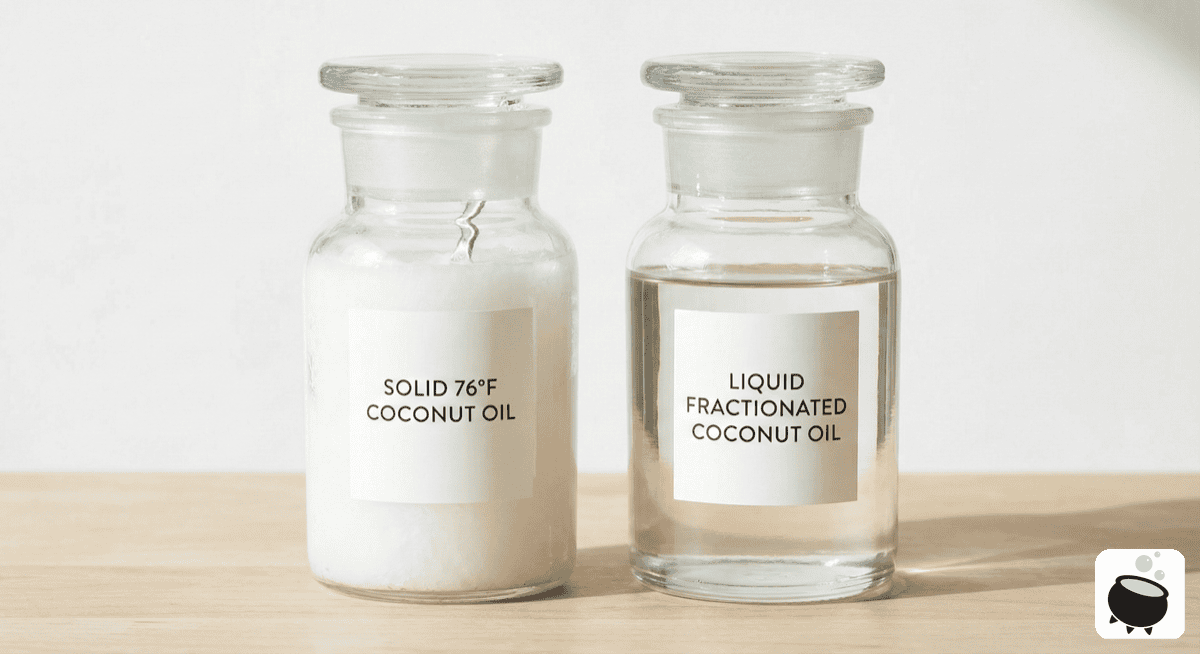
76 Degree Coconut Oil (Standard)
- Melts at 76 degrees F
- Most common for soap making
- Full coconut scent and properties
- SAP: 0.178
92 Degree Coconut Oil (Hydrogenated)
- Melts at 92 degrees F
- Firmer at room temperature
- Slightly different SAP: 0.170
- Less common in soap
Fractionated Coconut Oil (MCT)
- Always liquid
- Different fatty acid profile
- Lower cleansing properties
- SAP: 0.174
- Not interchangeable with standard coconut oil
Virgin vs. Refined
| Type | Characteristics |
|---|---|
| Virgin | Coconut scent, higher price |
| Refined | Neutral odor, more affordable |
For soap, refined is typically sufficient since the coconut scent fades anyway.
Optimal Percentages
Standard Soap Recipes: 15-30%
Most balanced recipes contain 15-30% coconut oil:
| Percentage | Effect |
|---|---|
| 15-20% | Mild cleansing, good lather, balanced moisture |
| 20-25% | Good cleansing, excellent lather, most common |
| 25-30% | Strong cleansing, abundant lather, watch for dryness |
Maximum for Regular Soap: 33%
Above 33%, coconut oil's cleansing power can strip natural oils from skin, causing:
- Tight, dry feeling
- Potential irritation
- Reduced skin comfort
100% Coconut Oil Soap (Special Case)
Pure coconut oil soap is possible with high superfat:
Requirements:
- 20% superfat (prevents excessive dryness)
- Produces very hard, cleansing bars
- Popular for laundry soap, marine soap, or personal preference
Trade-offs:
- Still drying for some skin types
- Limited conditioning
- Not for sensitive skin without testing
Balancing Coconut Oil in Recipes
Pairing with Conditioning Oils
Balance coconut oil's cleansing with moisturizing oils:
| Oil | Why It Balances |
|---|---|
| Olive oil | Mild, conditioning, moisturizing |
| Shea butter | Highly conditioning |
| Avocado oil | Rich in vitamins, moisturizing |
| Sweet almond | Gentle, conditioning |
Example Balanced Recipe
A well-balanced recipe for normal skin:
| Oil | Percentage | Purpose |
|---|---|---|
| Olive Oil | 40% | Conditioning, mildness |
| Coconut Oil | 25% | Lather, hardness, cleansing |
| Palm Oil | 25% | Hardness, stable lather |
| Castor Oil | 10% | Bubble boost |
Low-Coconut Options
For very sensitive or dry skin, reduce coconut to 10-15%:
| Oil | Percentage |
|---|---|
| Olive Oil | 50% |
| Shea Butter | 20% |
| Coconut Oil | 15% |
| Castor Oil | 10% |
| Avocado Oil | 5% |
Coconut Oil and Soap Characteristics
Contribution Chart
| Property | Coconut Oil's Effect |
|---|---|
| Hardness | High |
| Cleansing | Very high |
| Bubbly lather | Very high |
| Creamy lather | Low |
| Conditioning | Low |
| Longevity | High |
| INS value | High (258) |
Too Much Coconut: Warning Signs
Your recipe may have too much coconut if:
- Skin feels tight/stripped after washing
- Users complain of dryness
- Soap feels "squeaky clean" in a bad way
Solution: Reduce coconut percentage or increase superfat.
Special Applications
Salt Bars
Salt bars require high coconut oil (80-100%) because:
- Salt inhibits lather from most oils
- Coconut lathers even with salt
- Creates very hard, long-lasting bars
Typical salt bar formula: 80% coconut, 20% other oils, with salt at 50-100% of oil weight.
Laundry Soap
For laundry use, high coconut (up to 100%) is desirable:
- Strong cleansing action
- Hardness for grating
- Dryness not a concern for clothes
Shampoo Bars
Coconut oil contributes needed lather, but:
- Keep at 15-25% to prevent hair dryness
- Balance with conditioning oils
- Consider apple cider vinegar rinse for users
Common Mistakes
Mistake 1: Too Much for Facial Soap
Facial skin is more sensitive. For face bars:
- Limit coconut to 10-15%
- Or omit entirely for very sensitive skin
- High superfat helps but doesn't completely solve dryness
Mistake 2: Using Wrong Type
Using fractionated coconut oil (MCT) instead of 76 degree coconut oil dramatically changes your soap. MCT lacks lauric acid and doesn't provide the same lather or hardness.
Mistake 3: Same Percentage for All Recipes
Different products need different formulations:
- Body soap: 20-30%
- Face soap: 10-15%
- Baby/sensitive: 0-10%
- Utility/laundry: 80-100%
Mistake 4: Not Adjusting for Superfat
100% coconut oil soap at 5% superfat is very drying. Increase to 20% superfat for 100% coconut recipes.
Frequently Asked Questions
Can I make soap without coconut oil?
Yes. Other oils can provide lather (castor) and hardness (palm, tallow, cocoa butter). Coconut-free soap won't lather as abundantly but can still be quality soap.
What can I substitute for coconut oil?
For lather: castor oil (up to 10%), babassu oil (similar properties). For hardness: palm oil, tallow, lard. No single oil perfectly replaces coconut.
Why does my coconut oil soap crack?
100% coconut can crack if:
- Water discount too aggressive
- Unmolded too late
- Temperature shock during cure
Is coconut oil soap good for acne?
Mixed results. The cleansing can help oily skin, but coconut oil may be comedogenic for some. Test individually.
How do I know if I'm using too much coconut?
Your skin will tell you. If soap leaves skin tight, dry, or irritated, reduce coconut percentage in your next batch.
Does coconut oil soap lather in hard water?
Yes, better than most oils. This is one of coconut oil's major advantages for people in hard water areas.
Conclusion
Coconut oil is a powerful soap making ingredient that provides unmatched lather and cleansing. The key is using it in appropriate amounts for your intended use—balanced recipes for skin care, higher percentages for specialty applications.
Understanding how coconut oil interacts with other ingredients helps you formulate recipes that clean effectively without over-stripping skin's natural oils.
Track how different coconut percentages perform in your recipes using batch records. Over time, you'll find the sweet spot for your formulas and your customers' skin.
Ready to Manage Your Recipes Like a Pro?
PotionHub helps soap and candle makers calculate lye, track batches, manage inventory, and grow their business.
Get PotionHub