Cold Process Soap Recipe for Beginners: Step-by-Step with Lye Calculator
Complete cold process soap recipe for beginners with exact measurements, step-by-step instructions, safety tips, troubleshooting, and lye calculator link for any recipe variation.
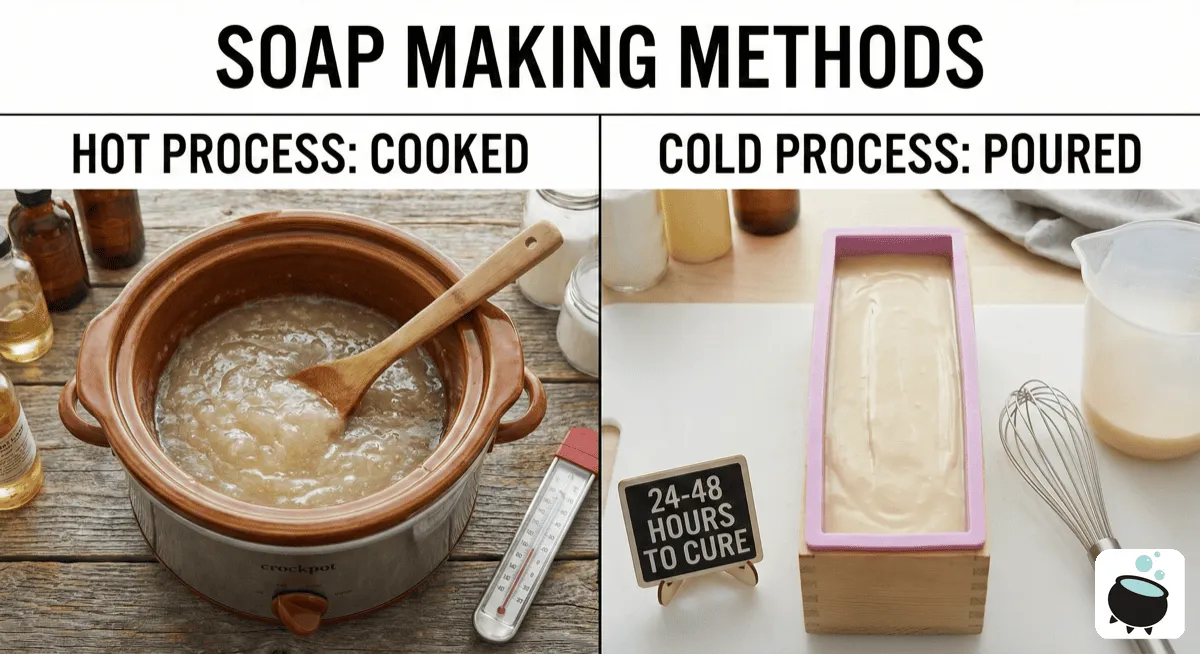
Quick Answer
This beginner cold process soap recipe makes 12 bars (3.5 lbs) with simple ingredients: 10 oz olive oil, 4 oz coconut oil, 2 oz shea butter, 2.2 oz lye, and 5.5 oz water. The process takes 30-45 minutes, then soap cures for 4-6 weeks. Always use a digital scale for accuracy, wear safety gear (gloves, glasses, mask), and follow steps precisely. Use PotionHub's free lye calculator to adjust this recipe for different oils or superfat.
Free Lye Calculator
Calculate exact lye amounts for any recipe, any oil combination, and any superfat. Prevents guessing and ensures perfect batches.
Free Soap Calculator
Track batch details, calculate costs, manage recipes, and organize your soap making production.

Before You Start: Safety First
Cold process soap uses lye (sodium hydroxide), a caustic chemical that burns skin and eyes. This is serious. Don't skip safety:
Required Safety Gear
| Item | Why | Cost |
|---|---|---|
| Safety glasses | Protects eyes from lye splashes | $8 |
| Rubber gloves | Protects hands (nitrile OK) | $5 |
| Face mask/respirator | Protects lungs from fumes | $12 |
| Long sleeves | Protects arms | (you have) |
| Closed-toe shoes | Protects feet | (you have) |
| Apron | Protects clothes | $5 |
Don't skip this. Lye is dangerous when mishandled. With proper safety gear, it's safe and manageable.
Safety Rules
- Never pour water into lye. Always pour lye into water (add lye to water, not water to lye).
- Never leave lye unattended.
- Keep vinegar nearby as first aid for accidental lye contact.
- Work in a ventilated area.
- Keep kids and pets away.
- Have an adult supervise if you're under 18.
The Beginner Cold Process Recipe
This recipe is formulated to be forgiving, with high olive oil (makes mild soap) and straightforward ingredients:
Ingredients
| Ingredient | Ounces (by weight) | Grams | Notes |
|---|---|---|---|
| Oils | |||
| Olive Oil | 10 oz | 283 g | Main oil, gentle |
| Coconut Oil | 4 oz | 113 g | Hardness and lather |
| Shea Butter | 2 oz | 57 g | Conditioning |
| Lye Solution | |||
| Lye (sodium hydroxide) | 2.2 oz | 62 g | Saponification agent |
| Distilled Water | 5.5 oz | 156 g | For lye solution |
| Additional | |||
| Water (for batter) | 4 oz | 113 g | Mixed into oils |
| Optional | |||
| Fragrance Oil | 0.5-0.8 oz | 14-23 g | Scent (10-15% by weight) |
| Mica/Colorant | 0.5-1 tsp | 3-5 g | Color (optional) |
Why These Oils?
Olive Oil (63% of recipe) - Creates a mild, moisturizing bar. Heats up slowly (longer working time). Good for beginners who need extra time.
Coconut Oil (25% of recipe) - Adds cleansing power and creamy lather. Makes bars harder and longer-lasting.
Shea Butter (12% of recipe) - Conditioning and luxurious feel. Makes soap more moisturizing.
Why 5% superfat? This recipe has 5% extra oil left over (not converted to soap). This makes soap gentler and more moisturizing without being too soft.
Equipment You'll Need
Essential
- Digital scale (accurate to 0.1 oz or 1 gram)
- Stainless steel pot (2-3 quart)
- Heat-safe container for oils (glass or stainless)
- Soap mold (silicone loaf mold, wooden box, or even a lined shoe box)
- Thermometer (dial or digital)
- Stick blender (immersion blender)
- Measuring spoons (for small amounts)
For Safety
- Rubber gloves
- Safety glasses
- Face mask/respirator
- Paper towels
- Vinegar spray bottle
Optional but Helpful
- Spray bottle (water for preventing soda ash)
- Heat gun or torch (speeds gel phase)
- Parchment paper or freezer paper
Complete Step-by-Step Instructions
Phase 1: Measuring and Safety Check
Step 1: Gather everything
- Lay out all equipment before starting
- Put on safety gear (gloves, glasses, mask)
- Ensure ventilation is good
- Keep vinegar spray bottle nearby
Step 2: Measure oils
- Weigh olive oil into heat-safe container: 10 oz
- Add coconut oil: 4 oz
- Add shea butter: 2 oz
- Total oil weight should be 16 oz
Step 3: Measure lye solution ingredients
- Measure distilled water into stainless pot: 5.5 oz
- Measure lye powder into a separate small container: 2.2 oz
Phase 2: Making Lye Solution
Step 4: Make lye solution
- Place the pot with 5.5 oz of distilled water on the scale
- Slowly add 2.2 oz of lye powder to the water (never water to lye)
- Stir continuously with heat-safe spoon
- The solution will heat up immediately (to ~170°F or 77°C)
Why it gets hot: This is a chemical reaction,completely normal. The heat helps dissolve the lye.
Step 5: Let it cool
- Let the lye solution sit on counter (don't cover it,fumes need to escape)
- Check temperature periodically
- You need it to cool to ~100°F (37°C),this takes 20-30 minutes
Phase 3: Heating Oils
Step 6: Heat oils While lye cools, heat your oils:
- Place oil container on stovetop
- Heat oils slowly to ~110°F (43°C)
- You're aiming for oils and lye solution to be within 10°F of each other
- Stir occasionally and check temperature
Don't overheat. Too much heat damages oils and makes soap fragile.
Phase 4: Mixing
Step 7: Check temperatures When both are ready:
- Lye solution should be ~100°F (37°C)
- Oils should be ~110°F (43°C)
- Don't worry about being exact; within 10°F is fine
Step 8: Measure water for batter
- Pour 4 oz of distilled water into oils
- Stir to combine,oils will be slightly thinner
Step 9: Pour lye solution into oils
- Slowly pour lye solution into the oils while stirring
- Stir continuously and slowly,don't splash
- The mixture will thicken slightly and turn from clear to opaque
- This takes 2-3 minutes of steady stirring
Phase 5: Blending
Step 10: Use stick blender
- Insert stick blender into the mixture
- Pulse blender in short 30-second bursts, then stir manually
- Alternate blending and stirring for 10-15 minutes
Why alternate? Stick blenders accelerate trace (thickening) quickly. Pulsing gives you control.
Step 11: Watch for trace As you blend, the mixture will gradually thicken. You're looking for "trace",when the soap batter drips off your spoon and leaves a brief trail.
| Stage | Consistency | Time | What to Do |
|---|---|---|---|
| Thin trace | Like thick cream | 5-8 min | Add fragrance and color |
| Medium trace | Like pudding | 10-12 min | Ready to pour (best for beginners) |
| Thick trace | Like applesauce | 15+ min | Pour carefully, soap sets fast |
For your first batch, aim for medium trace,when soap drips from your spoon and you can write in the batter surface.

Phase 6: Adding Fragrance and Color
Step 12: Add fragrance (optional) At medium trace:
- Add 0.5-0.8 oz fragrance oil
- Stir thoroughly (30 seconds)
- Some fragrances accelerate trace (soap thickens faster)
Using essential oils? Add fragrance and then blend a few more seconds to fully incorporate.
Step 13: Add color (optional)
- Add 0.5-1 tsp mica or colorant
- Blend for 30 seconds to ensure even distribution
- Don't add much water with colorants or you'll thin the batter
Phase 7: Pouring and Molding
Step 14: Pour into mold
- Pour soap batter into your prepared mold
- Scrape container to get all soap
- Tap mold on counter gently to settle soap and remove air pockets
- Smooth the top
Step 15: Cover mold (optional)
- Covering speeds gel phase (makes harder bars)
- You can cover with plastic wrap or old towel
- Or leave uncovered (soap still works fine, just slower to harden)
Phase 8: Curing and Unmolding
Step 16: Wait 24-48 hours
- Leave soap undisturbed for 24 hours minimum
- After 24 hours, you can unmold if soap is firm
- Some people wait 48 hours for easier cutting
Signs it's ready:
- Firm when pressed gently
- Doesn't collapse when unmolded
- Edges are defined (not mushy)
Step 17: Unmold
- Turn mold upside down
- Tap gently until soap slides out
- If stuck, leave overnight and try again
Step 18: Cut into bars
- Let soap sit another 24 hours before cutting (optional but easier)
- Using a knife (or soap cutter), cut into 12 bars
- Each bar should be roughly 1.5" thick
Step 19: Cure for 4-6 weeks
- Place bars on a wire rack or shelf
- Allow air circulation around all sides
- Don't stack them
- After 4-6 weeks, bars are fully cured and ready to use or sell

Troubleshooting Your First Batch
Problem: Soap Never Reached Trace
Causes:
- Temperatures were too cool
- Not enough blending
- Certain fragrance oils slow trace
Fix:
- Continue blending and stirring
- Soap will eventually reach trace even if slow
- Still usable, just takes longer
Prevention next time:
- Start with slightly warmer oils (120°F instead of 110°F)
- Use longer blending bursts
Problem: Soap Reached Trace Too Quickly
Causes:
- Temperatures were very warm
- Some fragrance oils accelerate trace rapidly
- Stick blender used continuously
Fix:
- Pour immediately and work fast
- Soap is still fine, just less working time
Prevention next time:
- Start with cooler temperatures (98°F oils, 90°F lye)
- Add fragrance right at trace to minimize working time reduction
Problem: Soap Developed White Powder (Soda Ash)
What it is: Sodium carbonate from lye reacting with air. Harmless but unattractive.
Cause: Uncovered soap exposed to humidity
Fix:
- Wash off with water or steam
- Perfectly functional soap underneath
Prevention next time:
- Cover soap with plastic during first 24 hours
- Spray with rubbing alcohol after pouring
Problem: Soap Didn't Heat (No Gel Phase)
What happened: Soap stayed cool throughout, didn't go through gel phase (translucent middle)
Is it bad? No. Soap still works fine. It just looks different,lighter colors, different texture.
Prevention next time:
- Cover with blanket/towel after pouring
- Use soap oven (heating pad wrapped around mold)
- Start with slightly warmer temperatures
Problem: Soap is Still Soft After 4 Weeks
Causes:
- Recipe has too much soft oil (olive oil)
- High humidity curing environment
- Not enough cure time yet
Fix:
- Continue curing another 2-4 weeks
- Or use dehumidifier in curing area
Prevention next time:
- Adjust recipe toward more coconut oil and less olive oil
- Use water discount (slightly less water in recipe)
Scaling This Recipe Up
Once you're comfortable, make bigger batches. The ratios stay the same:
| Batch Size | Olive Oil | Coconut Oil | Shea Butter | Lye | Lye Water | Batter Water |
|---|---|---|---|---|---|---|
| 1x (basic) | 10 oz | 4 oz | 2 oz | 2.2 oz | 5.5 oz | 4 oz |
| 2x (bigger) | 20 oz | 8 oz | 4 oz | 4.4 oz | 11 oz | 8 oz |
| 3x (large) | 30 oz | 12 oz | 6 oz | 6.6 oz | 16.5 oz | 12 oz |
Important: Use PotionHub's free lye calculator for any recipe changes. Even small oil adjustments change lye amounts.
Customizing the Recipe
Once you've made this basic recipe successfully, experiment:
Changing Fragrance
- Keep amount between 0.5-0.8 oz per batch
- Test new fragrances with small batches first
- Some fragrances thicken soap (orange, vanilla),they accelerate trace
- Some fragrances are trickier in cold process; test first
Changing Colors
- Add mica, oxide, or natural colorants
- Add to small amount of fragrance oil first, then mix into batter (prevents clumping)
- Maximum 1 tsp per 2 lbs of soap
- Some colorants (like mica) are just for looks; others (like iron oxide) go further
Changing Oils
- Once comfortable, experiment with different oils
- Keep your best-performing oil (olive oil here) at 40%+
- Coconut oil stays around 20-30%
- Rest of recipe is your exploration
Always use PotionHub's free lye calculator. Each oil has a different "SAP value" (amount of lye needed). Wrong lye amount = bad soap. The calculator removes guesswork.
Common Questions from Beginners
How do I know if my soap is done saponifying?
Soap is safe to use after passing the "zap test",touch a damp tongue to a small piece of soap. If it zaps/tingles, lye is still present and it's not ready. If no zap, it's safe. Usually happens within 24-48 hours.
Can I use tap water instead of distilled water?
Not ideal. Tap water minerals can cause issues. Distilled water is $1-2 per gallon and eliminates variables. Worth it for accuracy.
What if I don't have shea butter?
Substitute with:
- Cocoa butter (similar)
- Extra coconut oil (firmer soap)
- Palm oil (if you accept ethical concerns)
- Just use more olive and coconut (still works)
Recalculate lye with PotionHub's free lye calculator.
How long until I can use my soap?
Technically 24-48 hours (once it's solid). Realistically 4-6 weeks when it's properly cured and at its best. Soft fresh soap disappoints users.
Why does my lye solution smell?
Lye fumes don't smell like much, but you might smell the oils' fragrance or something chemical-like. This is normal. Ensure ventilation and don't breathe deeply near it.
Can I make cold process soap without a stick blender?
Yes, but it takes 20-30 minutes of hand stirring to reach trace. Stick blenders reduce this to 10-15 minutes. Many beginners get arm fatigue and give up,the $30 investment in a stick blender is worth it.
What temperature should my house be to make cold process soap?
Room temperature (60-75°F) is fine. Very hot climates may accelerate trace and reduce working time. Very cold climates slow everything down but don't prevent success.
Cleanup and Safety After
Important: Cold process soap is safe once unmolded. The saponification reaction is complete.
Cleanup:
- Dispose of extra lye solution (pour down drain with plenty of water if completely cooled)
- Wash all equipment with hot soapy water
- Don't let lye dry on equipment,clean while wet
- Soap residue washes off like normal soap
Can you reuse equipment for cooking? Yes, after washing thoroughly. There's no lye left after cleanup,saponification is complete and soap is cosmetic-safe.
Your First Batch Success Checklist
- All safety gear ready and on
- Lye solution made and cooling
- Oils heated to ~110°F
- Temperatures within 10°F of each other
- Lye poured into oils slowly
- Reached medium trace (10-12 minutes)
- Fragrance added (optional)
- Color added (optional)
- Soap poured into mold
- Waited 24-48 hours before unmolding
- Cut into 12 bars
- Curing on rack for 4-6 weeks
Conclusion
You now have everything needed to make your first batch of cold process soap. This beginner recipe is forgiving, the instructions are clear, and the safety guidelines are strict but essential.
Don't be scared of lye,respect it, follow safety rules, and it's completely manageable. Most soap makers make their first batch successfully. Your second batch will be even better.
Track your process with a soap making log or calculator app. When you're ready to customize, use PotionHub's free lye calculator to adjust recipes safely. And remember: proper curing takes 4-6 weeks. Patience is rewarded with hardened bars that lather beautifully and last longer.
Happy soap making!
Try These Free Tools
Skip the Manual Math
PotionHub calculates lye, tracks batches, manages inventory, and scales recipes for you. Free during beta - no credit card required.
Get PotionHub Free