Essential Oil Calculator for Soap: Safe Usage Rates and Formulas
Learn how to calculate essential oil amounts for soap making safely. Includes usage rates by oil type, maximum percentages, and formulas for scenting your handmade soap.
Quick Answer
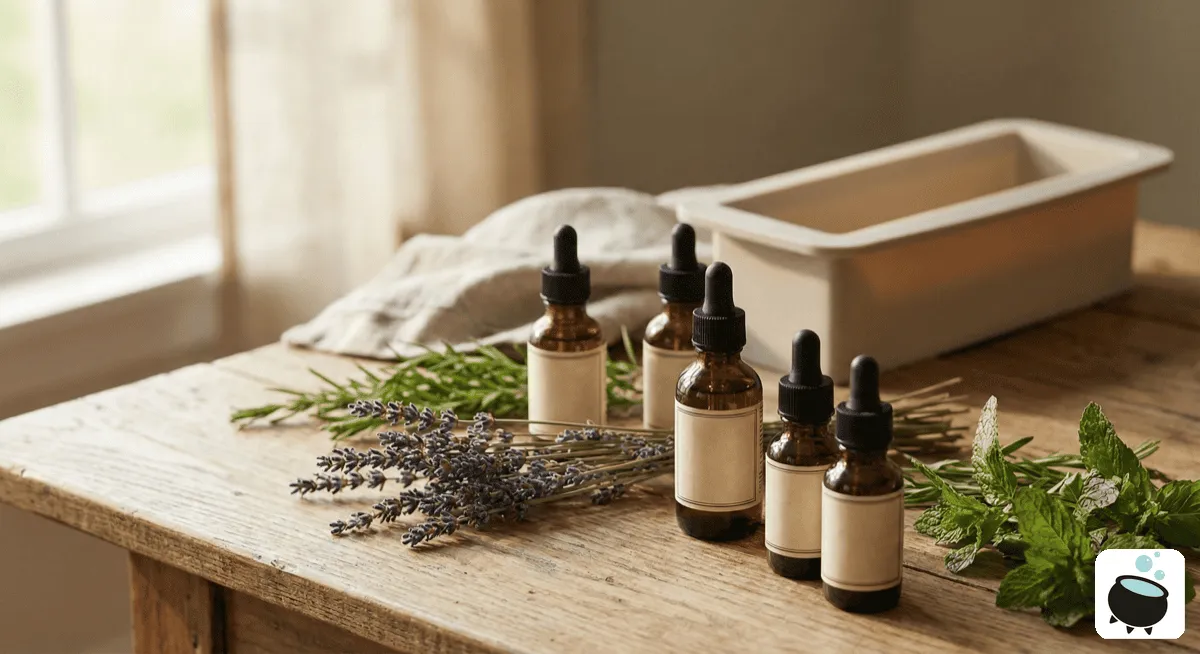
Essential oil usage in soap is typically 3-5% of total oil weight. Formula: Oil Weight × Usage Rate = Essential Oil Amount. For 32 oz oils at 4%: 32 × 0.04 = 1.28 oz essential oil. Always check maximum dermal limits for each specific essential oil, as some have lower safe limits.
Why Essential Oil Calculation Matters
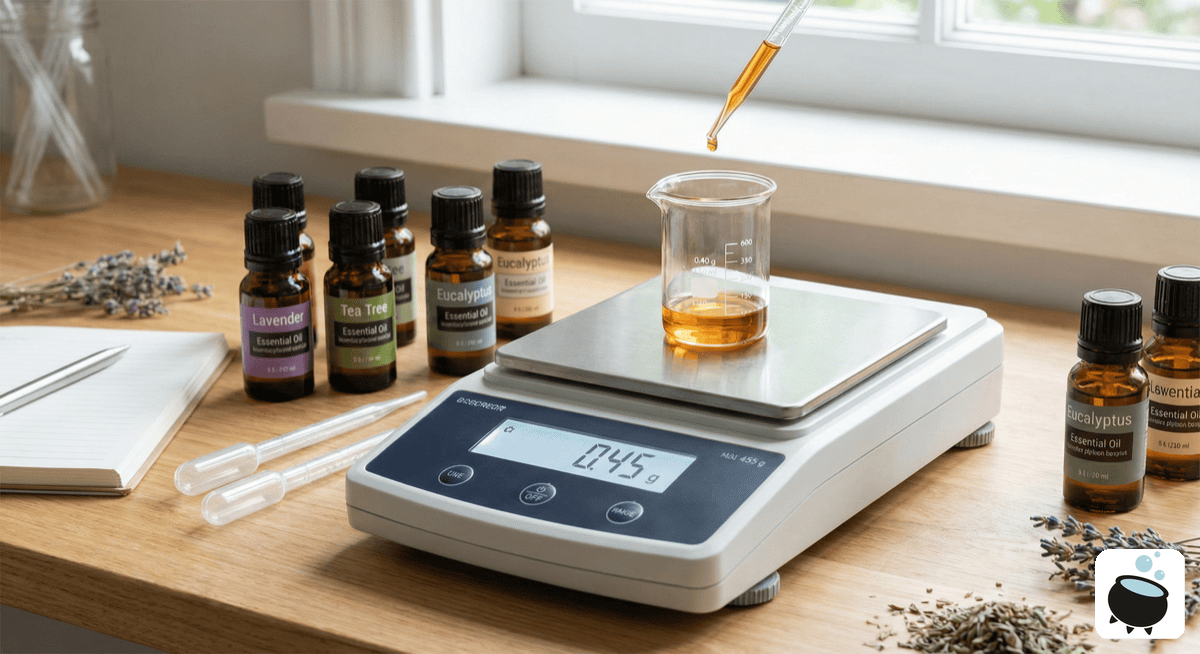
Essential oils aren't just pleasant scents—they're concentrated plant compounds that can cause skin irritation, sensitization, or other reactions if used incorrectly. Proper calculation ensures:
- Skin safety - Avoiding irritation and sensitization
- Effective scenting - Enough to smell, not so much it's overpowering
- Cost efficiency - Essential oils are expensive; don't waste them
- Regulatory compliance - Many regions have cosmetic safety requirements
The Basic Formula
Essential Oil Amount = Total Oil Weight × Usage Rate (%)
Example: 32 oz batch at 4% usage rate
- 32 oz × 0.04 = 1.28 oz essential oils
Standard Usage Rates for Soap
General Guidelines
| Usage Rate | When to Use |
|---|---|
| 2-3% | Sensitive skin formulas, mild scents |
| 3-4% | Standard usage, most recipes |
| 4-5% | Strong scent desired, robust oils |
| 5-6% | Maximum for most oils (check limits) |
By Essential Oil Type
Mild/Safe at Higher Rates (up to 5%):
- Lavender
- Tea Tree
- Sweet Orange
- Lemon (expressed)
- Eucalyptus (globulus)
- Rosemary
- Cedarwood
Use with Caution (3-4% max):
- Peppermint
- Spearmint
- Lemongrass
- Ylang Ylang
- Geranium
Restrict Usage (1-2% or less):
- Cinnamon (bark and leaf)
- Clove
- Oregano
- Wintergreen
- Bergamot (phototoxic concerns)
- Cassia
Avoid in Soap:
- Bitter Almond
- Boldo
- Calamus
- Horseradish
- Mustard
- Rue
- Sassafras
IFRA and Safety Guidelines
The International Fragrance Association (IFRA) sets maximum usage rates for fragrance ingredients in different product categories. For leave-on products like soap:
Sample Maximum Rates (IFRA Category 9 - Soap)
| Essential Oil | Max % in Soap |
|---|---|
| Bergamot (FCF) | No limit |
| Bergamot (regular) | 0.4% (phototoxic) |
| Cinnamon Bark | 0.07% |
| Cinnamon Leaf | 0.5% |
| Citronella | 1.25% |
| Clove Bud | 0.5% |
| Lavender | No specific limit |
| Lemon | No limit (expressed) |
| Lemongrass | 0.7% |
| Peppermint | No specific limit |
| Tea Tree | No specific limit |
| Ylang Ylang | 0.8% |
Note: These are simplified guidelines. Always check current IFRA standards and your supplier's documentation for specific oils.
Calculating Blends
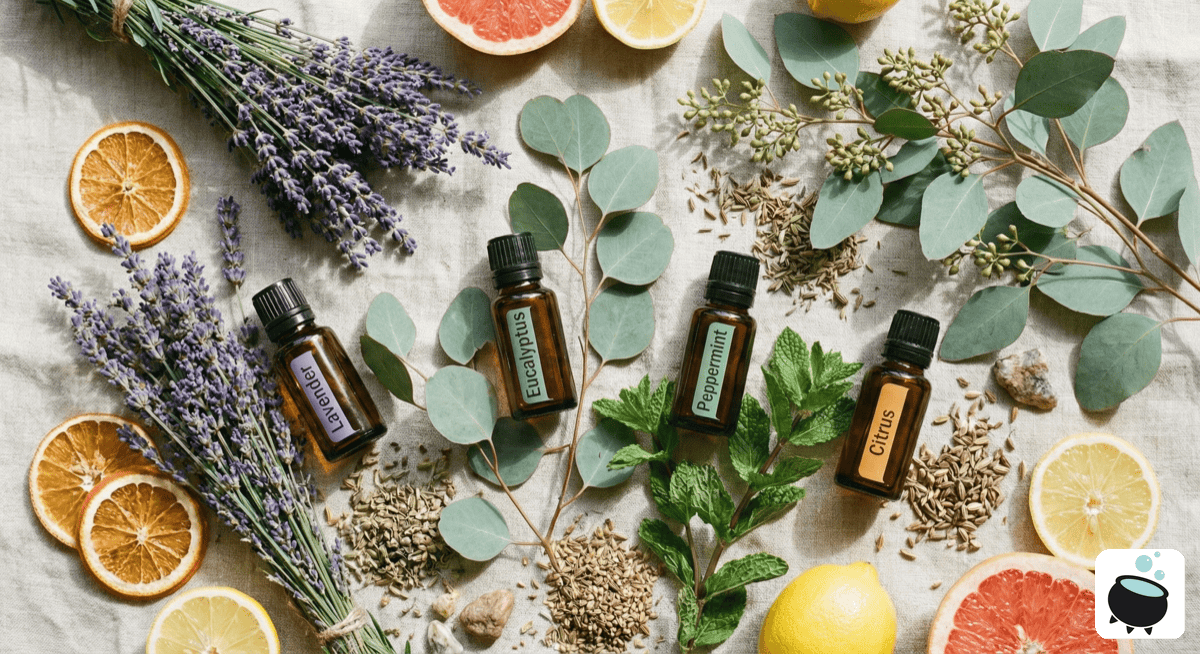
When using multiple essential oils, total combined usage should stay within safe limits.
Example Blend Calculation (32 oz oils, 4% total)
Target: 1.28 oz total essential oils
| Oil | % of Blend | Amount |
|---|---|---|
| Lavender | 50% | 0.64 oz |
| Cedarwood | 30% | 0.38 oz |
| Peppermint | 20% | 0.26 oz |
| Total | 100% | 1.28 oz |
Checking Individual Limits
Ensure each oil in your blend doesn't exceed its individual maximum:
- Lavender at 0.64 oz in 32 oz = 2% (well under limit)
- Cedarwood at 0.38 oz in 32 oz = 1.2% (safe)
- Peppermint at 0.26 oz in 32 oz = 0.8% (safe)
Essential Oil Usage Chart
Quick reference for common batch sizes at 4% usage:
| Oil Weight | EO at 3% | EO at 4% | EO at 5% |
|---|---|---|---|
| 16 oz | 0.48 oz | 0.64 oz | 0.80 oz |
| 24 oz | 0.72 oz | 0.96 oz | 1.20 oz |
| 32 oz | 0.96 oz | 1.28 oz | 1.60 oz |
| 48 oz | 1.44 oz | 1.92 oz | 2.40 oz |
| 64 oz | 1.92 oz | 2.56 oz | 3.20 oz |
Converting Between Units
Essential oils are often sold by milliliter:
1 oz ≈ 30 ml
1 ml ≈ 20 drops (varies by oil viscosity)
Example: Need 0.64 oz essential oil
- 0.64 oz × 30 = 19.2 ml
- 19.2 ml × 20 = 384 drops (approximate)
Better practice: Weigh essential oils instead of counting drops. Viscosity varies dramatically between oils.
Essential Oils vs. Fragrance Oils
| Factor | Essential Oils | Fragrance Oils |
|---|---|---|
| Source | Plant-derived | Synthetic/blended |
| Cost | Higher | Lower |
| Scent stability | May fade in soap | Typically stable |
| Usage rate | 3-5% typically | 5-7% typically |
| Safety data | Requires research | Supplier provides |
| Natural claims | Yes | No |
Many soap makers blend both, using essential oils for therapeutic claims and fragrance oils for complex scent profiles.
Tips for Essential Oil Success in Soap
Scent Anchoring
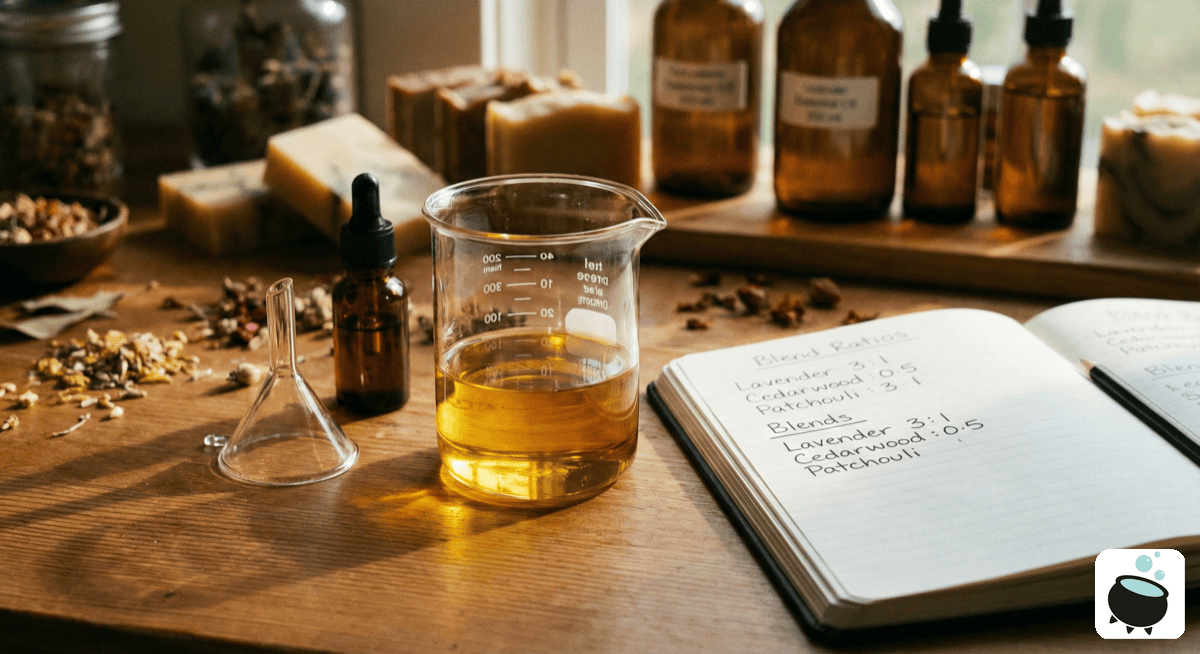
Essential oils fade faster in cold process soap. Use anchoring techniques:
- Add at light trace (not before)
- Blend with a "base note" oil (cedarwood, patchouli)
- Clay can help anchor scent
Temperature Sensitivity
Some essential oils flash off at high temperatures:
- Don't soap above 120°F for sensitive oils
- Add after cooling for hot process
- Citrus oils are particularly vulnerable
Proper Storage
Essential oils degrade with exposure to light, air, and heat:
- Store in dark glass bottles
- Keep in cool location
- Use within 1-2 years of opening
Documentation
Track which essential oils perform well in your recipes:
- Scent strength at 1 week, 1 month, 3 months
- Any acceleration or ricing
- Customer feedback on scent
Frequently Asked Questions
How much essential oil do I need per pound of soap?
At 4% usage rate: 1 lb (16 oz) oils × 0.04 = 0.64 oz essential oil. This is roughly 19 ml or about 380 drops (varies by oil).
Why doesn't my essential oil scent last in cold process soap?
Essential oils can fade during the curing process due to the alkaline environment. Citrus oils are especially prone to fading. Try adding at light trace, using anchoring base notes, or switching to fragrance oils for stable scent.
Can I use cooking essential oils in soap?
No. Food-grade essential oils are not formulated for skin application. Use cosmetic-grade essential oils from reputable suppliers with proper safety documentation.
Are essential oils safer than fragrance oils?
Not necessarily. "Natural" doesn't mean safe at any concentration. Many essential oils have strict usage limits due to sensitization or irritation potential. Both types require proper formulation.
How do I know if my essential oil is soap-safe?
Check your supplier's documentation for dermal limits and soap recommendations. Look up IFRA guidelines for the specific oil. When in doubt, use conservative amounts (2-3%).
Can I add more essential oil for stronger scent?
Only up to the safe limit for that oil. Beyond that, you risk skin irritation. If scent isn't strong enough at maximum safe levels, consider a different oil or fragrance oil alternative.
Conclusion
Essential oil calculation balances desired scent strength with skin safety. The formula is simple—oil weight times percentage—but understanding individual oil limits, creating balanced blends, and accounting for scent fade requires knowledge and tracking.
Soap making software can store essential oil maximum rates, automatically check your formulations against safety limits, and calculate blend amounts, reducing the risk of over-usage errors.
Always prioritize safety over scent strength. A beautifully scented soap that causes skin irritation will cost you customers and reputation.
Ready to Manage Your Recipes Like a Pro?
PotionHub helps soap and candle makers calculate lye, track batches, manage inventory, and grow their business.
Get PotionHub