How to Price Handmade Soap: Complete Pricing Guide for Soap Makers
Learn how to price handmade soap profitably. Includes cost calculation formulas, pricing strategies, and real examples to help you set prices that sell while making money.
Quick Answer
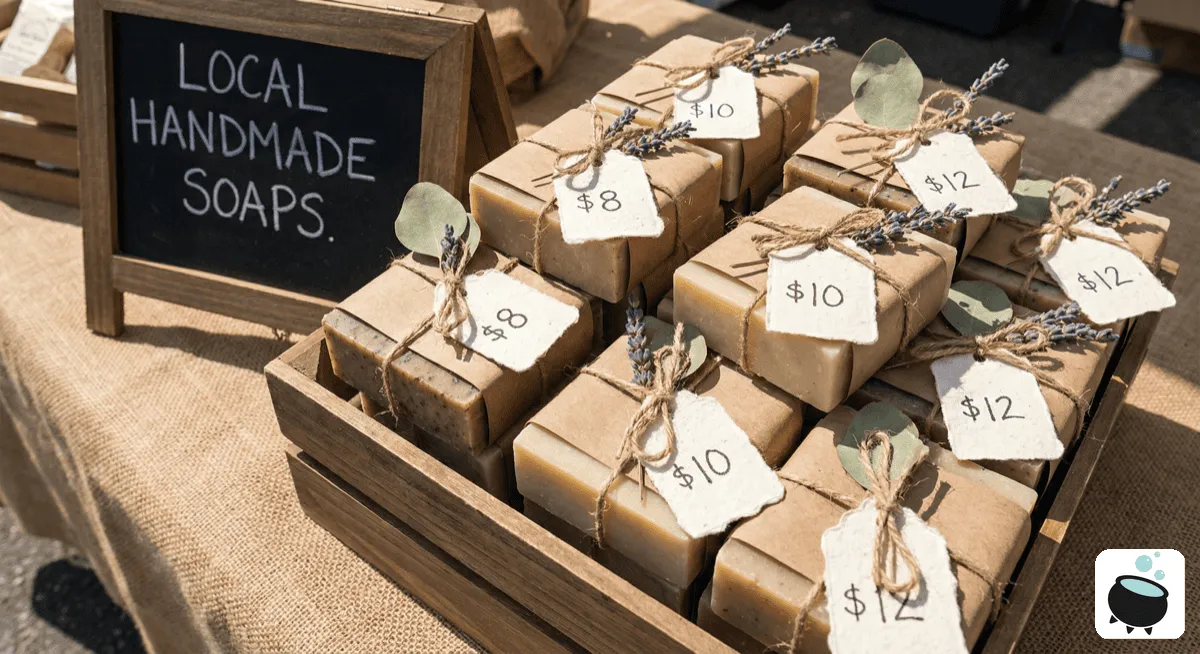
Price handmade soap using this formula: Wholesale Price = Total Cost × 2 (minimum); Retail Price = Wholesale × 2. Most handmade soap retails between $5-12 per bar. Calculate all costs first (materials, labor, packaging, overhead), then apply markup to ensure profitability.
Calculate instantly: Use our free soap cost calculator to find your true costs and get suggested retail prices with profit margins.
The Pricing Challenge for Soap Makers
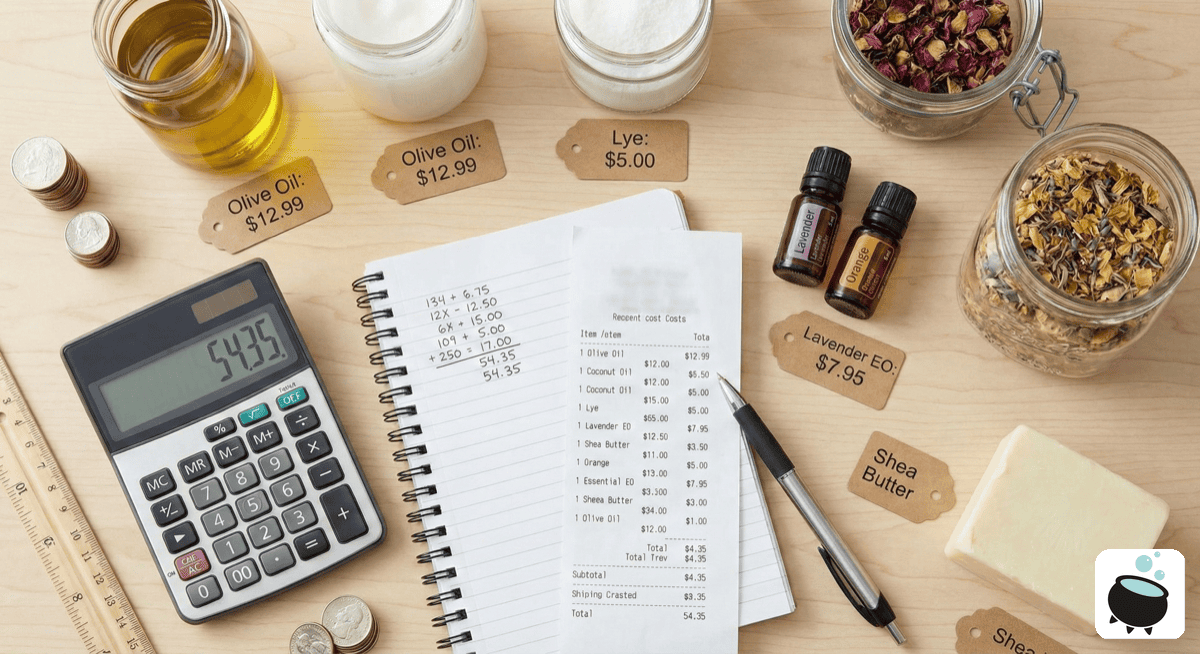
Many soap makers underprice their products. They see cheap commercial soap at $2-3 and feel guilty charging more. This is a mistake.
Handmade soap is a premium product. It contains quality ingredients, is made in small batches with care, and offers benefits mass-produced soap can't match. Your pricing should reflect this value.
Step 1: Calculate Your True Costs
Direct Material Costs
Track every ingredient in your recipe:
Example: Basic Soap Batch (makes 8 bars)
| Ingredient | Amount | Cost/Unit | Batch Cost |
|---|---|---|---|
| Olive Oil | 10 oz | $0.35/oz | $3.50 |
| Coconut Oil | 4 oz | $0.25/oz | $1.00 |
| Shea Butter | 2 oz | $0.50/oz | $1.00 |
| Lye | 2.2 oz | $0.15/oz | $0.33 |
| Water | 5.5 oz | — | $0.00 |
| Fragrance | 0.8 oz | $2.00/oz | $1.60 |
| Colorant | 0.5 tsp | $0.20/tsp | $0.10 |
| Total Materials | $7.53 |
Per bar: $7.53 ÷ 8 = $0.94
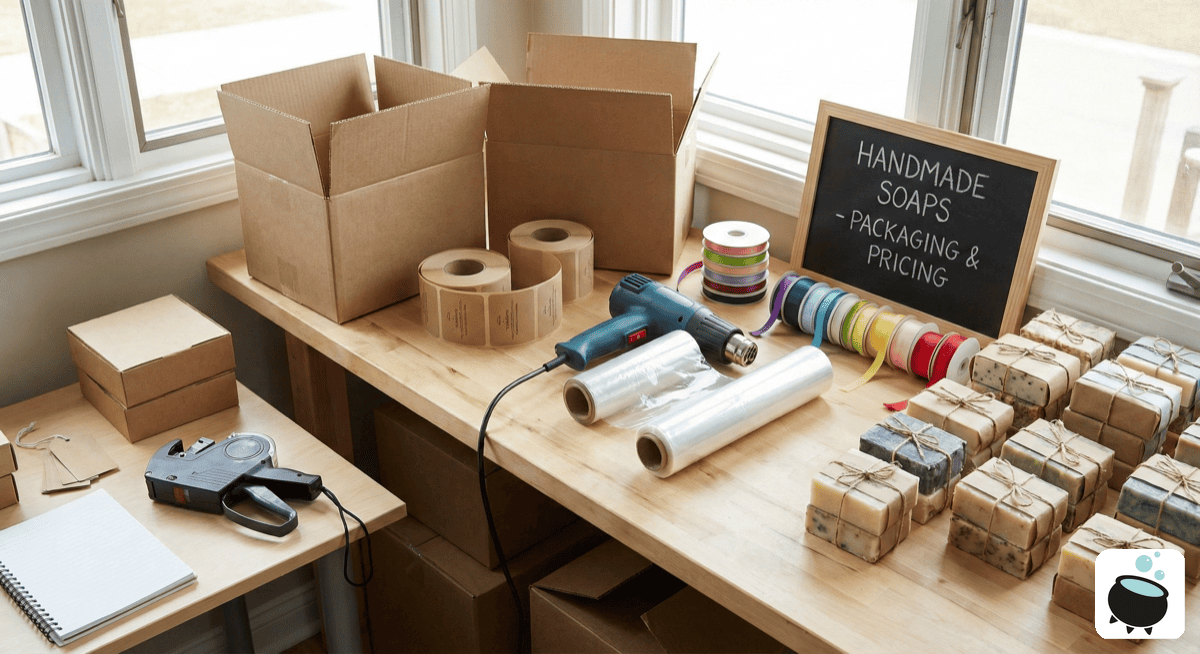
Packaging Costs
| Item | Cost Per Bar |
|---|---|
| Soap box | $0.35 |
| Label | $0.15 |
| Shrink band | $0.05 |
| Tissue paper | $0.02 |
| Total Packaging | $0.57 |
Labor Costs
Your time has value. Track hours spent:
| Task | Time | Rate | Cost |
|---|---|---|---|
| Making soap | 1 hour | $15/hr | $15.00 |
| Cutting/beveling | 0.5 hour | $15/hr | $7.50 |
| Packaging | 0.5 hour | $15/hr | $7.50 |
| Total Labor (8 bars) | $30.00 |
Per bar: $30.00 ÷ 8 = $3.75
Overhead Costs
Monthly costs spread across production:
| Expense | Monthly | Bars/Month | Per Bar |
|---|---|---|---|
| Website hosting | $15 | 100 | $0.15 |
| Market booth fees | $100 | 100 | $1.00 |
| Insurance | $50 | 100 | $0.50 |
| Utilities | $20 | 100 | $0.20 |
| Total Overhead | $1.85 |
Total Cost Per Bar
Materials:    $0.94
Packaging:    $0.57
Labor:        $3.75
Overhead:     $1.85
───────────────────
Total:        $7.11
Step 2: Apply Pricing Formula
The Standard Formula
Wholesale Price = Total Cost × 2 (minimum)Retail Price = Wholesale Price × 2
Using our example:
- Total cost: $7.11
- Wholesale: $7.11 × 2 = $14.22 (round to $14)
- Retail: $14 × 2 = $28
That seems high, right? Let's look at why.
Adjusting the Formula
Many soap makers use lower labor rates or don't sell wholesale. Here's a simplified approach:
Material Cost Only (with markup):
- Materials + Packaging: $1.51
- Retail markup: × 4 to 5
- Retail price: $6.04 to $7.55
This ignores labor and overhead but produces "market rate" prices. It's not sustainable long-term but is common for hobby sellers.
Finding Your Middle Ground
| Approach | Formula | Our Example Price |
|---|---|---|
| Hobby pricing | Materials × 4 | $3.76 |
| Semi-pro pricing | Materials × 5 + Labor | $8.70 |
| Professional pricing | Full cost × 2 | $14.22 |
| Premium/luxury | Full cost × 3 | $21.33 |
Step 3: Market Validation
Your calculated price must work in your market.
Research Competitors
Check prices at:
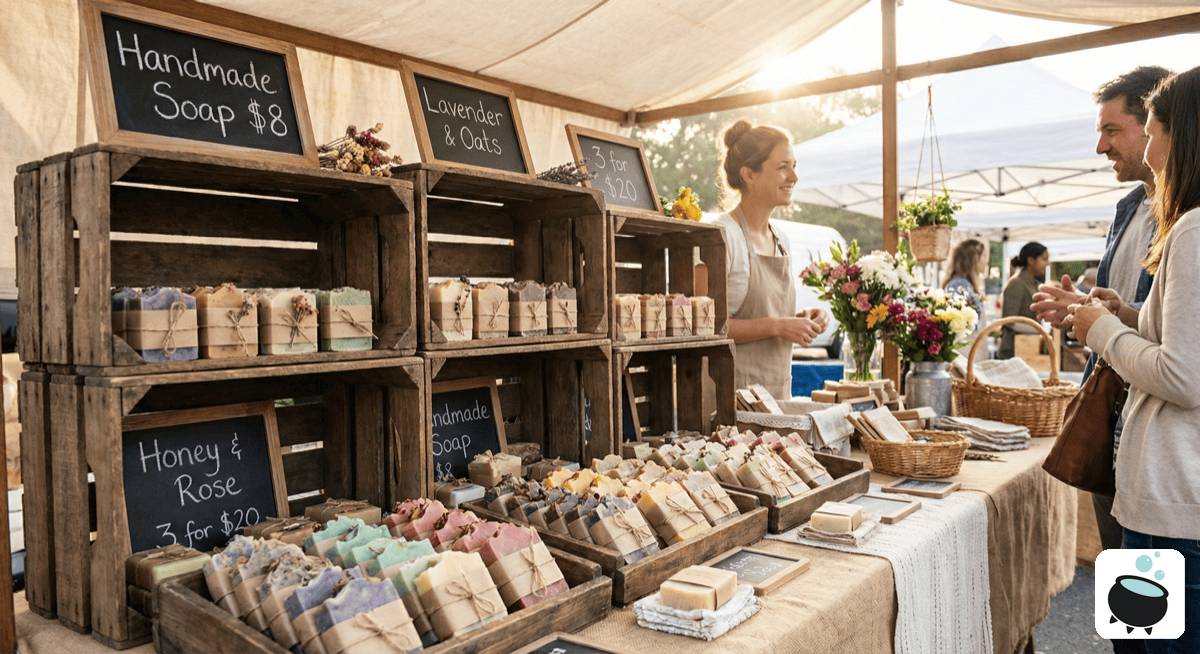
- Local craft fairs and farmers markets
- Etsy (search your product type)
- Similar boutique brands online
- Local gift shops
Typical Handmade Soap Price Ranges
| Market Segment | Price Range | Characteristics |
|---|---|---|
| Budget/hobby | $4-6 | Basic bars, local markets |
| Standard craft | $6-8 | Good quality, nice packaging |
| Premium craft | $8-12 | Specialty ingredients, design |
| Luxury/artisan | $12-20+ | Exceptional quality, branding |
Step 4: Pricing Strategies
Cost-Plus Pricing
Calculate all costs, add desired profit margin. Most straightforward but ignores market conditions.
Market-Based Pricing
Price based on what competitors charge. Risky if your costs are higher than average.
Value-Based Pricing
Price based on perceived value to customers. Works for unique or premium products.
Tiered Pricing
Offer different price points:
- Basic bars: $6
- Specialty bars: $8
- Luxury bars: $12
Pricing for Different Sales Channels
Direct Sales (Farmers Markets, Website)
You keep all revenue. Price at full retail.
- Our example: $8-10 per bar
Wholesale to Retailers
Retailers need 50% margin (keystone markup). Your wholesale price must be 50% of retail.
- If retail is $10, wholesale to shops: $5
- Your cost must be under $2.50 to profit
Consignment
You keep 60-70% of retail price. Price accordingly.
- If retail is $10, you receive $6-7
- Your cost must be under $3-3.50 to profit
Common Pricing Mistakes
Mistake 1: Ignoring Your Time
Your labor has value. Even at $10/hour, time spent adds up quickly.
Mistake 2: Forgetting Hidden Costs
Market fees, gas to markets, website costs, insurance—it all counts.
Mistake 3: Racing to the Bottom
Competing on price alone is unsustainable. Compete on quality, uniqueness, and service instead.
Mistake 4: Pricing by Weight Alone
A 5 oz bar with expensive ingredients may cost more than an 8 oz basic bar. Price by cost, not size.
Mistake 5: Emotional Pricing
"I'd never pay that much" isn't relevant. Your customers aren't you.
Raising Your Prices
If you've been underpricing:
Immediate Raises (Small)
- 10-15% increases rarely lose customers
- Frame as "prices adjusted to reflect quality ingredients"
Gradual Increases
- Raise prices annually
- Match inflation at minimum
New Product Premium
- Launch new products at correct pricing
- Gradually phase out underpriced items
Frequently Asked Questions
How much should I charge for a bar of handmade soap?
Most handmade soap retails between $5-12 per bar, depending on ingredients, size, and market positioning. Calculate your actual costs and apply appropriate markup rather than copying competitors' prices.
What profit margin should I target for handmade soap?
Target minimum 50% gross margin on materials for sustainability. Ideally, your retail price should be 3-4× your material costs, leaving room for labor, overhead, and profit.
Should I charge the same price at farmers markets and online?
Generally yes—consistent pricing prevents customer confusion. However, you might offer farmers market "show specials" or online subscription discounts.
How do I price gift sets and bundles?
Price bundles 10-15% below the sum of individual items. This encourages bundle purchases while maintaining profitability.
What if my prices are higher than competitors?
Differentiate through quality, ingredients, story, and service. Some customers specifically want premium products and will pay more.
How often should I review my prices?
Review annually at minimum, and immediately when ingredient costs rise significantly. Many soap makers underadjust for inflation.
Conclusion
Pricing handmade soap requires honest cost calculation and courage to charge what you're worth. Too many soap makers underprice, work for free, and eventually burn out.
Track every cost—materials, packaging, labor, and overhead. Apply markup that ensures profitability. Validate against your market. Then confidently price your products to reflect their true value.
Soap making software can help by tracking costs per batch and calculating per-bar costs automatically, removing the guesswork from pricing.
Ready to Manage Your Recipes Like a Pro?
PotionHub helps soap and candle makers calculate lye, track batches, manage inventory, and grow their business.
Get PotionHub