Lye Safety Guide: Essential Precautions for Soap Makers
Learn essential lye safety for soap making. Covers proper handling, protective equipment, emergency procedures, and storage guidelines for sodium hydroxide and potassium hydroxide.
Quick Answer
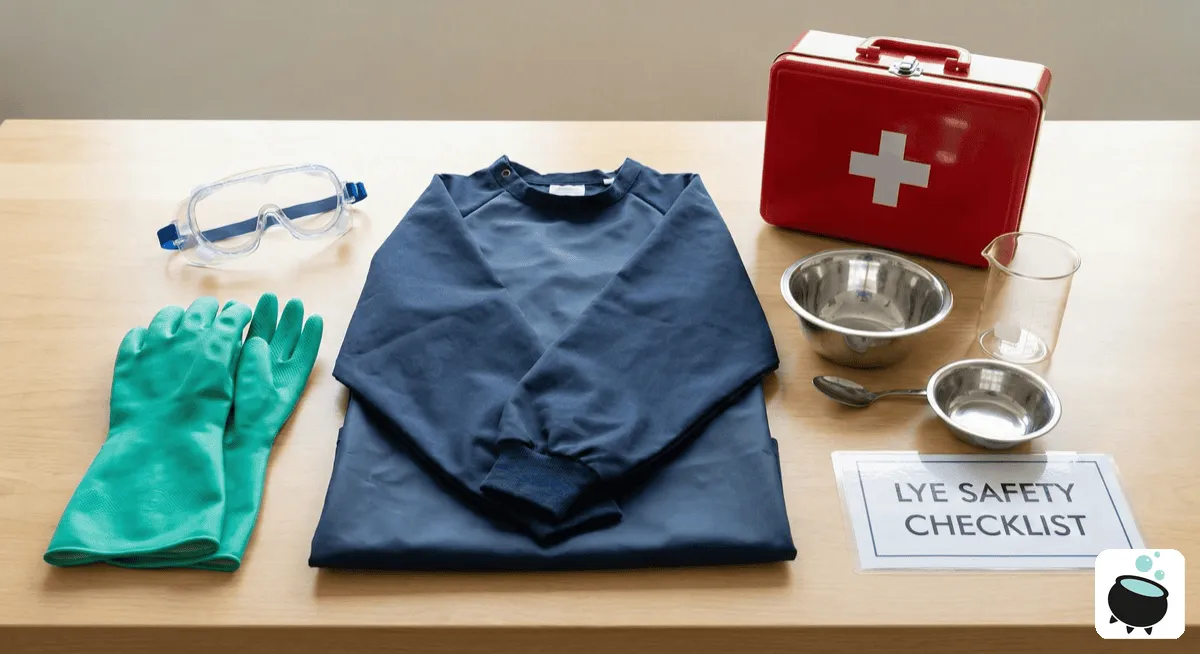
Lye (sodium hydroxide) is caustic and requires safety gear: goggles (not glasses), gloves, long sleeves. Always add lye to water (never reverse). Work in ventilated areas. Have vinegar water nearby for skin contact. Store in airtight containers away from children and pets. With proper precautions, lye is safely handled by thousands of soap makers daily.
Understanding Lye's Risks
What Makes Lye Dangerous
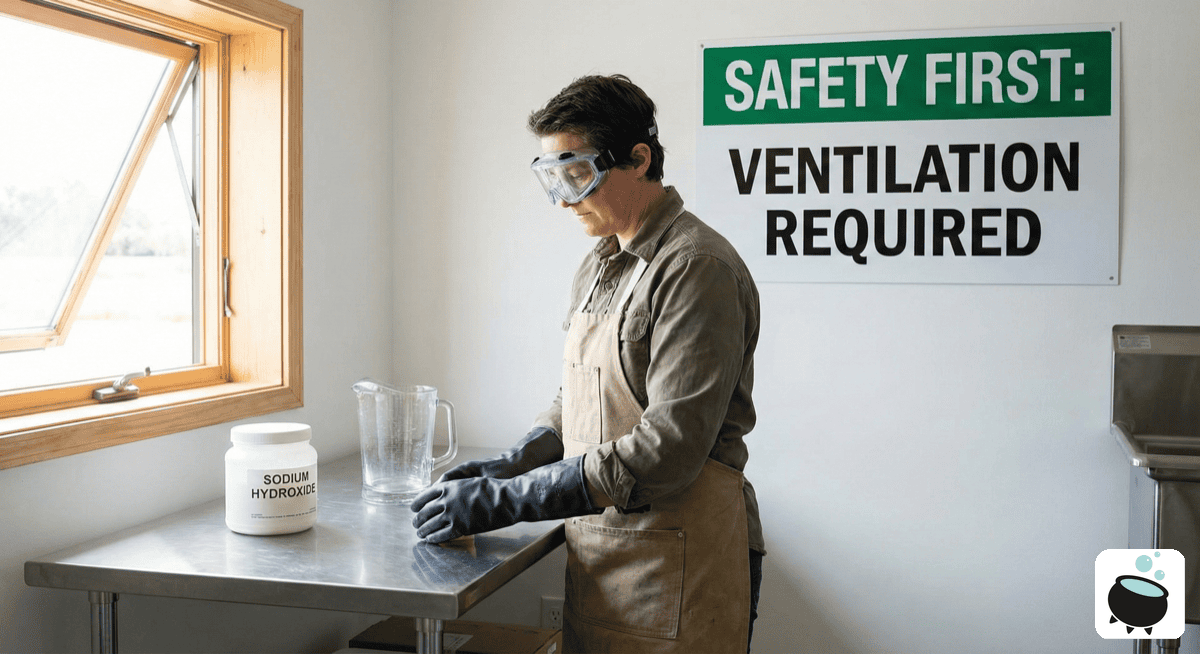
Lye (NaOH for bar soap, KOH for liquid soap) is a strong alkaline:
- pH of 13-14 (extremely basic)
- Causes chemical burns on contact with skin
- Generates heat when mixed with water
- Releases fumes during mixing
- Corrosive to many materials
Real But Manageable Risk
Yes, lye is hazardous. But thousands of soap makers safely handle it daily because:
- Proper equipment is readily available
- Procedures are well-established
- Risks are predictable and manageable
- Finished soap contains no free lye
Don't be afraid of lye—respect it and handle it properly.
Required Safety Equipment
Essential Gear
| Equipment | Why It's Needed | Specifications |
|---|---|---|
| Safety goggles | Protect eyes from splashes and fumes | Full seal, not regular glasses |
| Chemical-resistant gloves | Protect hands from burns | Nitrile or rubber, not latex |
| Long sleeves | Protect arms | Tight cuffs preferred |
| Closed-toe shoes | Protect feet from spills | No sandals |
| Long pants | Protect legs | Not shorts |
Strongly Recommended
| Equipment | Why It's Helpful |
|---|---|
| Apron | Additional splash protection |
| Face shield | Extra eye/face protection |
| Respirator mask | For enclosed spaces |
| First aid kit | Ready for emergencies |
Workspace Requirements
- Well-ventilated area (open window, fan, or outdoors)
- Clear, uncluttered work surface
- Heat-resistant container for mixing
- Cold water source nearby
- Stable surface (prevent tipping)
Proper Lye Handling Procedures
The Golden Rule
Always add lye TO water—never water to lye.
Why? Adding water to lye can cause violent reactions:
- Boiling
- Splashing
- Steam explosions
Memory trick: "Snow falls on the lake" (lye powder onto water)
Step-by-Step Safe Lye Mixing
- Prepare workspace
- Put on all safety gear
- Open windows or turn on ventilation
- Clear area of distractions (pets, children)
- Measure water
- Use room temperature or cold distilled water
- Pour into heat-safe container (not glass)
- Stainless steel, polypropylene, or HDPE work well
- Measure lye
- Open container away from face
- Use dry measuring tools
- Work quickly to minimize air exposure
- Combine carefully
- Slowly pour lye into water
- Pour in small amounts
- Stir gently with heat-safe utensil
- Keep face away from container
- Allow to cool
- Mixture will heat to 180-200 degrees F
- Let cool to recipe temperature
- Keep in safe location while cooling
What to Expect During Mixing
| Observation | Normal? | Action |
|---|---|---|
| Heat generation | Yes | Expected—container will be very hot |
| Fumes/steam | Yes | Work in ventilated area, don't breathe |
| Solution turns clear | Yes | Lye is fully dissolved |
| Crystals at bottom | No | Stir more until dissolved |
| Violent bubbling | No | Added too fast; step back |
Emergency Procedures
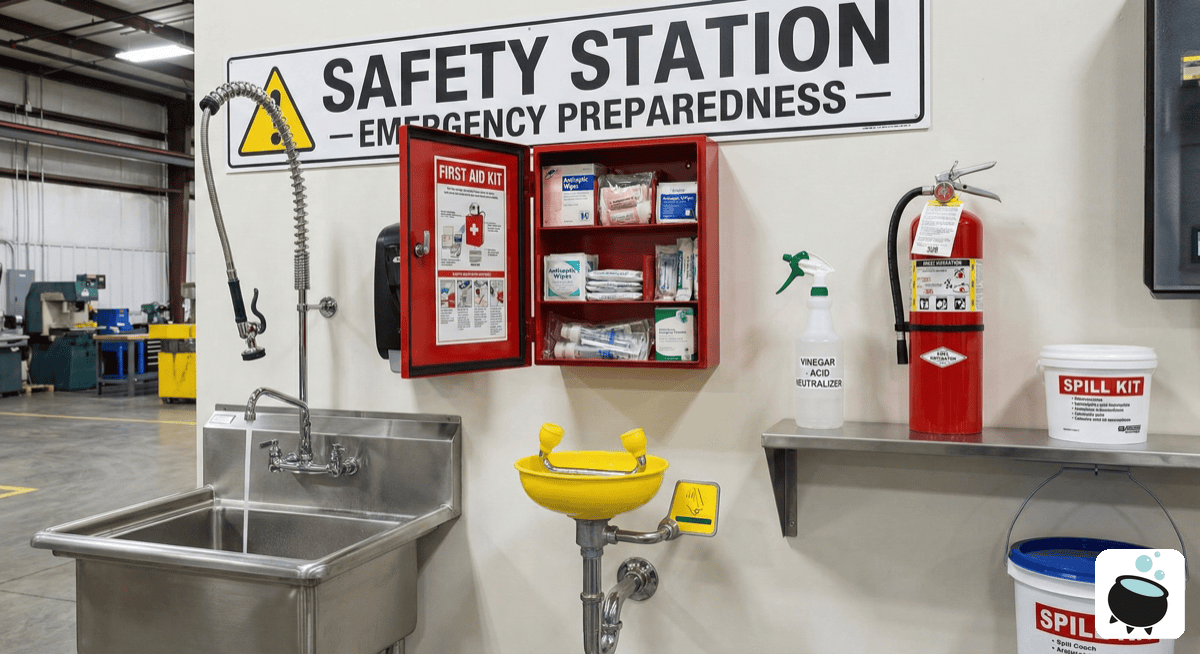
Lye on Skin
Immediate action:
- Flush with lukewarm running water for 15-20 minutes
- Remove contaminated clothing while flushing
- Do not rub the affected area
- Seek medical attention for serious burns
Do NOT use vinegar to neutralize on skin—the acid-base reaction creates additional heat and can worsen burns. Water dilution is the correct response.
Lye in Eyes
Immediate action:
- Flush with lukewarm water for 20+ minutes
- Hold eyelids open during flushing
- Remove contact lenses if present
- Seek immediate medical attention
Eye exposure is a medical emergency. Don't delay professional care.
Lye Spill
For small spills:
- Ventilate the area
- Neutralize with vinegar (for surfaces, not skin)
- Clean with paper towels (dispose properly)
- Wash area with water
For large spills:
- Evacuate the area
- Ventilate thoroughly
- Call professional cleanup if needed
- Don't attempt to clean without proper protection
Lye Ingestion
Immediate action:
- Call Poison Control immediately
- Do NOT induce vomiting
- Do not give anything by mouth unless directed
- Seek emergency medical care
Safe Lye Storage
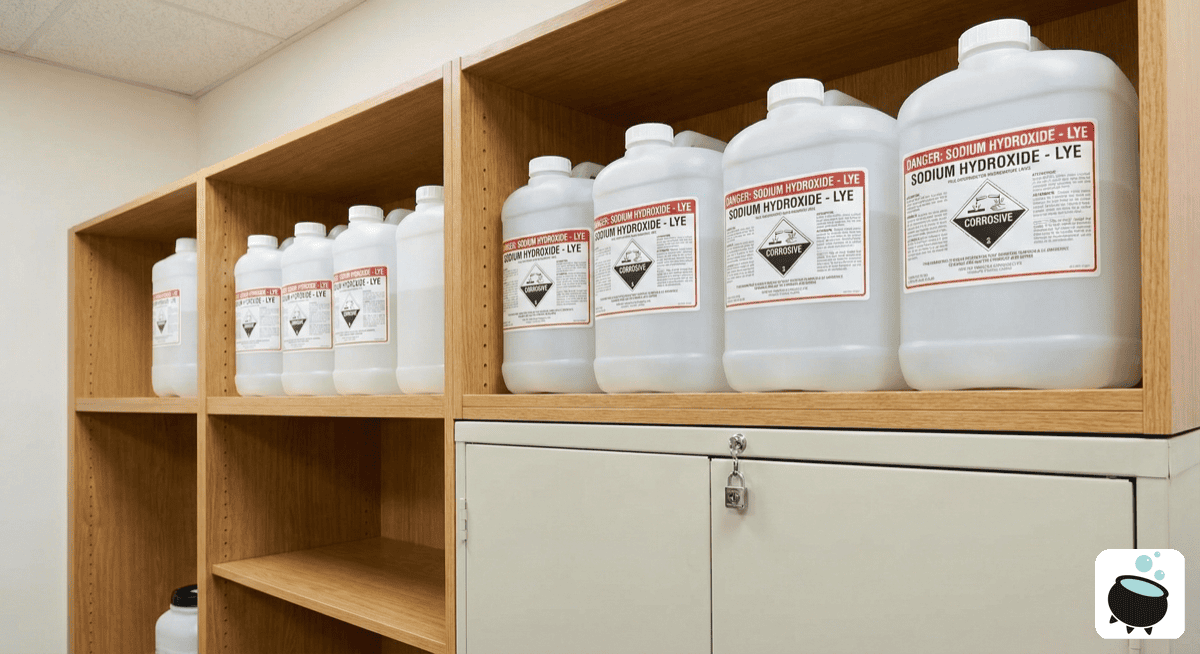
Storage Requirements
| Factor | Requirement |
|---|---|
| Container | Airtight, clearly labeled |
| Location | Cool, dry place |
| Access | Locked or out of reach of children/pets |
| Separation | Away from acids, metals, food |
| Moisture | Keep completely dry (lye absorbs water) |
Container Guidelines
Good containers:
- Original packaging (if resealable)
- HDPE plastic containers
- Glass with plastic lid (not rubber)
Avoid:
- Metal containers (corrosion)
- Rubber-sealed containers (deterioration)
- Clear containers in sunlight
Shelf Life
Properly stored lye lasts indefinitely. However:
- Lye that has absorbed moisture will clump
- Clumped lye still works but is harder to measure
- Keep container sealed immediately after use
Working With Children and Pets
When Children Are Present
- Make soap only when children are not in the workspace
- Store all supplies in locked or high cabinets
- Never leave lye solution unattended
- Clean up completely before children have access
Pet Safety
- Keep pets out of workspace during soap making
- Lye fumes can irritate animal respiratory systems
- Pets may knock over containers
- Store supplies where pets cannot reach
Safe Materials for Lye
Lye-Safe Materials
| Material | Lye Safe? | Notes |
|---|---|---|
| Stainless steel | Yes | Excellent for mixing |
| HDPE plastic | Yes | Common for containers |
| Polypropylene | Yes | Heat resistant |
| Silicone | Yes | Good for utensils, molds |
| Tempered glass | Caution | Can break from thermal shock |
Materials to Avoid
| Material | Why Avoid |
|---|---|
| Aluminum | Reacts violently with lye |
| Copper | Corrosive reaction |
| Zinc | Corrodes and contaminates |
| Tin | Corrodes |
| Regular glass | Can shatter from heat |
| Wood | Absorbs lye, degrades |
Lye Purity Considerations
Standard Purity
Most soap-making lye is 97-99% pure. The 1-3% impurity is:
- Usually water absorbed during packaging
- Accounted for in standard SAP calculations
- Not a safety concern
Checking Your Lye
If lye has absorbed significant moisture:
- It will clump or form hard chunks
- It's still usable but harder to measure
- Break up chunks carefully (wear protection)
- Consider fresh lye for accurate measurements
Frequently Asked Questions
How long do lye burns take to show?
Lye burns can be delayed—you may not feel it immediately. Skin might feel slippery (that's saponification of skin oils). Rinse immediately if lye contacts skin, even if you don't feel burning yet.
Can I make soap without handling lye?
Technically, you can use melt-and-pour soap bases (pre-made). But all real soap from scratch requires lye. There's no substitute—the chemistry requires an alkali.
Is it safe to make soap indoors?
Yes, with proper ventilation. Open windows, use a fan to direct fumes away, or work under a range hood. Many soap makers work indoors without problems.
What's the difference between NaOH and KOH safety?
Both require the same precautions. KOH (potassium hydroxide) is actually more caustic by weight, so handle equally carefully.
Can lye fumes hurt me?
Brief exposure during mixing typically causes minor irritation (stinging eyes, scratchy throat). Extended exposure or confined spaces can be more serious. Always ventilate.
How do I dispose of old lye solution?
Small amounts can be neutralized with acid (vinegar) and flushed with lots of water. Large amounts should be handled according to local regulations. Or, just make soap with it.
Conclusion
Lye is a hazardous material that requires respect and proper handling. But with appropriate safety equipment, correct procedures, and common sense, thousands of soap makers work with it safely every day.
The key points:
- Always wear protective equipment
- Add lye to water, never reverse
- Work in ventilated areas
- Know emergency procedures
- Store properly
Don't let fear of lye stop you from soap making. Learn the safety procedures, follow them consistently, and enjoy creating handmade soap with confidence.
Ready to Manage Your Recipes Like a Pro?
PotionHub helps soap and candle makers calculate lye, track batches, manage inventory, and grow their business.
Get PotionHub