Soap Batch Tracking: Why and How to Document Every Batch
Learn how to track soap batches professionally. Includes what information to record, tracking systems, and why batch documentation matters for quality control and business growth.

Quick Answer
Batch tracking means recording detailed information about every soap batch you make: recipe used, date, ingredients (including lot numbers), process notes, and outcomes. This enables quality control, troubleshooting, regulatory compliance, and customer service. Use batch numbers like "2024-001" for easy reference.
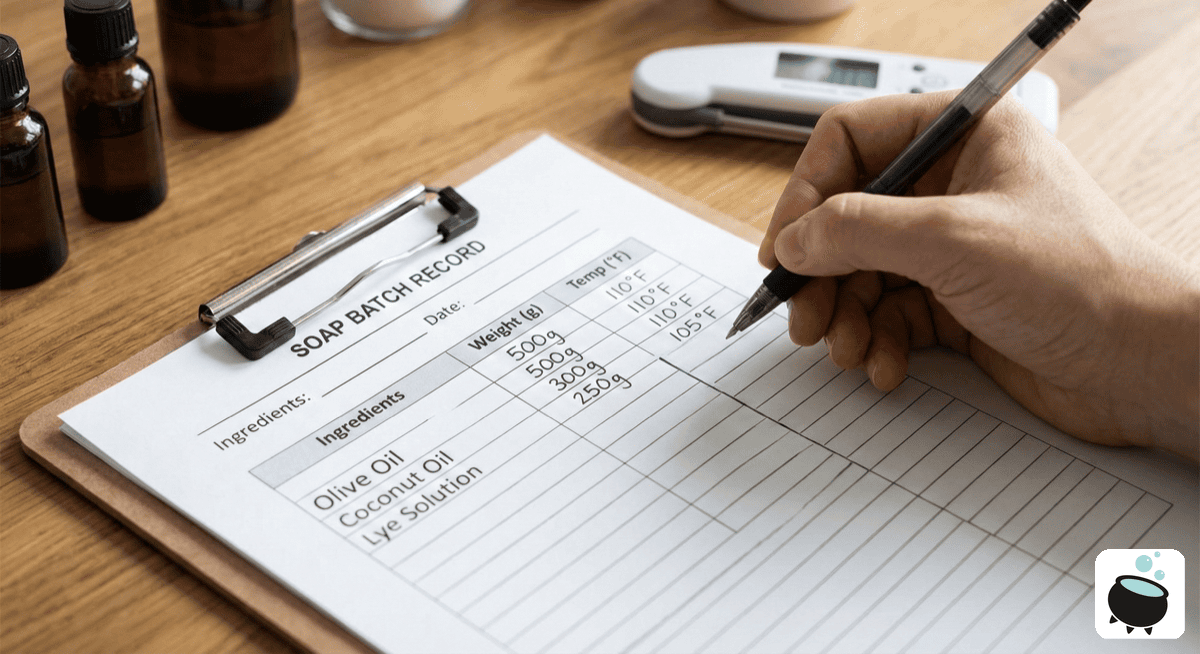
Why Batch Tracking Matters
Every professional soap maker tracks batches. Here's why:
Quality Control
When something goes wrong—DOS (dreaded orange spots), acceleration, separation—batch records help identify the cause. Was it a specific oil lot? A fragrance? Temperature issue?
Reproducibility
"This batch turned out amazing!" But can you recreate it? Without records, that perfect batch might never happen again.
Customer Service
When a customer asks about their soap (allergens, ingredients, when it was made), you can provide answers confidently.
Regulatory Compliance
Many jurisdictions require product traceability. Batch records prove due diligence and enable recalls if ever necessary.
Business Intelligence
Which recipes sell best? Which fragrances do customers reorder? Batch data reveals patterns that improve your business.
What to Track in Each Batch
Essential Information
| Field | Example | Why It Matters |
|---|---|---|
| Batch Number | 2024-001 | Unique identifier |
| Date Made | 2024-03-15 | Production timeline |
| Recipe Name | Lavender Dreams | Which formula |
| Recipe Version | v2.1 | Track modifications |
| Total Oil Weight | 32 oz | Batch size |
| Number of Bars | 8 | Production output |
Ingredient Details
| Field | Example | Why It Matters |
|---|---|---|
| Oil/Butter | Olive Oil | What's in the soap |
| Brand/Supplier | Bramble Berry | Track supplier quality |
| Lot Number | LOT-240301 | Trace specific purchases |
| Amount Used | 16 oz | Verify measurements |
| Expiration Date | 2025-06 | Shelf life awareness |
Process Notes
| Field | Example | Why It Matters |
|---|---|---|
| Lye Temperature | 105°F | Affects trace time |
| Oil Temperature | 110°F | Affects trace time |
| Trace Time | 3 minutes | Process consistency |
| Pour Temperature | 95°F | Affects gel phase |
| Additives at Trace | 1 oz FO at light trace | Technique documentation |
| Gel Phase | Yes, full gel | Affects color/texture |
| Unmold Time | 24 hours | Hardness indicator |
Outcome Tracking
| Field | Example | Why It Matters |
|---|---|---|
| Final Weight | 35.2 oz | Yield tracking |
| pH (if tested) | 9.2 | Safety check |
| Appearance | Smooth, amber color | Quality check |
| Fragrance Retention | Strong at 2 weeks | Scent performance |
| Cure Date | 2024-04-29 | Ready-to-sell date |
| Issues | Slight acceleration | Learn from problems |
Batch Numbering Systems
Simple Sequential
- 001, 002, 003...
- Easy but tells you nothing about date
Date-Based
- 2024-001, 2024-002...
- Shows year, resets annually
- Example: 2024-047 = 47th batch of 2024
Date-Code
- 240315-A, 240315-B...
- Shows exact date, A/B for multiple batches same day
- Example: 240315-A = First batch on March 15, 2024
Product-Coded
- LAV-2024-001
- Includes product/recipe identifier
- Example: LAV = Lavender recipe
Recommended: Date-Based with Product Code
- Format: PROD-YYMMDD-#
- Example: LAVDR-240315-1 = Lavender Dreams, March 15, 2024, Batch 1
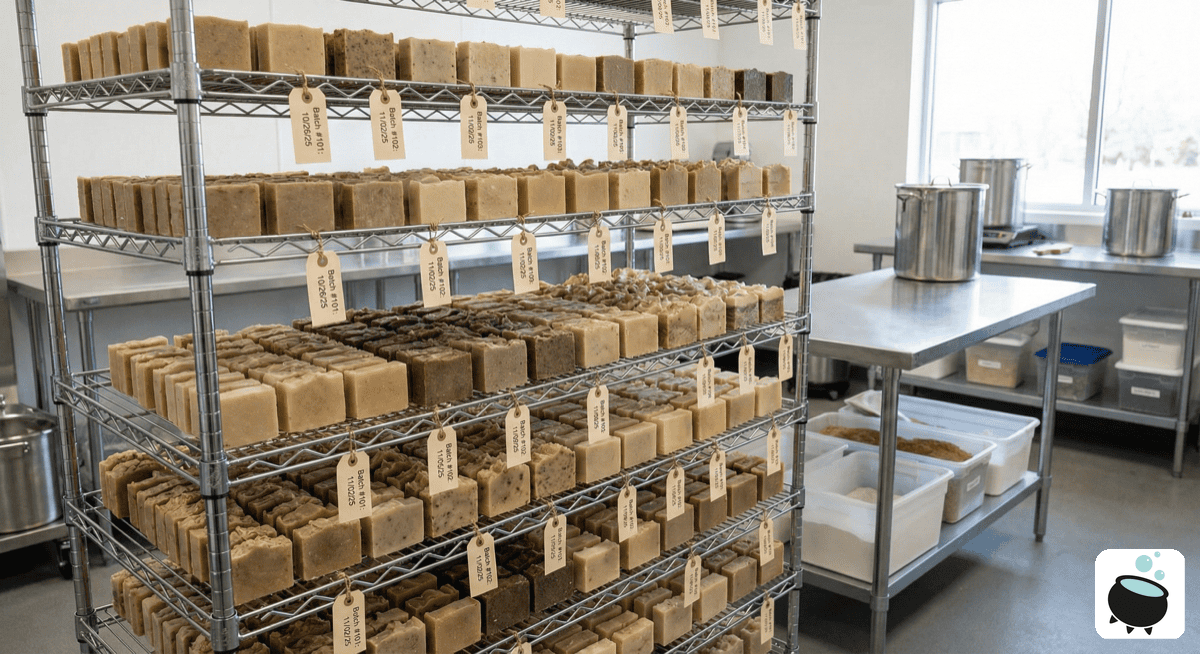
Tracking Methods
Paper Log Book
Pros:
- No technology required
- Always accessible
- Simple to start
Cons:
- Difficult to search
- Easy to lose
- No calculations
- Handwriting issues
- Can't backup easily
Spreadsheet (Excel/Google Sheets)
Pros:
- Searchable
- Sortable
- Calculable
- Free or cheap
- Shareable
Cons:
- Manual entry
- Can become complex
- Not linked to recipes
- Requires discipline
Dedicated Software
Pros:
- Integrated with recipes
- Auto-calculates
- Linked to inventory
- Professional reports
- Designed for soap making
Cons:
- Has a cost
- Learning curve
- Requires consistent use
Batch Tracking Template
Here's a minimal template to start:
BATCH RECORD
═══════════════════════════════════════

Batch #: _____________  Date: ___________
Recipe: _____________  Version: _________

OILS & BUTTERS
─────────────────────────────────────────
□ _____________ ____oz  Lot#: __________
□ _____________ ____oz  Lot#: __________
□ _____________ ____oz  Lot#: __________
□ _____________ ____oz  Lot#: __________

CHEMICALS
─────────────────────────────────────────
Lye (NaOH): ____oz  Purity: ____%
Water: ____oz

ADDITIVES
─────────────────────────────────────────
Fragrance: _____________ ____oz
Colorant: _____________ ____tsp
Other: _____________

PROCESS NOTES
─────────────────────────────────────────
Lye Temp: ____°F    Oil Temp: ____°F
Trace Time: ____min
Gel Phase: □ Yes □ No □ Partial
Unmold: ____hours

OUTCOMES
─────────────────────────────────────────
Bars Made: ____  Avg Weight: ____oz
Cure Date: ____________
Issues: _________________________________
Notes: __________________________________
Using Batch Records for Troubleshooting
Scenario: Rancidity in Some Bars
Pull batch records for affected batches:
- Same oil supplier lot number?
- Same manufacture date range?
- Same fragrance?
- Storage conditions similar?
Compare to unaffected batches to isolate the variable.
Scenario: Inconsistent Trace Times
Review recent batches:
- Temperature variations?
- Different oil lots?
- New fragrance added?
- Recipe modifications?
Patterns emerge when data is available.
Scenario: Customer Reaction Report
With batch tracking:
- Identify which batch customer received
- Pull complete ingredient list including lot numbers
- Check if that specific ingredient lot had issues
- Contact other customers with same batch if needed
Batch Tracking Best Practices
Record Immediately
Fill in details during soap making, not after. Memory fades quickly.
Be Specific
"Olive oil" isn't enough. "Pomace olive oil from Bulk Apothecary, LOT-240215" enables true traceability.
Track Everything
Even "perfect" batches deserve documentation. You'll want to replicate them.
Include Photos
Before and after photos help track appearance changes during cure.
Review Regularly
Monthly review of batch records reveals patterns in quality, timing, and popular products.
Backup Data
If digital, backup regularly. If paper, consider photographing pages.
Frequently Asked Questions
How long should I keep batch records?
Keep records for at least 3 years, longer if selling commercially. Some soap makers keep records indefinitely for recipe development reference.
Do I really need lot numbers for every ingredient?
For hobby use, it's optional. For selling, yes—it enables proper recalls and quality investigation.
Can I use one record for multiple identical batches made the same day?
Not recommended. Each batch can behave differently. Track separately for accurate troubleshooting.
What if I forget to record something during the process?
Note it was estimated. "Oil temp: ~110°F (estimated)" is better than nothing, but train yourself to record in real-time.
How do professional soap companies track batches?
They use comprehensive software systems that integrate recipes, inventory, production, and sales data. Everything links by batch number.
Should I track failed batches?
Absolutely. Failed batches often teach more than successful ones. Document what went wrong.
Conclusion
Batch tracking transforms soap making from memory-dependent guessing to professional production. Start simple—even a basic notebook is better than nothing—and expand your tracking as your operation grows.
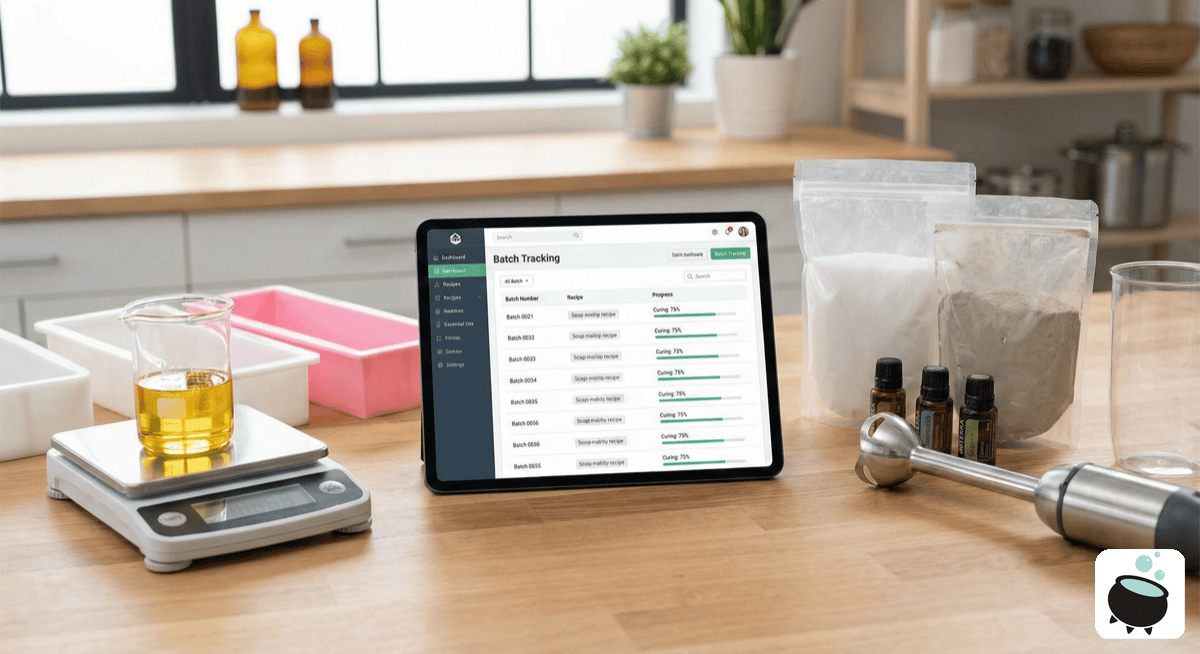
Dedicated soap making software automates much of batch tracking by linking recipes, inventory, and production records. When you make a batch, the software records ingredients used, deducts from inventory, and creates searchable batch history.
Whatever method you choose, consistent batch tracking is the foundation of professional soap making.
Ready to Manage Your Recipes Like a Pro?
PotionHub helps soap and candle makers calculate lye, track batches, manage inventory, and grow their business.
Get PotionHub