How to Color Soap: Complete Guide to Soap Colorants and Techniques
Learn which soap colorants work best for cold process, hot process, and melt and pour soap. Covers natural colorants, micas, oxides, usage rates, and common mistakes to avoid.
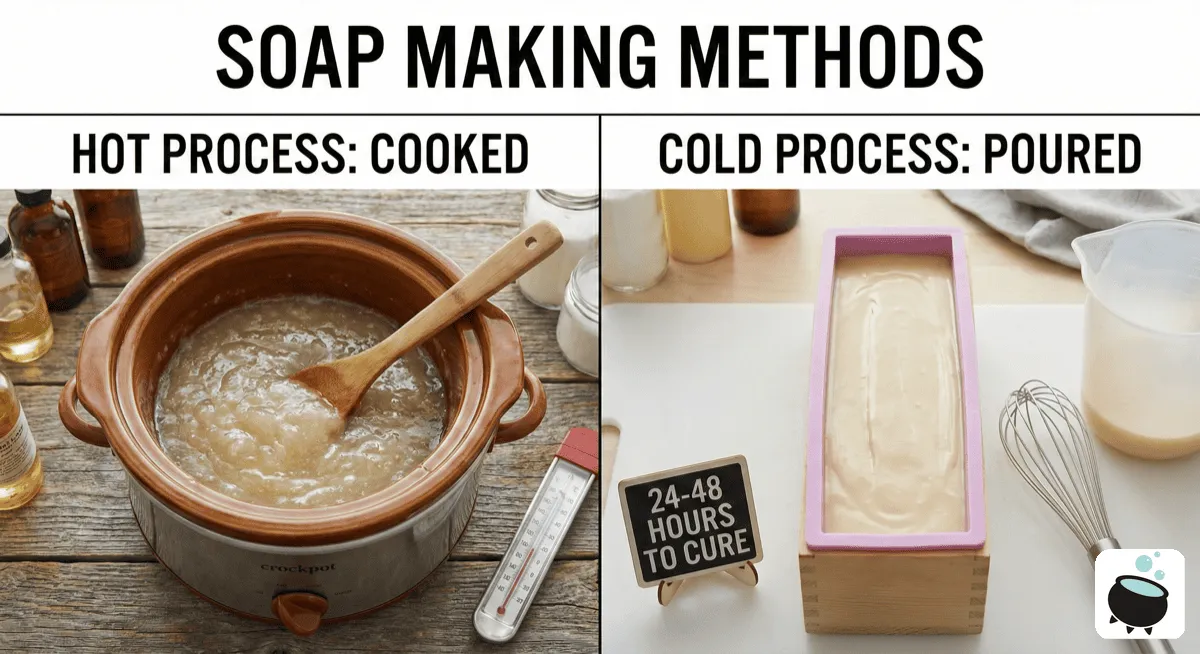
Quick Answer
The best soap colorants depend on your soap type. Cold process soap works well with micas, oxides, and some natural colorants. Hot process soap tolerates lab colors and micas better. Melt and pour soap accepts virtually all colorants. Start with 0.5-1 teaspoon per pound of oils for micas, adjust based on desired intensity. Always test colorants in small batches before committing to large quantities.
Need to calculate exact oil quantities for your soap recipe? Try our free lye calculator.

Why Choosing the Right Colorant Matters
Selecting the right colorant isn't just about aesthetics. It affects your soap's performance, safety, and stability. Some colorants migrate or bleed into other bars. Others oxidize or fade over time. Certain colorants interact with lye and oils, causing unexpected color shifts. Using incorrect amounts can stain skin or leave unpleasant residue.
Understanding your options helps you create vibrant, stable colors that look beautiful months after curing. It also prevents expensive batch failures and customer complaints about discoloration.
Types of Soap Colorants
Natural Colorants
Natural colorants come from plants, minerals, and spices. They appeal to consumers seeking clean ingredients. However, they're often less vibrant than synthetic options and prone to fading in soap.
Popular natural colorants include madder root (red-orange), indigo (blue), turmeric (golden yellow), activated charcoal (black-gray), spirulina (green-blue), and alkanet root (purple-pink). Some require special preparation like steeping or infusing into oils before adding to soap.
The main limitation: natural colorants often brown or muddy over time due to soap's alkaline environment. Plan for color shifts and communicate this to customers.
Micas
Mica is a naturally occurring mineral that creates shimmer and vibrant colors in soap. It's FDA-approved and safe for cosmetics. Micas work in all soap types and provide excellent color stability.
Soap-safe micas come in hundreds of colors: golds, silvers, holographic shades, and pastels. They're cosmetic-grade, meaning they're formulated to be colorfast and non-toxic. Unlike natural colorants, micas won't fade or shift significantly in cured soap.
Application is straightforward: disperse micas in a small amount of oils or glycerin before adding to soap batter. Dry micas clump and distribute unevenly.
Oxides & Pigments
Iron oxides and other mineral pigments provide earthy, natural-looking colors. They're synthetic but created through mineral processing, making them acceptable to many natural product consumers.
Common oxide colors include red oxide (rust-red), yellow oxide (ochre), brown oxide (chocolate), black oxide (deep charcoal), and chromium oxide (olive green). They're affordable, stable, and work beautifully in both cold and hot process soap.
Oxides are heat-stable and won't fade. Usage rates are low—typically 0.5-1 teaspoon per pound—making them economical.
Lab Colors (FD&C and Cosmetic Colorants)
Synthetic lab colors (also called FD&C dyes) offer the brightest, most intense hues. These are FDA-approved cosmetic colorants developed in laboratories.
Lab colors are problematic for soap because they're often water-based dyes. Lye and oils will cause separation and poor dispersion. They also migrate and bleed, especially in melt and pour soaps where they may seep into neighboring bars.
If you use lab colors, formulate them into soap-grade versions specifically engineered for saponification. These cost more but mix properly.
Clays
Clays like French green clay, kaolin, and bentonite add subtle colors while offering skincare benefits. They produce muted earth tones: greens, pinks, tans, and grays.
Clays suspend in soap without fully dissolving. They also add mild exfoliation. Usage rates range from 1-3 tablespoons per pound of oils. Higher amounts create gritty texture.
| Type | Best For | Typical Usage Rate | Pros | Cons |
|---|---|---|---|---|
| Natural Colorants | Artisan, natural-focused brands | Varies widely (1-3 tsp) | Clean ingredient list, unique | Fade over time, muddy in lye, inconsistent results |
| Micas | All soap types | 0.5-1 tsp per pound | Stable, vibrant, shimmer, many colors | Not "natural," requires dispersion |
| Oxides & Pigments | Cold/hot process | 0.5-1 tsp per pound | Stable, earthy, affordable, heat-stable | Limited color range |
| Lab Colors (soap-grade) | Melt and pour primarily | 0.25-0.5 tsp per pound | Brightest colors, intense shades | Migration, bleeding, expensive |
| Clays | Natural brands, exfoliation focus | 1-3 tbsp per pound | Skincare benefits, muted tones | Gritty texture, weak color |
How to Add Colorants to Soap
Method 1: Dispersing in Oil (Best for Most Colorants)
- Measure your colorant in a small cup
- Add a small amount of liquid oil (coconut, olive, or castor work well)
- Stir thoroughly until the colorant fully dissolves or suspends
- Add this mixture to your soap batter at trace
- Stir well for 1-2 minutes to distribute evenly
This method prevents clumping and ensures even color distribution.
Method 2: Blooming in Water (Natural Colorants)
- Steep natural colorant in hot water for 15-30 minutes
- Strain to remove solids
- Add the cooled colored water to your soap batter
- Stir well to incorporate
Some color may be left in the water, so intensity varies. Test this method before large batches.
Method 3: Direct Addition (Micas Only)
For experienced soapers, micas can be mixed directly into a small portion of oils, then added to batter. This requires thorough mixing to prevent streaking.
Method 4: Layering Technique
For striped or ombré effects:
- Prepare 2-3 separate portions of soap batter at light to medium trace
- Add different colorants to each portion
- Pour one color, allow it to partially set (1-2 minutes)
- Pour the second color on top at an angle
- Repeat for additional layers
Timing is critical. Pour too early and colors mix; too late and layers don't fuse.
Usage Rate Reference Chart
| Colorant | Recommended Rate Per Pound of Oils | Expected Color Result |
|---|---|---|
| Mica (light shades) | 0.5 tsp | Subtle shimmer, pastel |
| Mica (bold shades) | 1-1.5 tsp | Vibrant, saturated color |
| Iron Oxide Red | 0.5 tsp | Rich rust-red |
| Iron Oxide Yellow | 0.75 tsp | Golden ochre |
| Iron Oxide Brown | 0.5 tsp | Deep chocolate |
| Iron Oxide Black | 0.25-0.5 tsp | Dark charcoal (0.25 tsp is usually enough) |
| Chromium Oxide Green | 0.5 tsp | Muted olive green |
| Madder Root | 1-2 tsp | Burnt orange to rust (brews in oil first) |
| Indigo | 0.5-1 tsp | Blue-gray to deep blue |
| Turmeric | 1 tsp | Golden yellow (may brown slightly) |
| Activated Charcoal | 0.5-1 tsp | Black to dark gray |
| Spirulina | 1-2 tsp | Blue-green (fades significantly) |
| French Green Clay | 2-3 tbsp | Muted sage green |
| Lab Color (soap-grade) | 0.25-0.5 tsp | Bright, intense color |
Note: Start with lower amounts and increase gradually. It's easier to add more colorant than to dilute too-dark soap.
Natural Colorants Reference
| Ingredient | Color Produced | Usage Rate | Notes |
|---|---|---|---|
| Madder Root | Red-orange, burnt sienna | 1-2 tsp per pound | Infuse in oil 24+ hours before soap making; color shifts warm over time |
| Indigo | Blue to blue-gray | 0.5-1 tsp per pound | Requires careful mixing to avoid uneven distribution; use in layers for depth |
| Turmeric | Golden yellow to ochre | 1 tsp per pound | Will brown over 2-3 months due to lye; expect color shift |
| Activated Charcoal | Black to gray | 0.5-1 tsp per pound | Won't fade; mix thoroughly to prevent streaks |
| Spirulina | Blue-green, teal | 1-2 tsp per pound | Fades significantly in 1-2 months; best for natural-focused brands accepting impermanence |
| Alkanet Root | Purple-pink to mauve | 1-2 tsp per pound | Infuse in oil 24+ hours; fade to brown over months |
| Cocoa Powder | Chocolate brown | 1-2 tbsp per pound | Subtle color; often appears muddy; acts as mild additive |
| Matcha Powder | Pale green | 1-2 tsp per pound | Fades to olive-gray; use with indigo for stable green |
| Chlorophyll | Bright green | 0.5-1 tsp per pound | Very unstable; fades to olive-gray within weeks |
| Mica Blends | Varies (can mimic natural) | 0.5-1.5 tsp per pound | More stable than true natural colorants; marketed as natural-looking |
Common Colorant Mistakes
Mistake 1: Using Undispersed Colorants
Adding dry micas, oxides, or charcoal directly to soap batter causes clumping and streaky color. Always disperse in oil first.
Mistake 2: Trusting All Natural Colorants
Not all natural colorants work in soap. Some are water-soluble and won't incorporate properly. Others fade drastically. Test in small batches before committing large quantities.
Mistake 3: Using Lab Colors Without Soap-Grade Formulation
Standard cosmetic lab colors are water-based and will separate from soap batter. They'll also bleed and migrate. Only use lab colors formulated specifically for soap.
Mistake 4: Overloading Colorants
More colorant doesn't always equal better color. Excessive amounts can stain skin, create grittiness, or cause lye pockets that increase slipperiness. Follow recommended rates and adjust minimally.
Mistake 5: Ignoring Cure-Time Color Shifts
Many natural colorants and some oxides shift color during cure. Yellows brown, purples fade to mauve, greens become olive. Document initial color and track changes. Set customer expectations appropriately.
Mistake 6: Not Testing in Melt and Pour
Melt and pour soap is more transparent than cold process. A colorant's behavior in cold process won't match its appearance in MP soap. Always test separately before making large batches.
Mistake 7: Forgetting About Trace
Adding colorants at the wrong soap trace stage causes poor incorporation. Aim for light to medium trace—liquid enough for even distribution but thick enough to suspend particles.
Frequently Asked Questions
Q: Can I use food coloring in soap?
A: Regular food coloring is water-based and won't mix into soap's oil phase. It will separate and won't color the final product. Soap-safe colorants are necessary for proper incorporation.
Q: Will my soap colors fade in the sun?
A: Natural colorants fade significantly under UV exposure. Micas and oxides are much more light-stable. Store finished soaps in opaque packaging or away from direct sunlight to preserve color.
Q: Can I combine colorants?
A: Yes. Blending micas creates custom colors. Mixing oxides produces earth-tone variations. However, combining natural colorants with synthetic ones can cause unpredictable results. Test combinations in small batches first.
Q: How do I get a vibrant purple soap?
A: Combine indigo (blue) with madder root or red oxide (red) in the correct ratio. Start with equal parts and adjust to preference. Synthetic lab colors offer the most intense purples if using soap-safe formulations.
Q: Is mica safe to use in soap?
A: Cosmetic-grade mica is FDA-approved and safe for soap. Ensure you purchase cosmetic-grade (not industrial-grade) mica from reputable suppliers. Some consumers prefer the mica-free aesthetic, so clarify ingredients with your audience.
Q: What's the difference between mica and pigment?
A: Micas are naturally occurring minerals that create shimmer due to their layered structure. Pigments (like oxides) are opaque and don't shine. Both are stable in soap, but micas add visual depth and movement that pigments don't provide.
Q: Can I use essential oils to color soap?
A: No. Essential oils contain fragrance compounds but don't contribute color. Some herbs (like madder or indigo steeped in oil) color soap, but the essential oils themselves don't.
Q: How do I achieve swirled colors?
A: Divide soap batter into portions, add different colorants to each, then pour into molds in a specific pattern. Use tools like toothpicks, skewers, or a spatula to drag colors back and forth, creating visual patterns. Timing is crucial—all portions must be at similar trace levels.
Conclusion
Choosing the right soap colorant transforms your soap from plain to stunning. Whether you prioritize natural ingredients, color stability, or vibrancy, there's a colorant solution for your needs. Start with micas and oxides if you're beginning—they're forgiving, stable, and offer endless color possibilities.
As your soap business grows, recipe management becomes critical. PotionHub simplifies tracking colorant ratios, testing notes, and batch variations in your recipes. Experiment confidently, document results, and refine your signature colors.
Ready to level up your soap-making process? Explore PotionHub's tools for managing complex formulas and tracking your colorant experiments.
Try These Free Tools
Skip the Manual Math
PotionHub calculates lye, tracks batches, manages inventory, and scales recipes for you. Free during beta — no credit card required.
Get PotionHub Free