Soap Making Inventory Management: Track Supplies Like a Pro
Learn how to manage soap making inventory effectively. Track ingredients, supplies, and finished products to reduce waste, control costs, and never run out of key supplies.
Quick Answer
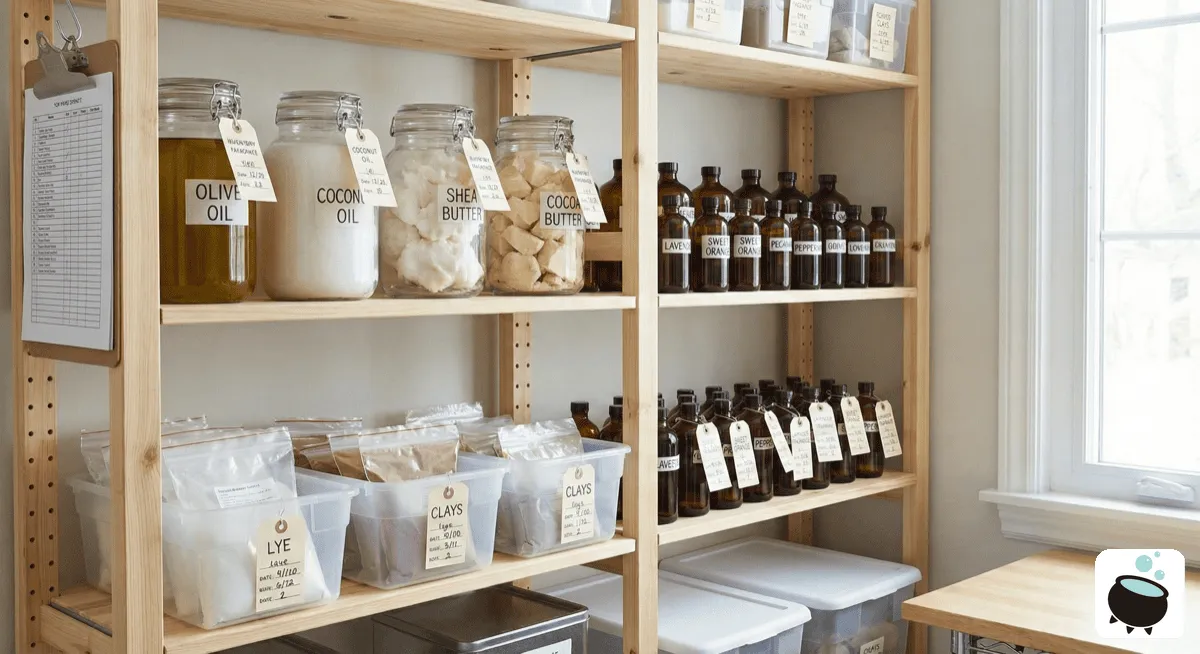
Effective soap inventory management tracks three categories: raw materials (oils, lye, fragrances), packaging supplies (boxes, labels, wrap), and finished products (cured soaps ready for sale). Use software or spreadsheets to monitor stock levels, set reorder points, and calculate costs per batch.
Why Inventory Management Matters for Soap Makers
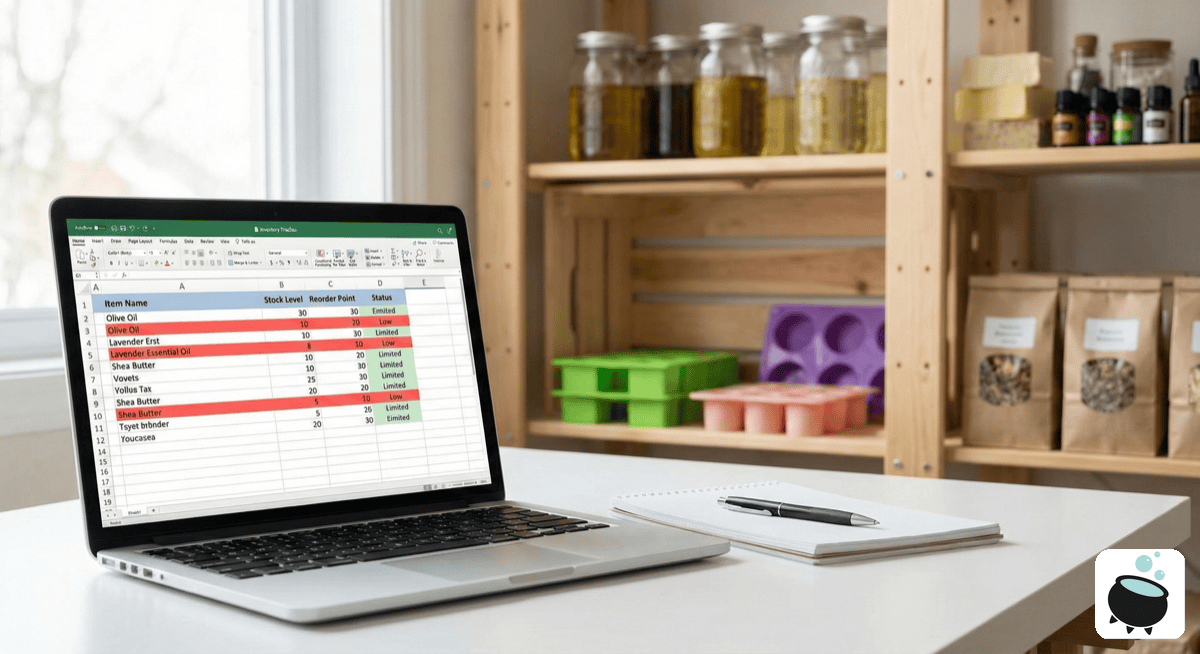
Most soap makers start with casual supply tracking. A mental note here, a scribbled list there. This works until:
- You run out of coconut oil mid-batch
- You can't calculate your actual cost per bar
- You're uncertain how much inventory you actually have
- Tax time arrives and you have no organized records
- A customer wants to reorder and you can't make more
Good inventory management prevents these problems and transforms your soap making from a hobby into a professional operation.
The Three Categories of Soap Inventory
1. Raw Materials
Oils and Butters:
- Olive oil, coconut oil, palm oil
- Shea butter, cocoa butter
- Specialty oils (avocado, sweet almond, etc.)
Chemicals:
- Sodium hydroxide (lye)
- Potassium hydroxide (for liquid soap)
- Citric acid, sodium lactate
Additives:
- Fragrance oils and essential oils
- Colorants (micas, oxides, clays)
- Botanicals and exfoliants
2. Packaging and Supplies
- Soap boxes and wrapping
- Labels and tags
- Shrink wrap or bands
- Tissue paper
- Molds and liners
3. Finished Products
- Cured soap inventory
- Product by scent/style
- Batch information
- Cure dates
Setting Up an Inventory System
Step 1: Audit Current Stock
Count everything you have:
- Weigh or measure all oils and butters
- Count fragrance bottles and note amounts
- Inventory packaging supplies
- Count finished soaps by type
Step 2: Create Categories and Items
Organize by category and create a record for each item:
| Item | Category | Unit | Current Stock | Reorder Point |
|---|---|---|---|---|
| Olive Oil | Oil | oz | 128 oz | 32 oz |
| Coconut Oil | Oil | oz | 64 oz | 16 oz |
| Sodium Hydroxide | Chemical | oz | 32 oz | 8 oz |
| Lavender EO | Fragrance | oz | 4 oz | 1 oz |
Step 3: Set Reorder Points
Calculate when you need to reorder:
- How quickly do you use each item?
- What's the lead time for delivery?
- What's your buffer for unexpected orders?
Example:
- You use 16 oz olive oil per week
- Delivery takes 1 week
- Buffer: 1 week
- Reorder point: 32 oz (2 weeks supply)
Step 4: Track Usage by Batch
Every time you make soap:
- Record ingredients used
- Subtract from inventory
- Add finished products to inventory
- Note batch number for traceability
Inventory Tracking Methods
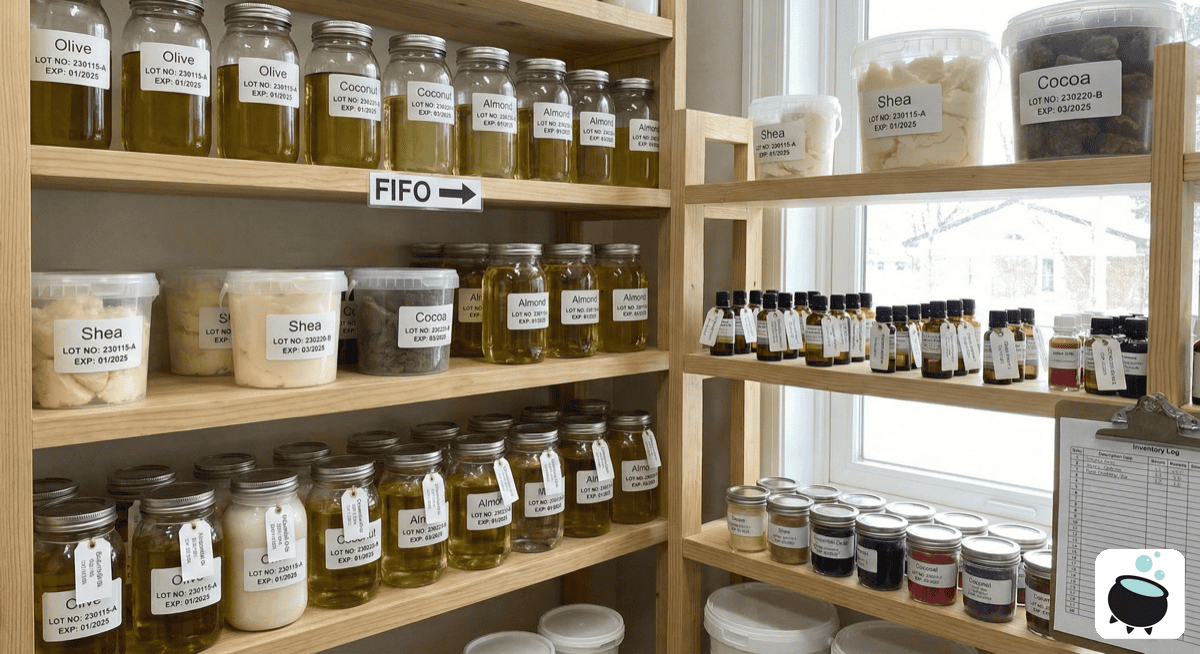
Spreadsheets
Pros:
- Free (Google Sheets, Excel)
- Customizable
- Familiar interface
Cons:
- Manual entry required
- Easy to make errors
- No automatic calculations
- Can become complex
Dedicated Software
Pros:
- Automatic inventory deduction
- Recipe integration
- Cost calculations built-in
- Batch tracking included
Cons:
- Has a cost
- Learning curve
- Requires consistent use
Paper Records
Pros:
- No technology required
- Simple to start
Cons:
- Difficult to search
- Easy to lose
- No calculations
- Time-consuming
Calculating Cost Per Bar
Good inventory management enables accurate cost calculation:
Direct Costs Per Batch
Oils: $4.50
Lye: $0.75
Fragrance: $2.00
Colorant: $0.50
= $7.75 per 8-bar batch
= $0.97 per bar in materials
Adding Indirect Costs
Materials: $0.97
Packaging: $0.30
Labels: $0.10
Shrink wrap: $0.05
= $1.42 direct cost per bar
Full Cost (Optional)
Direct: $1.42
Allocated utilities: $0.05
Your time (at rate): $2.00
= $3.47 full cost per bar
Batch Traceability
Professional soap makers track batches for:
- Quality control - Which batches were problematic?
- Customer inquiries - "When was this made?"
- Recalls - If an ingredient is bad, which batches are affected?
- Recipe improvement - What changed between batches?
Batch Record Should Include:
- Batch number/date
- Recipe used
- Specific ingredients (brands, lot numbers)
- Process notes
- Cure date
- Photo (optional but helpful)
Common Inventory Mistakes
Not Tracking Small Items
Micas, colorants, and small additives matter. A few dollars here and there adds up significantly.
Forgetting Packaging Costs
Boxes, labels, and wrap can cost as much as ingredients. Include them in inventory and cost calculations.
Inconsistent Recording
Updating inventory sometimes but not always creates inaccurate counts. Make it habit after every batch.
Ignoring Waste
Soap residue in pots, fragrance spills, and trimmed edges are real costs. Factor in a waste percentage.
Not Using Expiration Dates
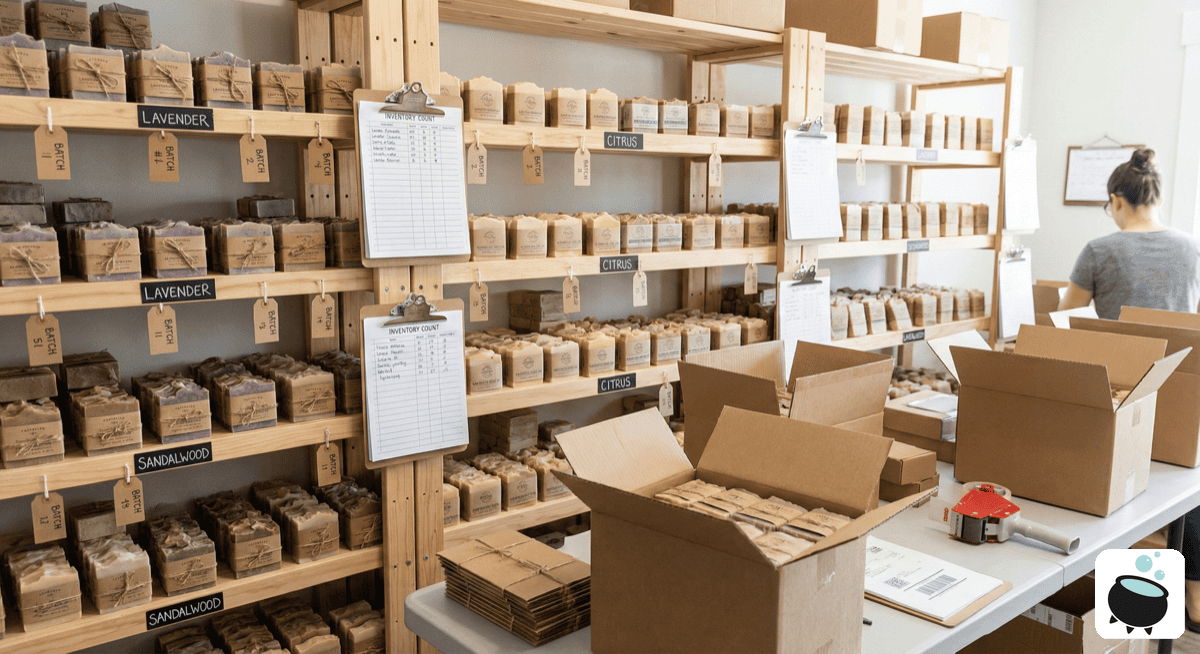
Oils go rancid. Fragrance notes can change. Track when items were purchased and use older stock first.
Inventory Management for Growth
Signs You Need Better Systems
- You frequently run out of key supplies
- You're uncertain of your actual profit
- Tax prep takes days instead of hours
- You can't answer "how many do you have in stock?"
- Batches have inconsistent quality
Scaling Considerations
As your business grows:
- Consider bulk purchasing (changes reorder strategy)
- Track supplier lead times more carefully
- Implement "safety stock" levels
- Monitor inventory turnover rates
- Review slow-moving inventory regularly
Frequently Asked Questions
How often should I update my inventory?
Update after every soap making session. At minimum, do a full audit monthly to catch discrepancies.
Should I track inventory by weight or by bottle/package?
Track by the unit you measure when making soap. If you measure olive oil in ounces, track in ounces. If you buy lye by the pound, you can track by pound but know the oz equivalent.
How do I handle partial bottles or bags?
Weigh or estimate remaining amounts. It's better to have an approximate number than to not track at all.
What's the best free solution for soap inventory?
Google Sheets with a well-designed template works for small operations. Search for "soap making inventory spreadsheet template" for starting points.
How do I track inventory across multiple locations?
Note the location in your tracking system. Software solutions handle multi-location inventory better than spreadsheets.
Should I do FIFO (first in, first out) for soap making supplies?
Yes, especially for oils and fragrances that can expire or change over time. Use older stock first.
Conclusion
Inventory management separates hobbyists from professional soap makers. Knowing exactly what you have, what it costs, and when to reorder enables confident pricing, reliable production, and smooth operations.
Start with whatever system you'll actually use—even a simple spreadsheet is better than nothing. As your operation grows, consider dedicated soap making software that integrates inventory with recipes and batch tracking.
The time invested in proper inventory management pays back in reduced waste, accurate pricing, and peace of mind.
Ready to Manage Your Recipes Like a Pro?
PotionHub helps soap and candle makers calculate lye, track batches, manage inventory, and grow their business.
Get PotionHub