Does Soap Expire? Soap Shelf Life Guide for Handmade Soap Makers
Learn how long handmade soap lasts, what causes it to go bad, and how to extend shelf life. Covers dreaded orange spots (DOS), oil rancidity, and proper storage techniques.
Quick Answer
Most handmade cold process soap lasts 1-2 years at full efficacy, while hot process soap typically reaches 18-24 months. Melt and pour soap, being less vulnerable to oxidation, can maintain quality for 2-3 years under proper storage. The key to longevity? Protect your soap from heat, light, humidity, and air exposure. A well-stored bar remains safe and functional well beyond these timeframes, though it may gradually lose lather and fragrance.
Does Handmade Soap Actually Expire?
The straightforward answer: no, handmade soap doesn't technically expire like milk or bread. But that doesn't mean it never changes. Over time, soap undergoes a process called oxidation—the oils and fragrances gradually break down when exposed to oxygen, light, and heat. This degradation affects not what makes soap unsafe, but rather what makes it effective and pleasant to use.
Unlike commercial soaps that contain synthetic preservatives designed to extend shelf life indefinitely, handmade soap relies on natural oils and fragrances that, by their very nature, are more vulnerable to aging. For handmade soap makers, understanding these processes isn't just about preventing waste—it's about maintaining product quality for customers and managing inventory efficiently.
The good news: with proper storage and smart formulation, your soap will remain perfectly usable and safe far longer than you might expect. Most soap "goes bad" not because it becomes dangerous, but because it loses performance, fragrance, or visual appeal.
Shelf Life by Soap Type
Different soap-making methods produce different shelf lives. Understanding these variations helps you better manage your product line and set realistic expectations for customers.
| Soap Type | Typical Shelf Life | Key Factors |
|---|---|---|
| Cold Process | 1-2 years | Oil blend composition, fragrance stability, storage conditions |
| Hot Process | 18-24 months | Higher initial water content accelerates oxidation |
| Melt and Pour | 2-3 years | Stabilizers and lower water content reduce degradation |
| Liquid Soap | 12-18 months | High water content and alkalinity promote faster changes |
| Milk-Based (Cold/Hot) | 12-18 months | Proteins and milk fats oxidize faster than standard oils |
Cold process soap, the most popular among artisans, benefits from its neutral pH and dense bar structure. Hot process soap, made by accelerating saponification with heat, often contains slightly more residual water, which can shorten shelf life compared to cold process. Melt and pour bases, being pre-saponified commercial products, already contain stabilizers and have lower moisture content—giving them the longest practical shelf life.
Milk soaps, goat milk and cow milk varieties especially, deserve special attention. The milk solids and proteins are delicious for skin but more prone to oxidation than plain soapy fats. Plan for shorter shelf lives and more aggressive preventative measures.
What Causes Soap to Go Bad
Three primary culprits degrade handmade soap: dreaded orange spots (DOS), rancidity, and fragrance degradation.
Dreaded Orange Spots (DOS) are the cosmetic enemy of handmade soap. These rust-colored or orange flecks result from oxidation of unsaturated fatty acids within the soap. DOS doesn't render soap unsafe or non-functional—it's purely aesthetic. But for retailers and gift-givers, DOS dramatically reduces perceived quality. Cold process bars with high percentages of oils like olive, avocado, or hemp seed are most vulnerable.
Rancidity is far more significant than DOS. This process occurs when oils begin breaking down at the molecular level, producing unpleasant off-odors. Rancid soap may feel greasier, smell musty or sharp, and lose lathering ability. While still technically safe on skin, rancid soap provides a poor user experience and should be removed from inventory.
Fragrance Fade is inevitable with handmade soap. Essential oils and fragrance oils gradually volatilize—literally evaporating into the air. Some scents, particularly top notes (the initial bright scents you first smell), dissipate within months. A bar that smelled like fresh lemon zest at cure time might smell distinctly muted after a year.
Oil Shelf Life and Rancidity
Understanding your oil inventory is as crucial as understanding your finished soap. Oils that haven't rancidified in the bottle will perform better in finished soap.
| Oil | Shelf Life (Unopened) | DOS Risk Level | Rancidity Notes |
|---|---|---|---|
| Olive Oil | 18-24 months | HIGH | Highly susceptible; use ROE or Vitamin E |
| Coconut Oil | 2+ years | MEDIUM | Stable but can develop off-odors over 18+ months |
| Palm Oil | 18-24 months | MEDIUM | Decent stability; monitor for color changes |
| Shea Butter | 2+ years | LOW-MEDIUM | Very stable; excellent for extending soap shelf life |
| Sweet Almond Oil | 12-18 months | HIGH | Premium oil; oxidizes relatively quickly |
| Avocado Oil | 12-18 months | HIGH | Beautiful in soap but fatty-acid profile = high oxidation risk |
| Hemp Seed Oil | 6-12 months | VERY HIGH | Use soon after opening; store in cool, dark place |
| Jojoba Oil | 2+ years | LOW | One of the most stable carrier oils available |
| Sunflower Oil | 12-18 months | MEDIUM-HIGH | Variable depending on whether it's high-oleic |
| Castor Oil | 18-24 months | MEDIUM | Usually stable; watch for separation which indicates degradation |
| Sesame Oil | 12-18 months | HIGH | Rich fatty acid profile increases oxidation risk |
The oils highest in polyunsaturated fatty acids (like hemp seed and sweet almond) oxidize fastest. Conversely, oils with higher percentages of monounsaturated and saturated fatty acids (like jojoba, coconut, and shea) resist rancidity longer. When formulating soap designed for maximum shelf life, bias your oil blend toward the more stable varieties.
How to Extend Soap Shelf Life
Professional soap makers employ several strategies to slow oxidation and keep products fresh longer.
Use Antioxidants: Rosemary Oleoresin Extract (ROE) is the industry standard. Add 0.5-1% of total oils at trace. Vitamin E (tocopherol) works similarly and often smells less peppery. Both capture free radicals before oxidation occurs.
Choose Your Oil Blend Wisely: If shelf life is a concern, reduce percentages of highly unsaturated oils. A blend emphasizing coconut, palm, shea, and jojoba will outlast one heavy on olive and hemp seed oils.
Cure Thoroughly: Cold process soap requires 4-6 weeks of cure time to shed excess water. Under-cured soap with higher residual moisture oxidizes faster. Consider extending cure time to 8 weeks for maximum stability.
Optimize Storage Conditions: Temperature, light, and humidity are your three enemies.
- Store between 50-70°F (10-21°C)
- Keep away from direct sunlight; opaque packaging is ideal
- Maintain humidity between 35-50%
- Avoid kitchens, bathrooms, and anywhere with temperature swings
- Use wax paper, kraft paper, or dark labels rather than plastic wrap (oxygen permeability matters)
Reduce Water Content: Hot process soap can be pressed after completion to remove surface moisture. Even a 2-3% reduction in water content extends shelf life noticeably.
Use Packaging Strategically: Vacuum-seal individual bars or use oxygen-absorbing packets in finished boxes. Some makers wrap bars in dark kraft paper immediately after cure to minimize light exposure.
Monitor Fragrance Choices: Synthetic fragrance oils generally hold longer than essential oils. If using essential oils, consider adding a tiny amount of a stable fragrance oil base note to anchor the scent longer.
Identifying Bad Soap
Knowing what to look for helps you remove compromised bars before they reach customers.
Appearance Changes: DOS appears as orange, brown, or rust-colored speckles, usually beginning at edges. Small areas are cosmetic only; widespread DOS indicates oxidation throughout. Significant color darkening, fading to gray or brown, or streaking often signals oxidation.
Smell Test: Open a finished bar and smell deeply. Rancid soap smells musty, harsh, or like old peanuts. Metallic or sour notes suggest oxidation. Fresh soap smells like its fragrance plus slightly sweet (from glycerin) or neutral.
Texture and Feel: Press the bar. Rancid soap may feel softer, slicker, or greasier than fresh bars. The surface might be slightly weepy (oils seeping to the surface) or sticky. This indicates breakdown of the soap structure.
Lather Quality: Use a test bar. Rancid soap produces weaker lather or lather that dissipates quickly. It may also feel less creamy.
Trust your instincts. If a bar looks, smells, or feels off, it's better to remove it. Customers notice quality more than you might expect, and one bar of questionable soap damages trust more than offering a replacement.
Batch Tracking and Inventory Management
Extending shelf life is only half the battle. You must also know which batches are oldest and which oils might be approaching oxidation risk.
Implement a Tracking System: Record creation date, cure completion date, and oil batch numbers for every batch. Digital tools like spreadsheets or specialized software (like PotionHub) allow you to sort by age, identify batches approaching their prime, and calculate projected shelf life based on oil composition.
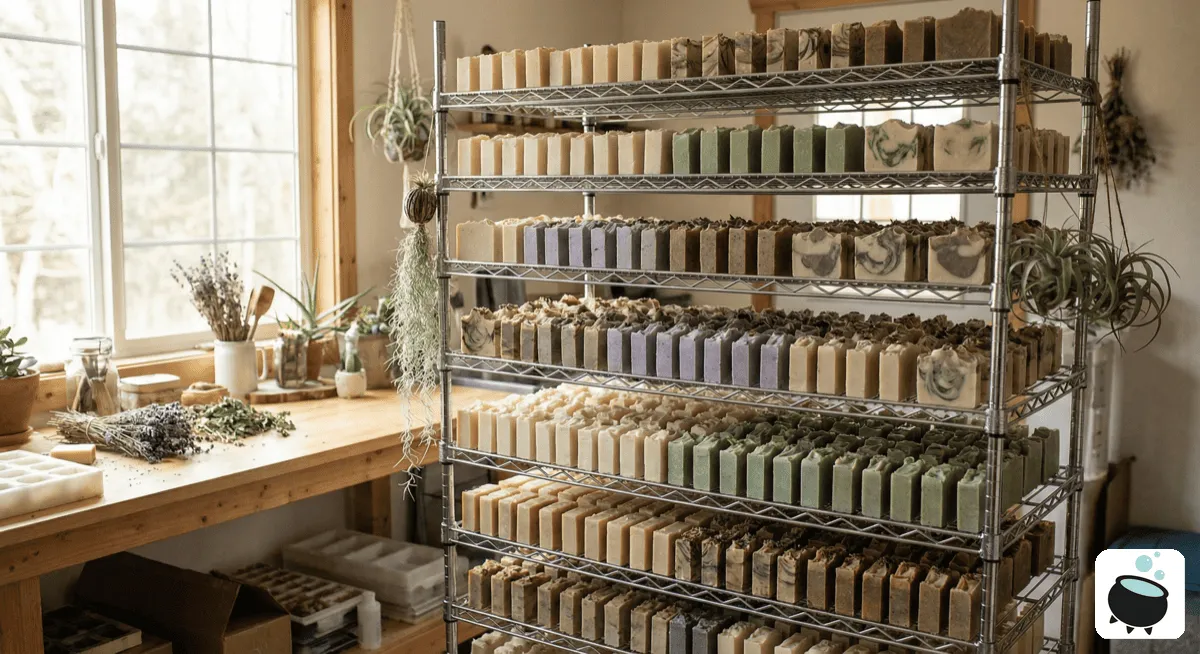
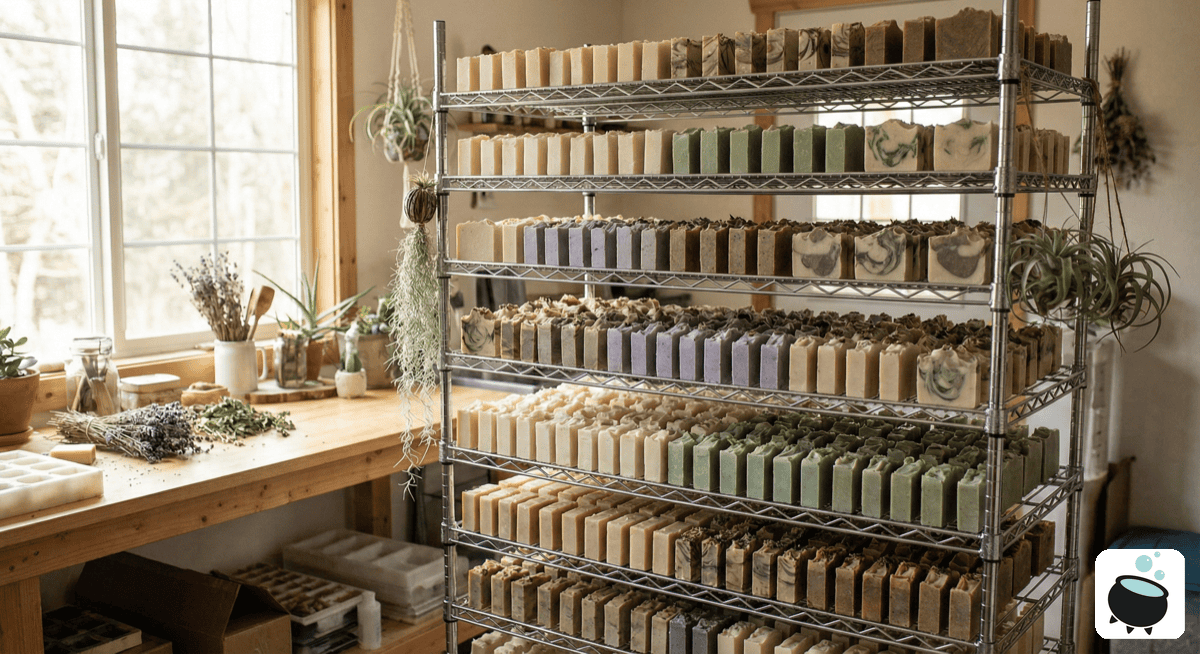
Use FIFO Rotation: First In, First Out. Older stock should be first to leave your shelves. Organize storage so newest batches are in the back.
Date Your Packaging: Recommend a "best by" date (usually 12 months from cure completion for cold process). Transparency about shelf life builds customer confidence.
Monitor Ingredients: When receiving new oil shipments, note the production date if available. Track when opened and seal containers tightly. Date containers after opening and commit to using them within their window.
Create Shelf Life Profiles: For different soap lines, calculate realistic shelf lives based on exact oil percentages. A soap with 25% olive oil will age differently than one with 50%. Document these profiles.
Common Shelf Life Mistakes
Even experienced makers occasionally make choices that unnecessarily shorten soap quality.
Overstocking Ingredients: Buying oil in bulk to save money is smart economics until that oil approaches rancidity. Calculate realistic usage and order accordingly. The savings evaporate if you're discarding oxidized oils.
Storing Near Heat Sources: Kitchens, near water heaters, above dryers, or on window sills all expose soap to temperature fluctuation. Even one warm summer can accelerate degradation. Designate a cool closet or climate-controlled storage area.
Insufficient Cure Time: Rushing soap to sale before full cure is tempting but catastrophic for shelf life. Water-logged soap oxidizes much faster. Invest in dedicated cure space if you struggle with timing.
Ignoring Fragrance Oil Expiration: Fragrance oils have their own shelf lives, typically 12-24 months. Old fragrance oil oxidizes before even reaching the soap batch. Rotate fragrance oil inventory the same way you do oils.
Over-Claiming Shelf Life: If you say your soap is good for 2 years but it's visibly changing after 12 months, customers lose trust. Be conservative with claims and let quality exceed expectations rather than fall short.
Mixing Humidity and Soap: Storing finished bars in humid areas (basements, bathrooms) reintroduces moisture, reigniting oxidation. Even properly cured soap can reabsorb atmospheric water. Keep storage areas dry.
Frequently Asked Questions
How do I know if my soap has dreaded orange spots?
DOS appears as rust-colored or orange speckles, usually starting at the soap's edges or surface. They look like someone flicked tiny drops of orange paint onto the bar. Early DOS is purely cosmetic and doesn't affect safety or function, but it can worsen with age. Once DOS appears, you can't reverse it, so focus on prevention through antioxidants and proper storage.
Can old soap make you sick?
Extremely unlikely. Rancid soap may smell unpleasant and lose lathering power, but it won't cause illness. The saponification process creates a pH too high for pathogenic bacteria to survive. Even oil breakdown products aren't toxic to skin at the concentrations found in aged soap. Your primary concern is user experience, not safety.
Should I use Vitamin E or Rosemary Oleoresin Extract?
Both work effectively. ROE is slightly more potent at 0.5%, while Vitamin E typically requires 0.75-1%. ROE can add a slight peppery scent some makers find noticeable; Vitamin E is more subtle. Many makers use both in combination for synergistic protection. Trial both and choose based on your sensitivity to added scent.
Can I extend shelf life by adding salt?
Salt doesn't meaningfully extend soap shelf life through oxidation prevention. It may draw water from the soap bar (which some makers intentionally do), but this is more relevant to lather and texture than longevity. Focus on oils, antioxidants, storage, and cure time instead.
Do I need to rotate stock if I'm selling quickly?
If your turn-around is less than 6 months, strict rotation is unnecessary. However, even active makers benefit from at least loosely organizing stock by age. You'll catch problem batches faster and feel confident telling customers when their soap was made.
What's the best packaging to extend shelf life?
Dark, opaque materials (kraft paper, dark cardstock, opaque shrink wrap) protect better than clear wrapping. Wax-coated or unbleached kraft paper is ideal for small batches. For larger quantities, consider vacuum-sealing or adding oxygen absorbers to boxes. Avoid plastic wrap, which allows oxygen transmission. Whatever you choose, ensure the package is dry before sealing.
Is melt and pour soap really better for shelf life?
Yes, typically 2-3 years versus 1-2 for cold process. Melt and pour bases are commercially formulated with stabilizers and lower water content. However, added inclusions (botanicals, milk, activated charcoal) can shorten this. Fragrances fading in melt and pour is just as inevitable as in cold process.
How should I store oils long-term to prevent rancidity?
Keep oils in dark bottles in a cool location (50-70°F is ideal). Some makers refrigerate high-risk oils like hemp seed oil. Once you open a bottle, seal it tightly immediately. Oxygen is the primary culprit, so minimize headspace in storage containers. Label bottles with the date opened. Most oils stay viable 12-24 months after opening; use before expiration when possible.
Conclusion
Soap shelf life is less mysterious than many makers assume. By understanding the mechanisms of oxidation, tracking your ingredients and batches, and implementing storage best practices, you'll confidently create soap designed to delight customers months after purchase. Most handmade soap lasts beautifully for 12-18 months with minimal effort—and well beyond that with thoughtful formulation and storage.
Managing shelf life becomes significantly easier with proper batch tracking and inventory systems. PotionHub helps soap makers monitor oil usage, track cure dates, manage fragrance inventory, and optimize production schedules—all designed to keep your soap at peak quality. When you know exactly which batch was made when and from which oils, extending shelf life becomes less guesswork and more science.
Your soap is a product of care and craftsmanship. Treat inventory with the same attention, and it will reflect that quality every time a customer opens the package.
Try These Free Tools
Skip the Manual Math
PotionHub calculates lye, tracks batches, manages inventory, and scales recipes for you. Free during beta — no credit card required.
Get PotionHub Free