Superfat Calculator: How to Calculate and Choose the Right Percentage
Learn how to calculate superfat for soap making. Understand what superfat percentages to use, how they affect your bars, and when to adjust your lye discount.
Quick Answer
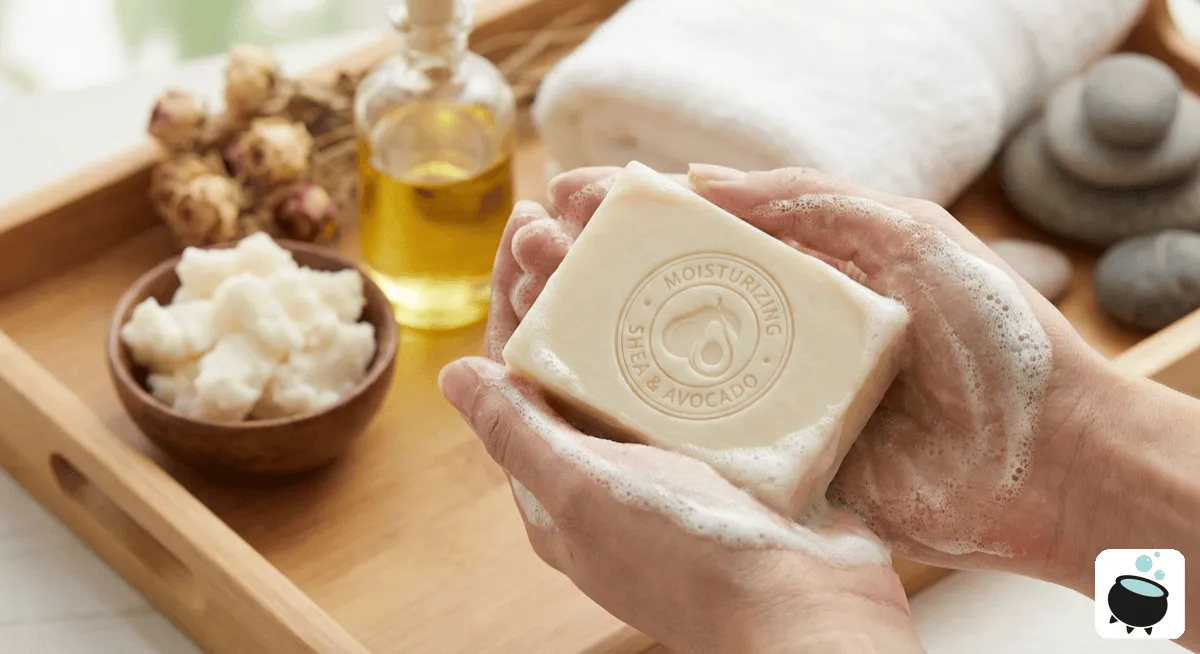
Superfat is the percentage of unreacted oils left in finished soap. To calculate: reduce your lye amount by your desired superfat percentage. A 5% superfat on a recipe requiring 100g lye means using 95g lye instead. Standard superfat is 5-8% for skin-safe, moisturizing bars.
What Is Superfat?
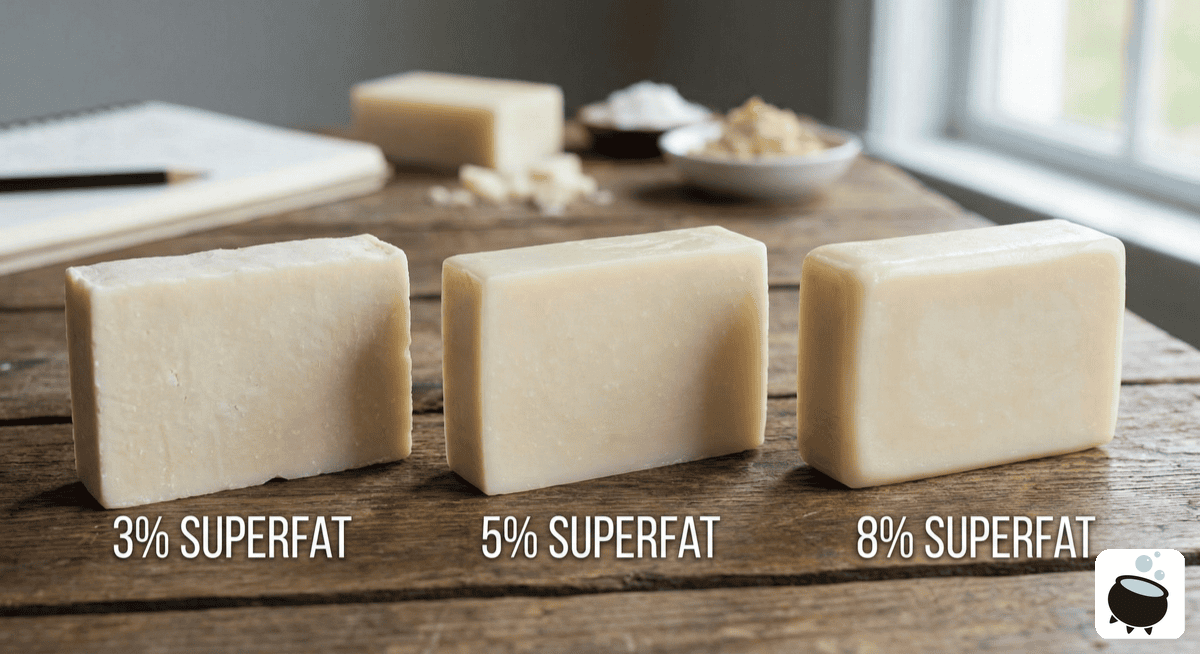
Superfat (also called lye discount) refers to the practice of using less lye than would be needed to saponify all the oils in your recipe. This intentionally leaves some oils unreacted in the finished soap.
The formula:
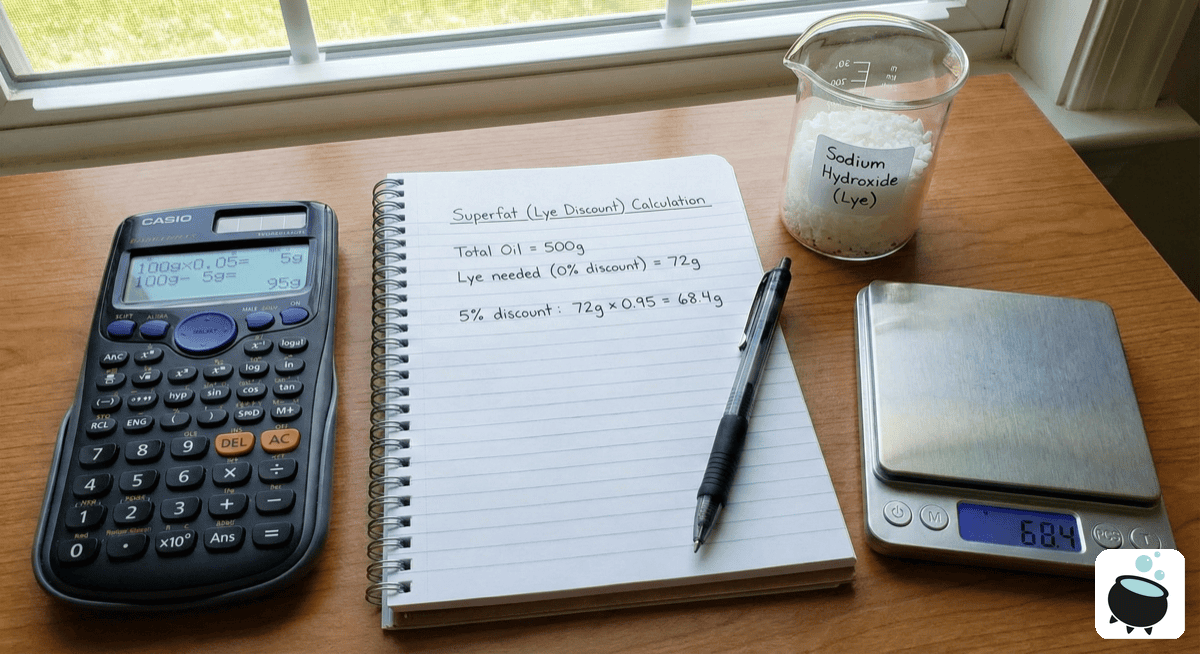
Actual Lye = Calculated Lye × (1 - Superfat%)
Example:
- Recipe calls for 100g lye at 0% superfat
- You want 5% superfat
- Actual lye needed: 100g × 0.95 = 95g
Why Superfat Matters
Safety Buffer
Even with precise measurements, tiny variations in scale accuracy, lye purity, or oil weights can occur. Superfat provides a safety margin, ensuring no free lye remains in your finished soap.
Moisturizing Properties
Unreacted oils in your soap provide extra moisturization. These "free oils" give soap a more luxurious feel and can benefit dry skin.
Bar Hardness
Higher superfat creates softer bars with more moisturizing properties. Lower superfat produces harder bars with better cleansing.
Superfat Percentage Guide
| Superfat % | Best For | Characteristics |
|---|---|---|
| 0-2% | Laundry soap, specialty uses | Very cleansing, hard bars, no extra moisture |
| 3-4% | Cleansing bars, oily skin | Good lather, firm bars, minimal superfat |
| 5% | Standard, most recipes | Balanced cleansing and moisture |
| 6-7% | Normal to dry skin | Extra moisturizing, slightly softer |
| 8-10% | Dry/sensitive skin, luxury bars | Very moisturizing, softer bars |
| 10%+ | Specialty only | Risk of soft bars, dreaded orange spots |
How to Calculate Superfat
Manual Calculation Method
Step 1: Calculate lye at 0% superfat using SAP values
For 16 oz of oils:
- Olive oil (10 oz): 10 × 0.134 = 1.34 oz
- Coconut oil (4 oz): 4 × 0.178 = 0.71 oz
- Shea butter (2 oz): 2 × 0.128 = 0.26 oz
- Total at 0%: 2.31 oz lye
Step 2: Apply superfat discount
For 5% superfat:
- 2.31 oz × 0.95 = 2.19 oz lye
For 8% superfat:
- 2.31 oz × 0.92 = 2.13 oz lye
Using Software
Reliable soap making software automatically calculates superfat. You simply:
- Enter your oils and weights
- Select your desired superfat percentage
- Get the exact lye amount instantly
This eliminates calculation errors that can ruin batches.
Choosing Oils for Your Superfat
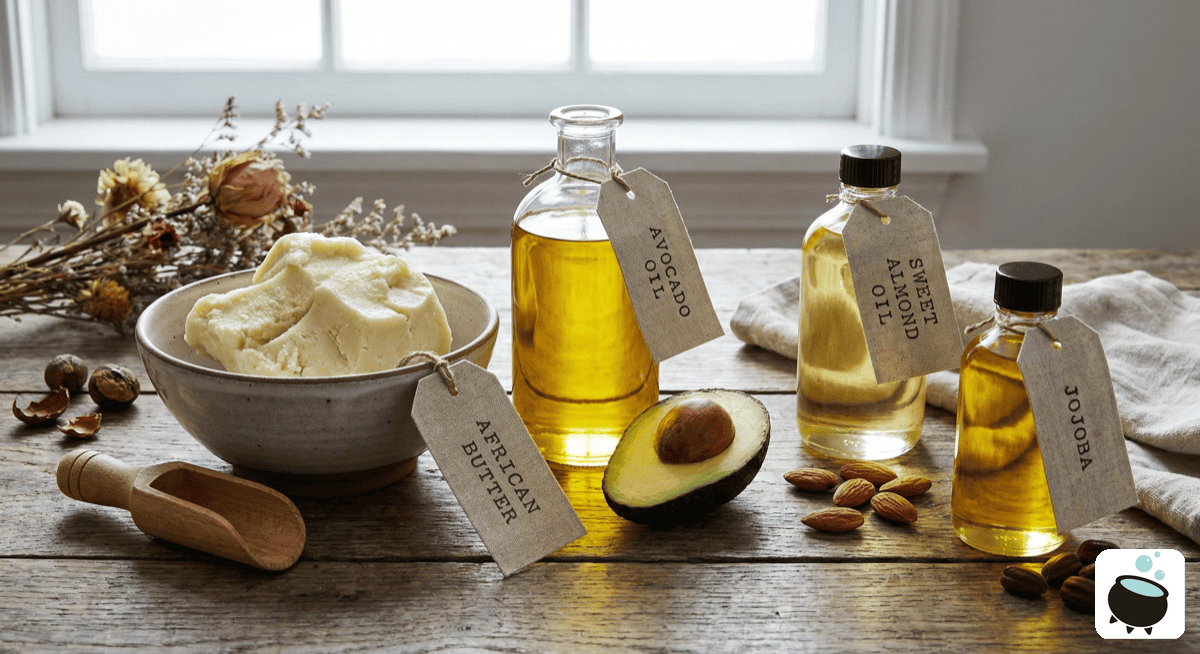
Not all oils behave the same when left as superfat. Some contribute more to the finished soap's properties than others.
Best Oils for Superfatting
| Oil | Benefits as Superfat |
|---|---|
| Shea Butter | Highly moisturizing, skin conditioning |
| Avocado Oil | Rich in vitamins, great for dry skin |
| Sweet Almond | Mild, conditioning |
| Jojoba | Closest to skin's natural oils |
| Cocoa Butter | Moisturizing, adds hardness |
Oils to Avoid as Superfat
| Oil | Why to Avoid |
|---|---|
| Coconut Oil | Can be drying at high percentages |
| Castor Oil | Sticky when not saponified |
| Sunflower/Canola | May go rancid quickly |
Advanced: Superfatting at Trace
Some soap makers add a specific oil at trace (after mixing lye and oils) to control which oil remains as superfat. This is called "superfatting at trace."
How it works:
- Calculate your recipe at 0% superfat
- Remove your superfat percentage worth of oil from the main recipe
- Add that oil at trace instead
Example:
- 16 oz oils with 5% superfat
- Remove 0.8 oz (5%) from main oils
- Add 0.8 oz shea butter at trace
- That shea butter will be your superfat
Note: This method isn't foolproof. Saponification continues to occur, so there's no guarantee your trace-added oil stays completely unreacted.
Superfat Problems and Solutions
Problem: Soft, Gooey Soap
Likely cause: Superfat too high Solution: Reduce superfat to 5% or below
Problem: Drying, Harsh Soap
Likely cause: Superfat too low (or calculation error) Solution: Increase superfat to 5-8%
Problem: Orange Spots (DOS)
Likely cause: Rancid free oils from high superfat Solution:
- Reduce superfat percentage
- Use more stable oils
- Add antioxidant (ROE, Vitamin E)
- Store soap in cool, dark place
Problem: Crumbly, Zappy Soap
Likely cause: This is NOT a superfat issue—it's lye heavy Solution: Check your calculations; you may have too little superfat
Frequently Asked Questions
What superfat should I use for sensitive skin?
For sensitive skin, use 6-8% superfat with gentle oils like olive, shea butter, or sweet almond. Avoid high coconut oil percentages which can be drying.
Can I use 0% superfat?
You can, but it's not recommended for skin soap. Zero superfat leaves no safety margin for calculation errors and produces a very cleansing bar. It's mainly used for laundry soap.
What's the difference between superfat and lye discount?
They're the same thing, just different terminology. Superfat focuses on the extra oils left behind; lye discount focuses on using less lye. A 5% superfat equals a 5% lye discount.
Does superfat affect how long soap lasts?
Yes. Higher superfat soaps may develop "dreaded orange spots" (rancidity) faster than lower superfat bars. Proper curing and storage minimizes this risk.
Should I adjust superfat for different seasons?
Some soap makers use slightly higher superfat (7-8%) in winter when skin is drier, and lower (5%) in humid summer months. This is optional but can be beneficial.
Why does my soap feel oily even at 5% superfat?
The slimy or oily feeling might not be from superfat. It could be:
- High olive oil content (normal feeling)
- Incomplete saponification
- Insufficient cure time
- Too much castor oil
Conclusion
Superfat is one of the most important variables in soap making. The right percentage balances safety, moisturization, and bar quality. For most soap makers, 5% provides excellent results—safe from free lye while delivering good bar hardness and lather.
Accurate superfat calculation requires precise measurements and correct math. Many soap makers rely on dedicated software to eliminate calculation errors and ensure consistent, safe results batch after batch.
Experiment with different superfat levels to find what works best for your recipes and your customers' skin types. Keep detailed notes, and you'll quickly discover your preferred percentages.
Ready to Manage Your Recipes Like a Pro?
PotionHub helps soap and candle makers calculate lye, track batches, manage inventory, and grow their business.
Get PotionHub