Soap Making vs Candle Making Business: Which Is Right for You?
Compare soap and candle making businesses side by side. Understand startup costs, profit margins, market demand, and time requirements to choose the right craft business for you.
Quick Answer
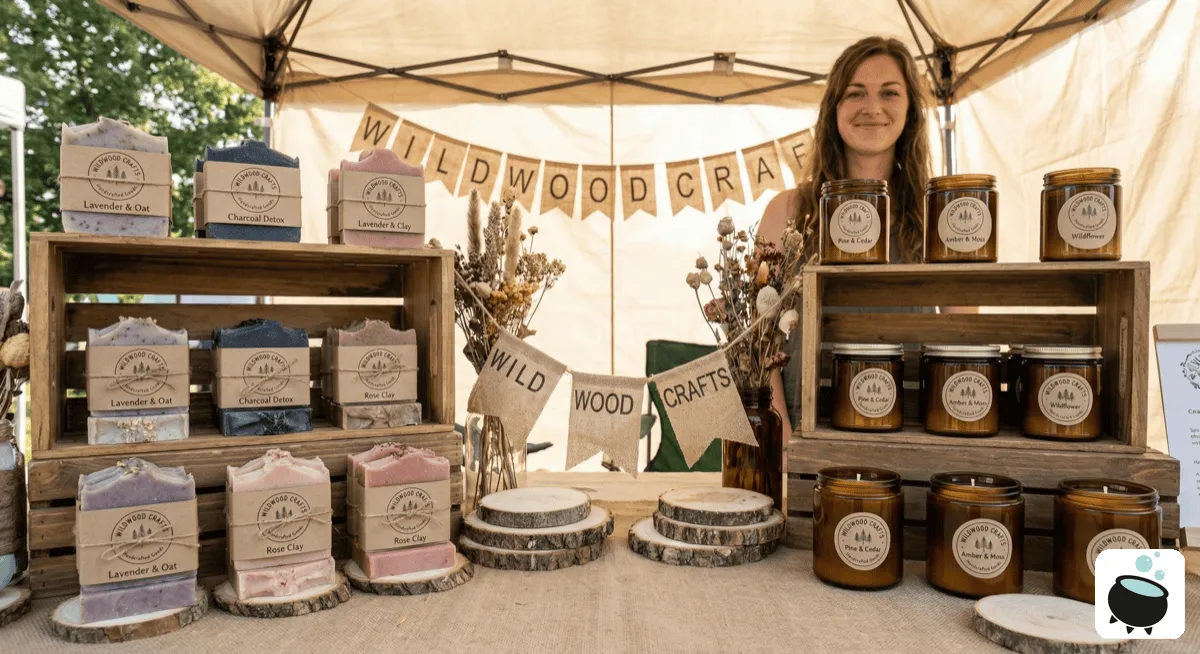
Both soap and candle businesses are viable craft ventures. Candles have faster production (no cure time) and higher margins but more competition. Soap has longer production cycles but strong differentiation potential and repeat customers. Many successful makers sell both, using shared equipment and cross-selling to the same customer base.
The Side-by-Side Comparison
| Factor | Soap Making | Candle Making |
|---|---|---|
| Startup cost | $200-500 | $150-400 |
| Time to sellable product | 4-6 weeks (cure time) | 1-2 weeks |
| Production time per unit | 1-2 hours/batch | 30-60 min/batch |
| Typical retail price | $5-12/bar | $15-35/candle |
| Material cost per unit | $1-3 | $3-8 |
| Profit margin | 50-70% | 50-75% |
| Shelf life | Years | 1-2 years |
| Repeat purchase cycle | Monthly | Seasonal |
| Competition level | High | Very high |
| Learning curve | Moderate | Easy-moderate |
Startup Costs Breakdown
Soap Making Startup
| Item | Cost Range |
|---|---|
| Oils/butters (initial stock) | $50-100 |
| Lye | $15-30 |
| Fragrances/EOs | $40-80 |
| Colorants | $20-40 |
| Molds | $30-60 |
| Scale | $15-25 |
| Safety equipment | $20-40 |
| Mixing equipment | $30-50 |
| Packaging materials | $30-60 |
| Total | $250-485 |
Candle Making Startup
| Item | Cost Range |
|---|---|
| Wax (5-10 lbs) | $25-50 |
| Wicks | $15-25 |
| Containers | $30-60 |
| Fragrance oils | $30-60 |
| Dyes | $15-25 |
| Melting pot/pitcher | $15-30 |
| Thermometer | $8-15 |
| Scale | $15-25 |
| Wick accessories | $10-20 |
| Labels/packaging | $20-40 |
| Total | $185-350 |
Production Process Comparison
Soap Making Timeline
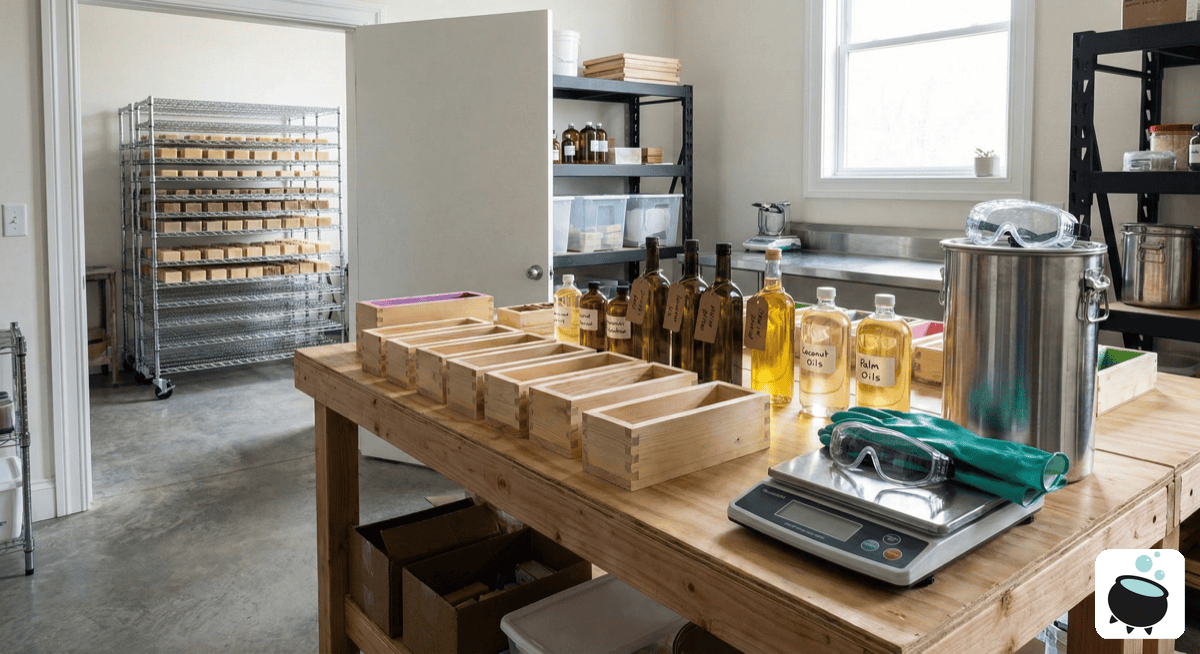
Day 1: Make soap (1-2 hours active time)
Day 2: Unmold and cut (30 min)
Day 2-30: Curing (passive, but inventory tied up)
Week 5-6: Ready for sale
Considerations:
- Must plan 6+ weeks ahead for inventory
- Batching mistakes aren't discovered until cure
- Cash tied up in curing inventory
- Need storage space for curing soap
Candle Making Timeline
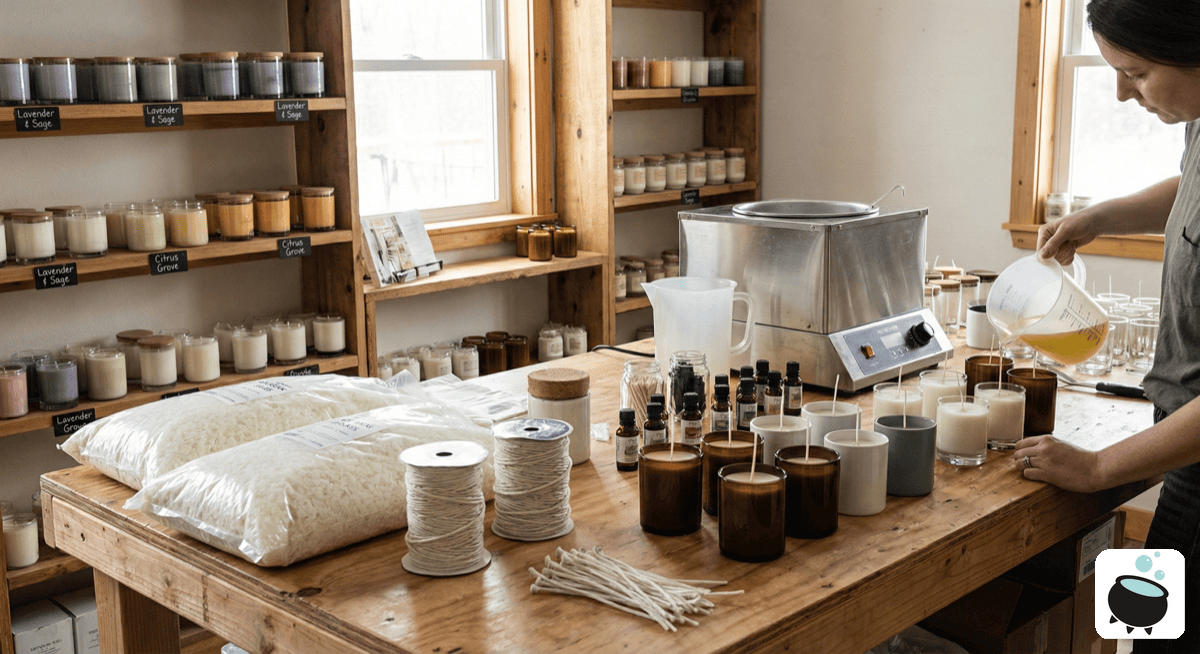
Day 1: Make candles (30-60 min active time)
Day 2: Fully cooled and ready
Week 1-2: Cure for optimal scent (optional but recommended)
Considerations:
- Faster turnaround on inventory
- Can respond quickly to demand
- Less working capital tied up
- Smaller storage footprint
Market and Customer Analysis
Soap Market
Strengths:
- Repeat purchase product (monthly use)
- Strong gifting market
- Health/natural product trends
- Can target specific skin concerns
- Loyal customer base once established
Challenges:
- Long cure time affects cash flow
- FDA/cosmetic regulations
- Shelf competition from major brands
- Educating customers on value vs. commercial soap
Candle Market
Strengths:
- Higher price points ($20-40 common)
- Strong gifting market
- Home decor crossover appeal
- Seasonal demand spikes
- Visual/Instagram-friendly product
Challenges:
- Extremely competitive market
- Fast-changing fragrance trends
- Seasonal demand fluctuations
- Many low-cost competitors
Profit Margin Analysis
Soap Profit Example
4 oz bar:
- Materials: $1.50
- Packaging: $0.50
- Direct labor (prorated): $0.75
- Overhead allocation: $0.50
- Total cost: $3.25
- Retail price: $8.00
- Gross profit: $4.75 (59%)
Candle Profit Example
8 oz candle:
- Materials (wax, wick, FO): $3.00
- Container: $2.00
- Packaging/label: $0.75
- Direct labor (prorated): $0.75
- Overhead allocation: $0.50
- Total cost: $7.00
- Retail price: $22.00
- Gross profit: $15.00 (68%)
Note: These are examples—actual margins vary significantly based on sourcing, scale, and pricing strategy.
Skills and Learning Curve
Soap Making Skills
| Skill Area | Difficulty |
|---|---|
| Basic process | Moderate |
| Lye safety | Critical but learnable |
| Recipe formulation | Advanced |
| Design techniques | Moderate-advanced |
| Troubleshooting | Requires experience |
Timeline to proficiency: 6-12 months of regular practice
Candle Making Skills
| Skill Area | Difficulty |
|---|---|
| Basic process | Easy |
| Wick selection | Requires testing |
| Fragrance blending | Moderate |
| Container adhesion | Moderate |
| Troubleshooting | Moderate |
Timeline to proficiency: 2-4 months of regular practice
Equipment Overlap
If you're considering both, note shared equipment:
| Equipment | Soap | Candles | Shared? |
|---|---|---|---|
| Digital scale | Yes | Yes | Yes |
| Thermometer | Yes | Yes | Yes |
| Mixing containers | Yes | Yes | Dedicated recommended |
| Fragrance oils | Yes | Yes | Some shared, but note different max loads |
| Colorants | Yes | Yes | Different types often |
| Labels/packaging | Yes | Yes | Brand-consistent |
| Heat source | Yes | Yes | Yes |
Starting with both has efficiency advantages—shared branding, combined market booth inventory, cross-selling opportunities.
Running Both Businesses
Advantages of Dual Products
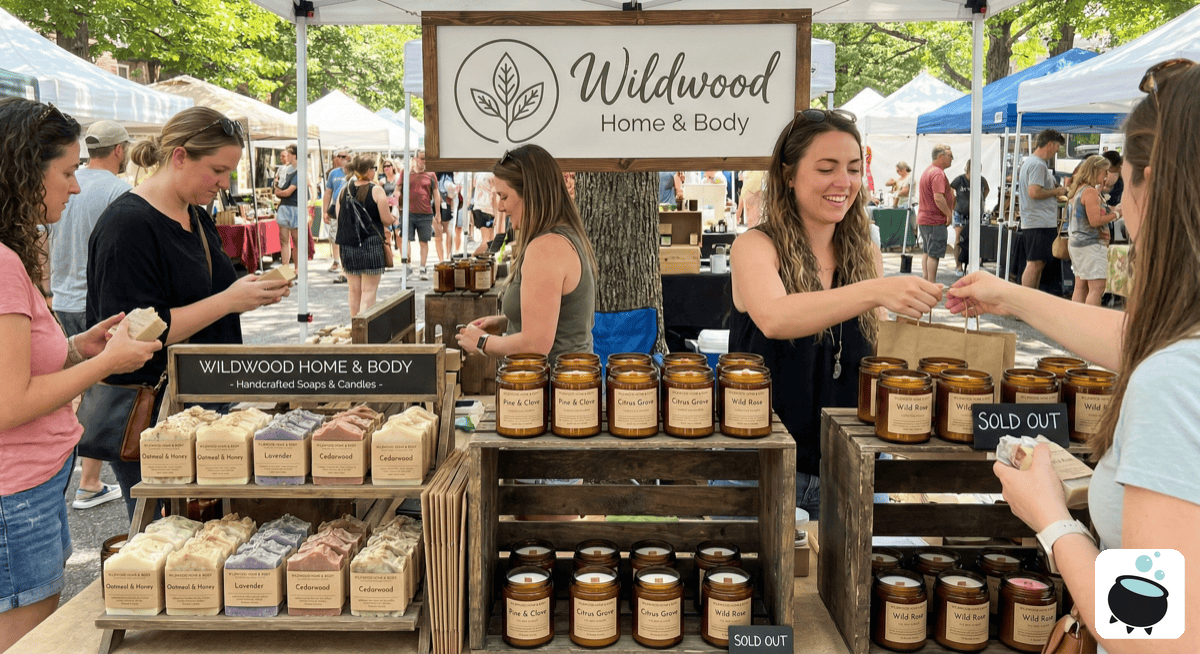
- Cross-selling: Customers who love your soap may buy matching candles
- Gift sets: Soap + candle bundles increase average order
- Market presence: More products = bigger booth = more attention
- Year-round sales: Candles strong in winter; soap steady year-round
- Shared branding: One brand, multiple products
Challenges of Dual Products
- Split focus: Two crafts to master, not one
- Inventory complexity: More SKUs to track
- Cash flow: More capital tied up in supplies
- Quality control: More variables to monitor
- Time management: Production scheduling more complex
Success Strategy for Both
- Master one craft first (6-12 months)
- Establish sales channels
- Add second product line gradually
- Use shared branding and complementary scents
- Track inventory and costs carefully (software helps)
Which Should You Choose?
Choose Soap If You:
- Have patience (cure time doesn't bother you)
- Enjoy chemistry and formulation
- Want to create truly unique products
- Are comfortable with safety procedures
- Value repeat customer relationships
- Don't need immediate income from products
Choose Candles If You:
- Want faster turnaround to sales
- Enjoy home fragrance aesthetics
- Are comfortable in a competitive market
- Can produce efficiently (volume matters)
- Have good visual/photography skills
- Want higher price points per unit
Choose Both If You:
- Have time to learn two crafts well
- Want maximum market booth presence
- See synergy in your brand vision
- Can manage inventory complexity
- Have capital for dual supplies
- Think long-term about business growth
Frequently Asked Questions
Which is more profitable: soap or candles?
Both can be profitable. Candles often have higher per-unit margins but face more competition. Soap has loyal repeat customers but longer production cycles. Profitability depends more on your execution than which product.
Can I use the same fragrances for soap and candles?
Often yes, but at different concentrations. Candle fragrance loads are typically 6-10%; soap is usually 3-5%. Some fragrances don't perform well in one medium or the other.
Which has lower startup costs?
Candle making typically has slightly lower startup costs ($150-350 vs $250-500 for soap), mainly due to simpler equipment needs.
Is one safer than the other?
Soap making involves lye (caustic), which requires careful handling. Candle making involves hot wax (burn hazard). Both require safety precautions but are safely practiced by hobbyists and professionals alike.
Which is easier to learn?
Candle making is generally easier for beginners. The process is more straightforward, mistakes are apparent quickly, and there's no cure time to wait for results.
Should I sell both from the start?
No. Master one craft first, establish your brand and sales channels, then expand. Starting with both often means mediocrity at both.
Conclusion
Both soap and candle businesses offer paths to creative entrepreneurship. Your choice should align with your personality (patience level, comfort with chemistry), goals (quick income vs. long-term brand building), and market access (what your local customers want).
Ready to dive deeper? Check out our guides on starting a soap business or candle making for beginners.
Many successful makers eventually sell both, using shared branding and cross-selling to maximize customer value. But start focused—master one craft, build your customer base, then expand thoughtfully.
Whichever you choose, professional software can help manage recipes, track inventory, calculate costs, and organize your growing business.
Ready to Manage Your Recipes Like a Pro?
PotionHub helps soap and candle makers calculate lye, track batches, manage inventory, and grow their business.
Get PotionHub