How to Calculate Lye for Cold Process Soap: Complete Guide
Learn exactly how to calculate lye (sodium hydroxide) for cold process soap making. Includes SAP values, superfat calculations, and a step-by-step guide for perfect soap every time.
Quick Answer
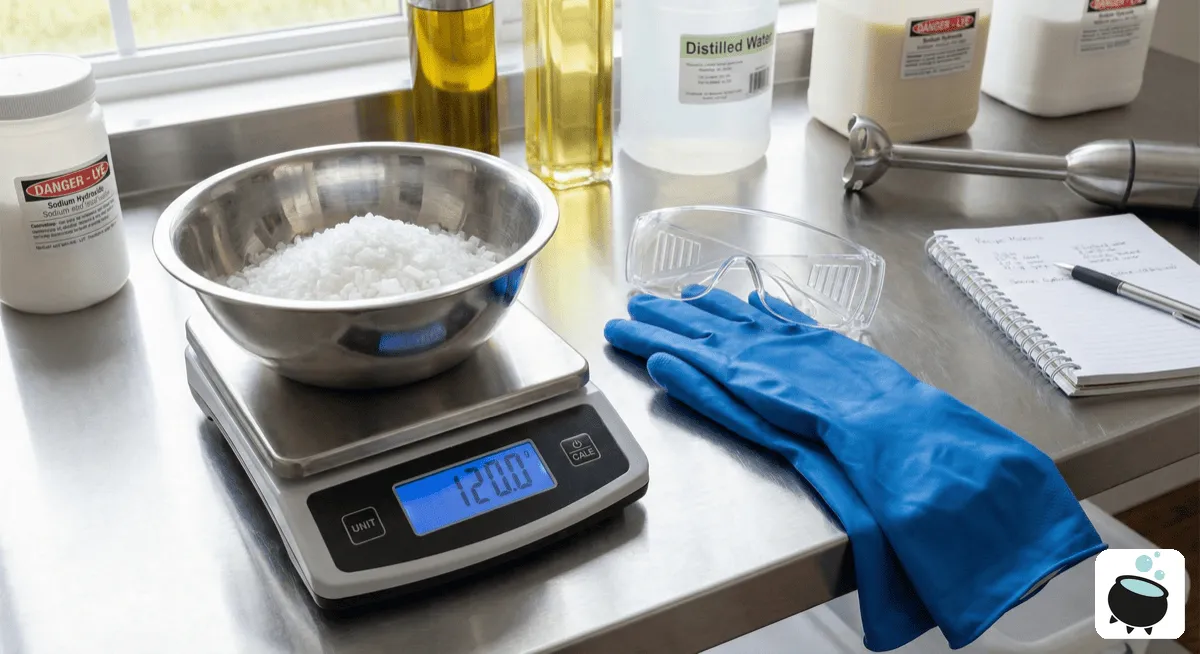
To calculate lye for cold process soap, multiply each oil's weight by its SAP (saponification) value, then reduce by your desired superfat percentage (typically 5-8%). For example: 16 oz olive oil × 0.134 SAP = 2.14 oz lye needed before superfat adjustment.
Skip the math: Use our free lye calculator to instantly calculate lye amounts for any recipe with 50+ oils and automatic soap property analysis.
What Is Lye and Why Does It Matter?
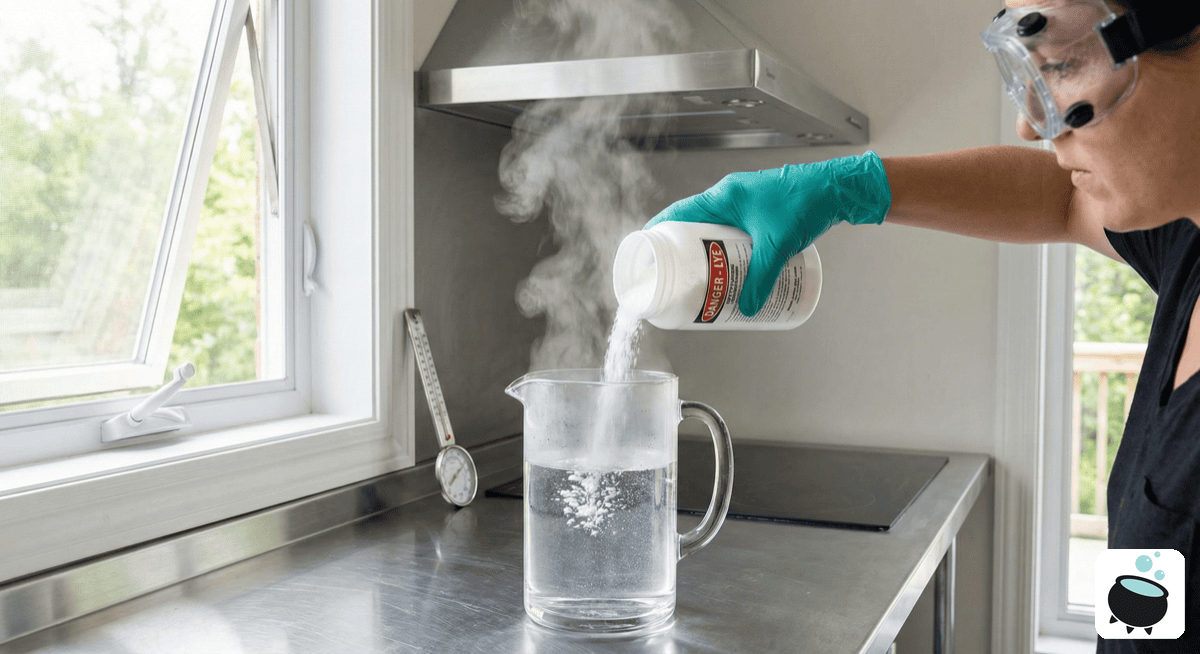
Lye, or sodium hydroxide (NaOH), is the essential ingredient that transforms oils into soap through a chemical reaction called saponification. Without the correct amount of lye, your soap will either be too harsh (lye heavy) or too soft and oily (lye light).
Getting your lye calculation right is the single most important step in soap making. Too much lye creates a caustic, skin-irritating bar. Too little leaves unreacted oils that can go rancid.
The Lye Calculation Formula
The basic formula for calculating lye is:
Lye Amount = Oil Weight × SAP Value × (1 - Superfat Percentage)
Let's break this down:
SAP Values Explained
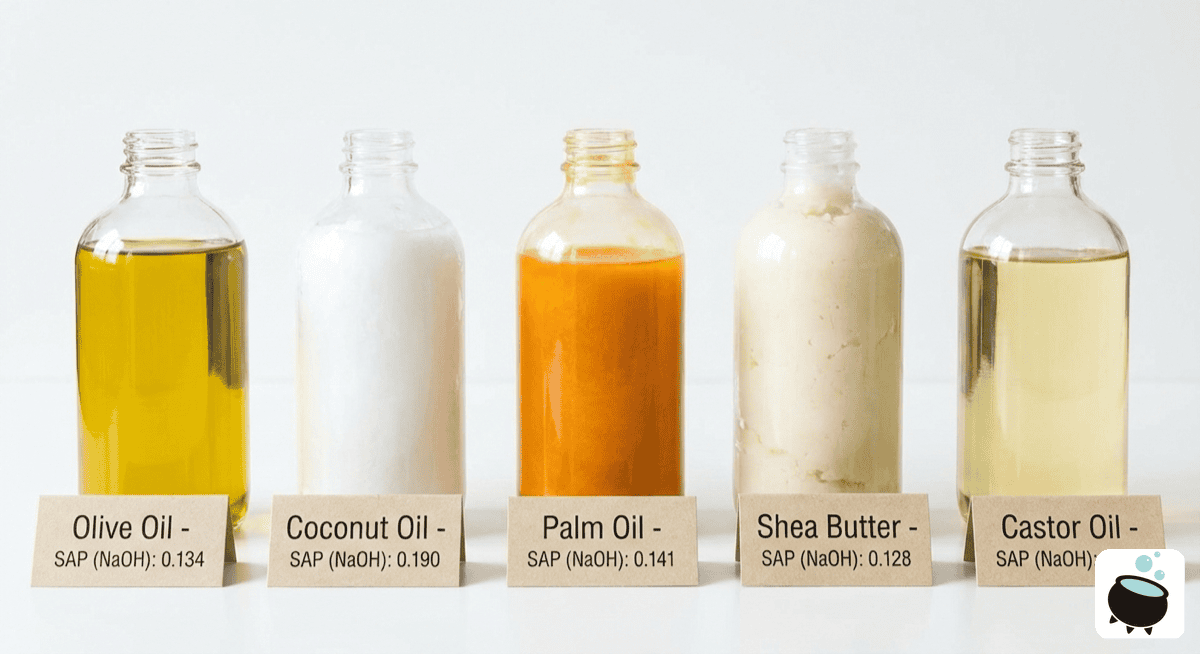
SAP (Saponification Value) represents how much lye is needed to fully convert one unit of a specific oil into soap. Every oil has a unique SAP value. For a comprehensive reference, see our complete guide to SAP values.
| Oil | SAP Value (NaOH) |
|---|---|
| Olive Oil | 0.134 |
| Coconut Oil | 0.178 |
| Palm Oil | 0.141 |
| Shea Butter | 0.128 |
| Castor Oil | 0.128 |
| Sweet Almond Oil | 0.136 |
| Avocado Oil | 0.133 |
| Lard | 0.138 |
| Tallow | 0.140 |
Superfat: Your Safety Buffer
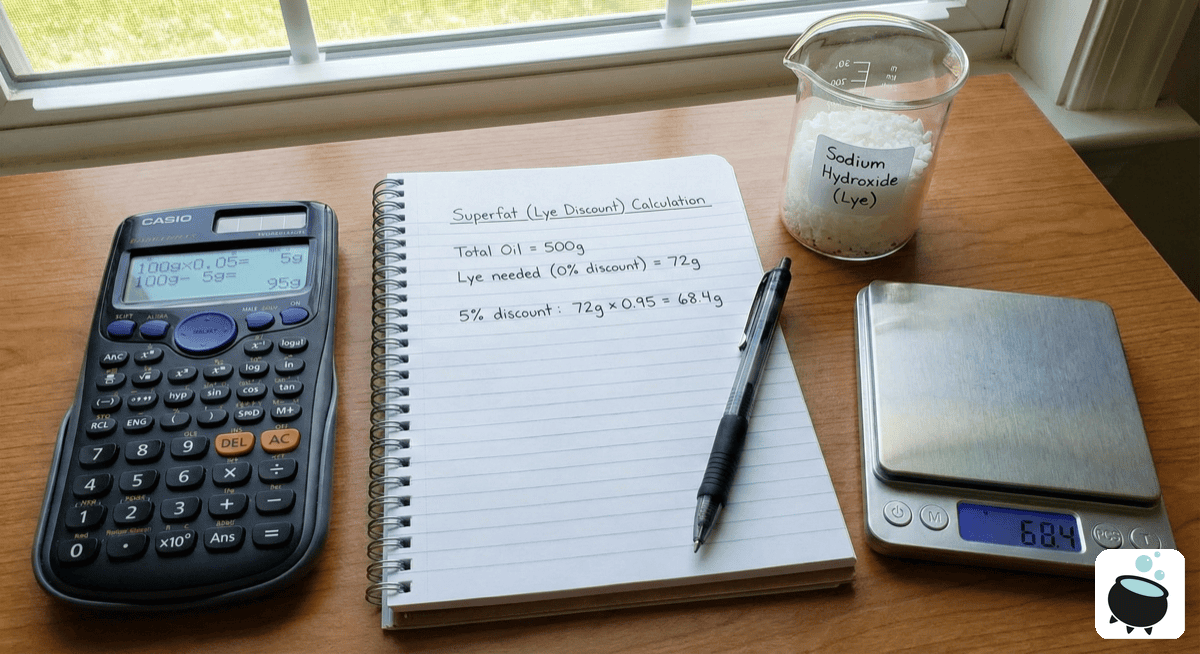
Superfat (also called lye discount) means using slightly less lye than needed to saponify all oils. This leaves some unreacted oil in your finished soap, making it more moisturizing and ensuring no free lye remains. Learn more about choosing the right percentage in our superfat calculator guide.
Standard superfat percentages:
- 5% - Most common, balanced moisture
- 6-8% - Extra moisturizing, good for dry skin
- 3-4% - Harder bars, good for laundry soap
- 0% - Only for specific applications (not recommended for skin)
Step-by-Step Lye Calculation
Example Recipe: Basic 3-Oil Soap (1 lb batch)
Oils:
- Olive Oil: 8 oz (50%)
- Coconut Oil: 5 oz (31%)
- Shea Butter: 3 oz (19%)
Step 1: Calculate lye for each oil
- Olive Oil: 8 oz × 0.134 = 1.072 oz
- Coconut Oil: 5 oz × 0.178 = 0.890 oz
- Shea Butter: 3 oz × 0.128 = 0.384 oz
Step 2: Add them together
Total lye (100%): 1.072 + 0.890 + 0.384 = 2.346 oz
Step 3: Apply superfat discount (5%)
Final lye amount: 2.346 × 0.95 = 2.23 oz sodium hydroxide
Step 4: Calculate water
Standard water-to-lye ratio is 2:1 to 2.5:1
Water needed: 2.23 × 2.5 = 5.58 oz distilled water
Why Manual Calculations Are Risky
While understanding the math is important, manual calculations introduce human error. A simple decimal mistake can ruin an entire batch—or worse, create a lye-heavy soap that burns skin.
Professional soap makers use dedicated soap making software to:
- Automatically calculate lye amounts
- Store and scale recipes
- Track batch inventory
- Adjust for different lye purities
Common Lye Calculation Mistakes
- Using the wrong SAP value - NaOH and KOH have different values
- Forgetting superfat - Results in harsh, potentially dangerous soap
- Measurement unit confusion - Mixing grams and ounces
- Not accounting for lye purity - Most lye is 97-99% pure
- Calculation errors - Decimal points matter enormously
Water Calculations for Lye Solutions
The water amount affects how quickly your soap traces and hardens:
| Method | Ratio | Best For |
|---|---|---|
| Full Water | 38% of oils | Beginners, slow-moving recipes |
| Water Discount | 33% of oils | Faster unmolding |
| Lye Concentration | 28-33% | Experienced makers |
Tips for Accurate Lye Calculations
- Always use a digital scale - Measuring by weight, not volume
- Double-check your math - Or use reliable software
- Use distilled water - Tap water minerals can affect soap
- Account for lye purity - Check your lye container
- Record everything - Keep detailed batch notes
Frequently Asked Questions
How much lye do I need per pound of oil?
The amount varies by oil type. On average, you need approximately 0.13-0.14 oz of sodium hydroxide per ounce of oils for a typical soap recipe, before applying superfat discount.
Can I substitute potassium hydroxide (KOH) for sodium hydroxide?
No, they're not interchangeable. KOH makes liquid soap and has different SAP values (approximately 1.4× the NaOH value). You cannot simply swap one for the other.
What happens if I use too much lye?
Excess lye creates a caustic soap that can burn skin. Signs include a crumbly texture, white powdery surface, and a "zap" when tested on your tongue. Lye-heavy soap should be discarded.
What happens if I use too little lye?
Too little lye results in soft, oily soap that may not fully harden and can go rancid quickly. It may also have poor lather.
Why do different calculators give different results?
Slight variations in SAP value databases and rounding methods can cause differences. Always use one consistent, reliable calculator or software for all your batches.
How do I calculate lye for a recipe with many oils?
Calculate the lye needed for each oil individually (oil weight × SAP value), add them together, then apply your superfat discount to the total.
Conclusion
Calculating lye correctly is fundamental to safe, successful soap making. While the formula is straightforward—multiply each oil by its SAP value, sum the results, and apply superfat—the margin for error is small. Many soap makers use dedicated software to eliminate calculation errors and manage their recipes professionally.
Whether you calculate manually or use software, always double-check your numbers before mixing lye with water. And don't forget to review our lye safety guide for proper handling precautions. Your skin—and your customers' skin—will thank you.
Ready to Manage Your Recipes Like a Pro?
PotionHub helps soap and candle makers calculate lye, track batches, manage inventory, and grow their business.
Get PotionHub